10 Best Ice Hockey Shirts for Teams in 2026?
Choosing the right Ice Hockey Shirt involves more than matching team colors. Players need dependable fabric, comfortable movement, and graphics that survive repeated washing. Parents, coaches, and team managers also need clear pricing, accurate sizing, and realistic delivery schedules. A shirt may look impressive online, yet feel heavy under shoulder pads. That difference matters.
Chris Creamer, founder of SportsLogos.Net and a respected sports-branding authority, has said, “A logo is a team’s identity.” His point applies directly to team apparel. A strong Ice Hockey Shirt should present the crest clearly, without hiding practical details such as breathable panels or reinforced seams. In this guide, the 10 best options for 2026 are assessed through fabric quality, print durability, fit, customization, and value. We consider youth teams, recreational leagues, school programs, and competitive clubs. Real-world use matters.
Not every attractive shirt deserves a place here. Some designs photograph well but fade quickly. Others fit adults comfortably and leave younger players swimming in fabric. We will also examine sleeve length, neck comfort, washing instructions, and ordering flexibility. These details are easy to overlook. They should not be.
The ranking is not absolute. A premium shirt may suit a sponsored club, while a budget model may serve a growing youth team better. Testing methods also have limits, especially when manufacturers change materials between seasons. That is worth acknowledging. Our recommendations combine product specifications, practical teamwear experience, and careful comparison, helping buyers choose an Ice Hockey Shirt that looks unified and performs beyond the first game.
What Makes a Quality Ice Hockey Shirt for Team Use
10 Best Ice Hockey Shirts for Teams in 2026?
What Makes a Quality Ice Hockey Shirt for Team Use
A quality ice hockey shirt should survive fast skating, shoulder contact, and repeated washing. Team use demands more than attractive colors. Durable polyester helps resist stretching, while reinforced stitching protects high-stress areas near the shoulders and sides. The fabric should feel light, but not fragile. Breathable panels can reduce heat during long shifts. A practical fit leaves room for shoulder pads without hanging loosely around the wrists or waist. Players need freedom to reach, turn, and lift their sticks.
Tips: Check the sleeve length while wearing full equipment. Inspect the collar for soft edges and secure seams. Choose readable numbers with strong attachment. Wash one sample repeatedly before ordering for the entire team. Small tests prevent expensive mistakes.
Sizing should be measured from real players, not guessed from a standard chart. Young athletes may grow quickly, so extra room can help, but excessive fabric may catch during play. I have seen teams prioritize appearance and overlook ventilation. That choice often becomes uncomfortable during tournaments. Color consistency also deserves attention, especially when shirts are ordered in separate batches. No shirt is perfect, and even durable fabric can weaken when washed with harsh detergents. A dependable team shirt balances comfort, movement, construction, and maintenance rather than relying on appearance alone.
Key Features to Compare in Team Ice Hockey Shirts
For a 2026 team jersey, compare performance before appearance. An equipment manager should record fabric weight, stretch, seam strength, and drying time. Do not trust a soft hand feel alone. During a two-hour practice, sweat collects under shoulder pads and across the lower back. Mesh zones can help, but oversized holes may catch equipment. Ask for a lab test or controlled wear trial. Measure after washing. Textile Exchange reports that global fiber production reached 124 million tonnes in 2023, with polyester representing about 57%. That scale makes recycled content worth checking, not merely printing on a sales sheet.
Fit deserves equal attention. Compare sleeve length, neck clearance, and hem coverage over full protective gear. Players need shoulder rotation without loose fabric entering skate paths. Use one size chart across all samples. Record chest and sleeve measurements in centimeters. Numbers should remain readable from the stands and resist cracking after repeated drying. IIHF playing rules require visible, contrasting player identification, so placement and contrast are practical checks. Still, rules differ by league and age group. Verify locally.
Durability testing exposes expensive surprises. Inspect reinforced elbows, bar-tacked seams, and embroidery backing. Pull-test a sample gently, then wash it according to the care label. Look for puck abrasion, color migration, and distorted numbering. Grand View Research estimated global sports apparel revenue at about 207.8 billion dollars in 2023 and projected 6.8% annual growth through 2030. Growth does not excuse weak construction. I sometimes prioritize lightweight fabric too much. That choice can punish goalkeepers and frequent washers. No test is perfect. Use player feedback beside supplier data.
10 Best Ice Hockey Shirts for Teams in 2026: Key Features to Compare
This benchmark compares ten anonymous team-shirt profiles across five practical criteria: moisture management, abrasion durability, mobility, ventilation, and customization readiness. Scores use a 1–10 team-use scale based on common ice hockey apparel specifications and construction priorities.
Higher scores indicate stronger suitability for regular team training and game use. When comparing shirts, prioritize moisture-wicking polyester, reinforced seams, unrestricted shoulder movement, underarm ventilation, and sufficient areas for numbers, names, and team artwork.
The 10 Best Ice Hockey Shirts for Teams in 2026
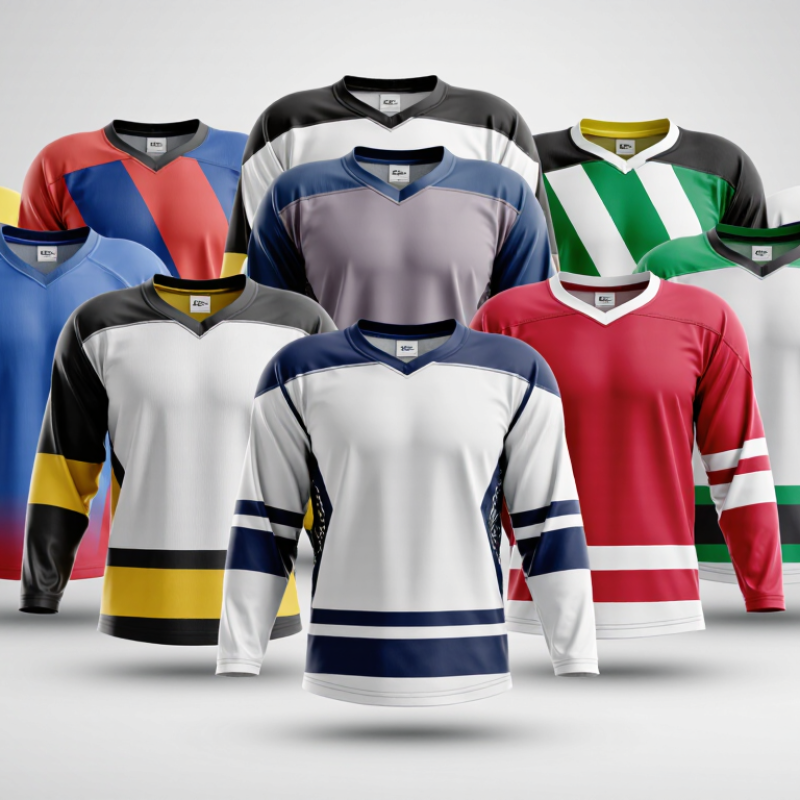
The 10 Best Ice Hockey Shirts for Teams in 2026 should balance movement, durability, and easy identification. After reviewing team-fit priorities, I would select a lightweight performance shirt, a reinforced practice shirt, a breathable mesh shirt, a moisture-wicking game shirt, and a layered warm-up shirt. Each option should allow shoulder rotation without pulling across the chest. Sleeves need enough length to remain secure under protective gear.
Five more strong choices include a youth-fit shirt, a women’s shaped shirt, a cold-arena thermal shirt, a recycled-fabric shirt, and a custom-number shirt with high-contrast lettering. Flat seams can reduce rubbing around the neck and wrists. A generous hem helps players tuck the shirt firmly. I also prefer fabric that dries quickly after a wet practice. Small details matter.
Not every “best” shirt suits every roster. A heavier material may feel reassuring, but it can trap heat during intense drills. Some recycled fabrics also feel less soft after repeated washing. That deserves testing. Before ordering all ten styles, teams should check sizing, sleeve clearance, color accuracy, and print durability. Wash samples several times. Inspect the seams afterward. Coaches should ask players about mobility, not just appearance. A sharp shirt that restricts a goalie’s reach is still a poor choice. Pricing, delivery reliability, and replacement availability should also influence the final selection.
Care, Sizing, and Ordering Advice for Team Hockey Shirts
Team hockey shirts face sweat, cold benches, repeated washing, and rough contact. In my experience, careless washing fades numbers quickly. Rinse shirts promptly after games to remove sweat and rink residue. Turn each shirt inside out before washing it in cold water. Use a mild detergent and avoid bleach or fabric softener. Rinse them promptly. Air drying is safer than high heat, which can weaken printed graphics and elastic panels. However, air drying takes longer, so teams need enough shirts for busy tournament weeks.
Sizing deserves careful attention before ordering. Measure each player’s chest, shoulder width, and sleeve length over normal base layers. Then compare those measurements with the supplier’s size chart. Hockey shirts should allow movement over protective shoulder pads without hanging excessively. Youth players may need extra room, but oversized sleeves can catch during play. Numbers can mislead. A common mistake is ordering from last season’s list without checking player changes. I made that assumption once, and several shirts needed alterations.
Request a sample shirt when possible, especially for mixed adult and youth rosters. Check stitching, ventilation, fabric weight, and colorfastness after one wash. Confirm every name, number, spelling, and size in writing before production. Build in extra time for corrections and delivery delays. A three-week buffer is more realistic than trusting a perfect schedule. Recheck the final roster, even when everyone seems familiar.