What Are the 7 Best Custom Embroidered Name Tags?

Custom Embroidered Name Tags do more than identify a person. They help customers find the right employee, give event teams a consistent look, and add a personal touch to uniforms. But a name tag that looks crisp on a screen can become crowded once stitched. Small lettering, dense thread, and a narrow border all affect readability.

Embroidery educator Erich Campbell is known for his work in embroidery digitizing. A useful rule for choosing a design is: “If the name is hard to read at a glance, simplify the stitching before adding decoration.” Treat that as practical guidance, not a guarantee; fabric, thread, and machine settings can change the result. A sample sew-out is worth requesting.

This guide compares seven custom embroidered name tag options, from classic rectangular badges to more distinctive shapes. It considers lettering clarity, backing choices, size, color contrast, durability, and ordering flexibility. Picture a navy tag on a textured work shirt: white lettering may stand out, while tiny script can disappear between the stitches. The best choice depends on where the tag will be worn and how quickly people need to read it.

There is no perfect option for every team. A polished photo may hide a stiff backing or a cramped name. Check real product details, ask about customization limits, and review a proof before ordering. That small extra step can prevent an expensive-looking mistake.
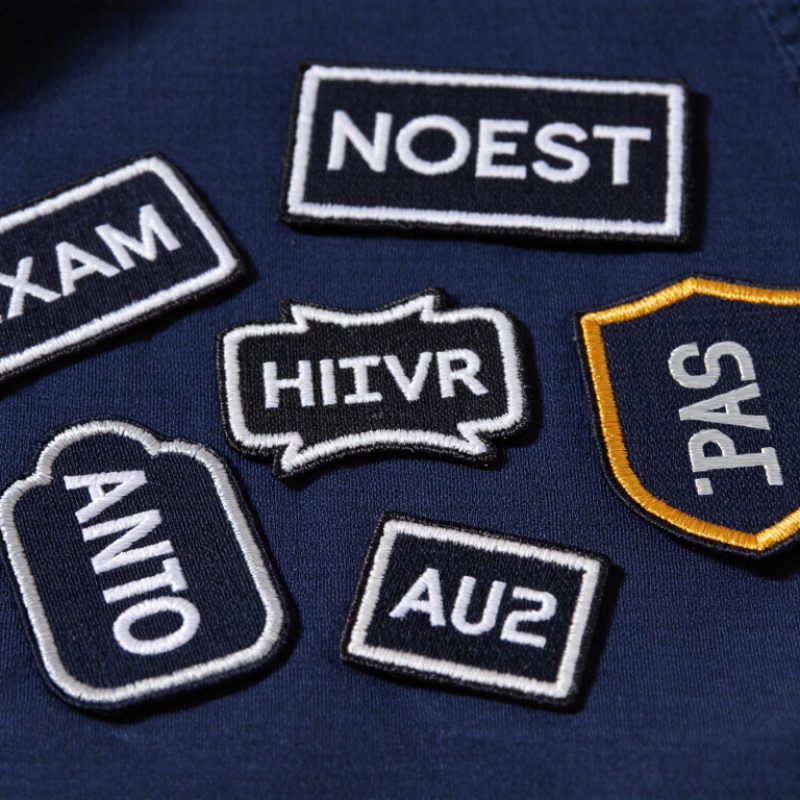
What Are the 7 Best Custom Embroidered Name Tags?

What Custom Embroidered Name Tags Are and How They Are Made

Custom embroidered name tags display a person’s name in thread on a fabric patch or garment. They are often used on uniforms, aprons, and workwear. The name may be stitched directly onto fabric or onto a separate tag with an edge border. Unlike printed labels, embroidery has a raised texture you can feel. Small details matter.

Making a tag begins with choosing its size, shape, fabric, thread colors, and attachment method. The name is converted into stitch instructions using embroidery software. Letter height and spacing need careful adjustment; tiny text can close up or become hard to read. The fabric is placed in a hoop with stabilizer underneath to reduce puckering. An embroidery machine follows the stitch file, then the backing is trimmed and the edges are finished. Each tag should be checked for loose threads, clear lettering, and secure attachment. Even with a good setup, fabric can shift slightly. That part takes practice.

Tips: Keep names short when possible, and choose strong contrast, such as dark thread on light fabric. Ask for a sample if exact color or letter size matters. Check how the tag attaches, too; an attractive design is less useful if it curls or catches on clothing.

Features to Compare When Choosing an Embroidered Name Tag

Compare an embroidered name tag by readability before decoration. A clear first name should remain legible from a few feet away. Check letter height, thread contrast, and whether the font closes up when stitched. Dense script may look elegant on a screen, then become a blur on fabric. Small details matter.

Fabric and thread affect appearance, wear, and care. Textile Exchange’s 2024 Materials Market Report estimates polyester represented 57% of global fiber production in 2023. That figure makes polyester a common option to compare, not an automatic best choice. Ask about fabric weight, edge finishing, wash performance, and colorfastness. For frequent laundering, request a sample and wash it with the uniform. Test it first.

Then compare attachment and construction. A pin can sit securely on a jacket, but may snag lightweight fabric; magnetic backs avoid pinholes, yet need a secure fit. Hook-and-loop backing can suit removable uniforms, though lint may collect over time. Check stitch density and backing thickness, too. I would not assume the most elaborate stitching is the most durable. Confirm the tag’s dimensions against the actual garment, and ask for a sewn sample before ordering a large batch.

What Are the 7 Best Custom Embroidered Name Tags?

Compare these practical features when choosing an embroidered name tag.

How to read this chart: Scores are an illustrative 1–5 selection-priority guide, not measured product ratings or survey results. Priorities can vary by workplace, garment, and laundering needs.

Seven Custom Embroidered Name Tag Styles to Consider

Classic rectangular tags suit reception desks, clinics, and event teams because their broad center leaves room for a readable name. Rounded-corner rectangles feel softer on lightweight shirts and reduce snagging at the edges. Keep it simple. Shield-shaped tags add a formal, uniform-inspired look, though their angled edges can limit space for longer names. Check the lettering at actual size before ordering; dense stitches may close up small letters.

Oval tags create a less rigid profile and work well on aprons or jackets. Arched-top designs draw attention to a short name, but extra wording can make the layout feel crowded. Small details matter. Two-tone embroidered tags use contrasting thread and fabric to improve legibility, such as dark lettering on a pale background. Strong contrast helps, but very bright combinations may clash with some uniforms.

For teams that change roles or garments, removable hook-and-loop tags offer flexibility. They need a compatible loop panel, and loose edges may catch during frequent wear. A useful check is to compare the backing, fabric weight, and washing instructions before choosing. There is no universally perfect style; a shape that looks balanced on a jacket may feel oversized on a narrow shirt pocket.

How to Match a Name Tag Style to Its Intended Use

What Are the 7 Best Custom Embroidered Name Tags?

How to Match a Name Tag Style to Its Intended Use

A name tag should suit the room, the clothing, and the work. For a front desk, choose a neat embroidered patch with high-contrast lettering. In a busy shop, a larger name and simple lettering are easier to read at a glance. Small script can look refined, but it often loses clarity from a few feet away. Test the design on the actual uniform.

Match the attachment to the garment. Sew-on tags stay secure on workwear, while magnetic backs avoid pinholes in delicate shirts. Pin-backs are inexpensive, but can snag lightweight fabric. Fold-over styles suit jackets and event uniforms; compact patches work well on aprons. For frequent laundering, check the thread, backing, and care instructions before ordering. Details matter.

The Advertising Specialty Institute’s 2023 Ad Impressions Study reports that 85% of consumers remember an advertiser after receiving a promotional product. That finding covers promotional products broadly, not name tags specifically, so treat it as context rather than a guarantee. For temporary events, prioritize easy replacement and quick identification. For daily use, prioritize comfort and durable stitching. I have seen attractive tags become awkward when their edges curl or names disappear against patterned fabric. A sample helps.

How to Customize, Attach, and Care for Embroidered Name Tags

A useful embroidered name tag starts with a clear purpose. For uniforms, choose a readable font and keep the name large enough to see from a few steps away. High contrast helps: dark stitching on a light patch, or the reverse. Add a role or department only if the tag has room. Too much text can turn tidy stitching into a blur. Small details matter. Check every letter and spelling before ordering, especially for names with unusual accents.

Attachment depends on the garment and how often it is washed. Sewing around the patch’s edge usually gives a secure hold, while hook-and-loop backing makes tags easy to move between garments. Iron-on backing can work on suitable fabrics, but heat may damage delicate or coated materials. Test the placement first, and follow the garment’s care label and the tag maker’s instructions. For washing, fasten any loose edges, turn the garment inside out, and use a gentle cycle when appropriate. Air-drying often reduces wear on the threads. In practice, even careful stitching can snag on rough surfaces, so inspect the edges now and then. A tag that looks perfect on a table may sit awkwardly on a moving sleeve; check its position while wearing the garment before attaching it permanently.

This website uses cookies to ensure you get the best experience possible. Learn more.