Choosing a 3 Wheel Electric Auto is no longer a novelty decision. It is a practical mobility question for crowded streets, short commutes, and lower-energy travel. However, buyers need more than attractive photographs and impressive range claims.
Mark Frohnmayer, founder of Arcimoto, has said, “The future of transportation is electric, autonomous, and shared.” His observation helps frame this guide. A modern three-wheel vehicle can combine a narrow footprint with electric efficiency. It may fit into a tight parking space beside a city curb. Some models offer weather protection, regenerative braking, removable batteries, or cargo areas for daily errands.
Real-world performance differs sharply. A claimed 100-kilometre range may fall during cold weather, steep climbs, or heavy passenger use. Charging access also matters. A home socket can be enough for some owners, but apartment residents may need public infrastructure. Tire width, suspension travel, seat position, and visibility deserve close attention.
Safety remains non-negotiable. Buyers should review published crash information, braking systems, lighting, stability design, and local approval requirements. A vehicle accepted in one market may require different equipment elsewhere. Insurance, registration, helmet rules, and driving-license categories can also vary.
This article examines seven leading options for global buyers. It compares range, charging time, cabin comfort, storage, handling, maintenance, and expected use. Some choices are polished. Others reveal compromises. That is the honest part.
There is no perfect model. The best 3 Wheel Electric Auto depends on climate, roads, budget, and daily habits. A short test drive may expose more than a long specification sheet.
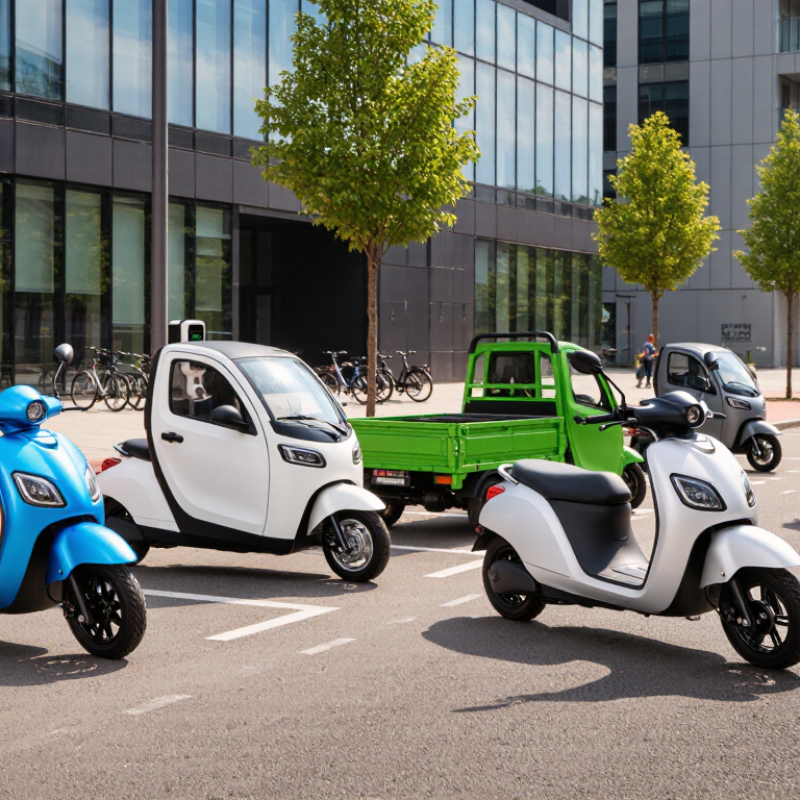
A suitable three-wheel electric auto must work beyond a showroom test. Global buyers need stable handling, predictable charging, and practical protection from changing weather. A low center of gravity helps, especially on wet roads or uneven streets. However, a narrow rear track can still feel nervous during sharp turns. Test it slowly before trusting it fully.
Battery range should reflect real conditions, not only laboratory figures. Hills, heavy loads, cold mornings, and frequent stops reduce distance. A buyer should check charging voltage, plug compatibility, and available household connections. Removable batteries may help apartment users, but they can add weight and theft concerns. Fast charging sounds attractive, yet it may increase battery stress over time.
Safety equipment deserves careful inspection. Look for strong lighting, effective brakes, seat belts, mirrors, and visible turn signals. A weather-resistant cabin is valuable in tropical rain, while good ventilation matters in hot regions. Service access is equally important. Ask about replacement tires, battery testing, diagnostic support, and trained technicians near your area. Spare parts should not depend on one distant supplier. That can become expensive.
Passenger space and cargo capacity also affect daily usefulness. A wide seat may feel comfortable, but it can reduce maneuverability in crowded lanes. Real-world range rarely matches advertisements. That is worth remembering. Buyers should compare total ownership cost, local road conditions, insurance requirements, and charging habits before choosing among the seven best options.
What makes a three-wheel electric auto suitable for global buyers? The benchmark below compares representative vehicle categories by practical driving range and payload capacity.
Values are indicative market ranges for non-branded three-wheel electric vehicle categories. Actual specifications vary by battery size, road conditions, load, climate, and local regulations.
Comparing three-wheel electric autos starts with the job they must perform. A delivery vehicle carrying 120 kilograms needs different hardware from a commuter model. Record daily distance, passenger weight, road grades, and parking limits before reading advertisements. Real use matters more than claimed maximum range. On a cold, wet morning, hills and heating can reduce usable distance sharply. Measure twice.
Battery capacity is important, but charging access may matter more. Check usable battery size, charging time, connector type, and replacement cost. A removable pack helps apartment residents, although it can add weight and theft concerns. Examine the motor’s continuous power, not only its peak figure. Ask for climbing performance on a stated gradient. Test acceleration with a full load. A quiet motor is pleasant, but predictable braking is essential.
Stability deserves a hands-on inspection. Compare track width, tire grip, suspension travel, turning radius, and battery position. Try slow turns, emergency braking, and reversing in a safe legal area. Look for lights, mirrors, seat belts, protective structure, and clear operating instructions. Service coverage, parts availability, warranty terms, and battery diagnostics reveal how dependable ownership may be. I would not trust a glossy range number without independent testing. One easy mistake is underestimating crosswinds; a lightweight body may feel nervous beside a bus. That changed my checklist. Verify local registration, road-use, and charging rules before purchase.
For global buyers, three-wheel electric autos offer a practical balance between stability, efficiency, and compact design. A city commuter usually has a narrow body, a removable battery, and a covered cabin for short urban trips. A delivery trike adds a lockable rear box, low loading height, and reinforced suspension. It suits groceries, parcels, and small business routes.
A passenger-oriented model provides two seats, adjustable weather protection, and a wider rear axle. A cargo flatbed focuses on payload capacity, tie-down points, and simple maintenance access. An enclosed mobility auto often includes a low step, supportive seating, and easy-to-read controls. A utility tricycle may carry tools, water containers, or light equipment through crowded streets. The sport-style three-wheeler emphasizes faster acceleration, responsive steering, and stronger disc brakes. It feels more engaging, but comfort can suffer on rough roads.
Real-world testing matters more than attractive specifications. Check battery performance after repeated charging, not only the advertised range. Cold weather, steep roads, heavy loads, and strong headwinds reduce distance. I would inspect welds, tire quality, lighting, braking response, and water sealing before purchase. Service coverage is easy to overlook. Ask about replacement batteries, controller support, spare parts, and qualified technicians in the destination country. Some cabins feel secure but become hot in humid climates. Others have excellent visibility but limited luggage space. Buyers should also confirm charging compatibility, safety certification, seating capacity, and local registration requirements before paying.
Choosing among the seven best three-wheel electric autos requires more than reading the claimed range. An enclosed city model may travel 80–120 kilometers daily, while a cargo version often loses range under heavy loads. The IEA’s Global EV Outlook 2024 reports nearly 600,000 electric three-wheelers sold in India during 2023. That growth reflects practical demand, not only environmental enthusiasm. Small batteries can charge overnight from a standard outlet. Faster charging is useful, but it may require costly electrical upgrades.
Utility differs sharply by design. A passenger model needs supportive seats, clear windows, and easy entry for older riders. A delivery model needs a low loading floor and weather protection. Some long-range versions use larger batteries, yet added weight can reduce acceleration and tire efficiency. Real-world range may fall 20–35% in cold weather, steep streets, or with maximum payload. Test carefully.
Safety deserves equal attention. The World Health Organization’s Global Status Report on Road Safety 2023 records about 1.19 million annual road deaths worldwide. Buyers should inspect seat belts, braking systems, lighting, mirrors, and cabin intrusion protection. A three-wheel layout can feel stable, but sudden cornering still creates rollover risk. A cargo box can also block rear visibility. Certification standards vary across countries, so local approval matters. Range gets attention. Protection gets less. That is a mistake.
| Vehicle Profile | Typical Body Layout | Seats | Published Range | Battery Capacity | Top Speed | Charging Method | Approx. Charging Time | Safety Equipment | Utility Strength | Best-Fit Buyer |
|---|---|---|---|---|---|---|---|---|---|---|
| 1. Compact Urban Single-Seater | Enclosed three-wheel commuter with one front wheel and two rear wheels | 1 | 160 km / 100 mi claimed | 8.6 kWh lithium-ion | 130 km/h / 80 mph | Standard AC household outlet | About 3 hours with a suitable 220–240 V supply | Seat belt, front airbag, stability-oriented low center of gravity; equipment varies by market | Very small footprint and enclosed cabin; limited luggage capacity | Solo commuters in dense cities with occasional higher-speed road use |
| 2. Open Two-Seat Fun Utility Vehicle | Open cockpit with two front wheels and one rear drive wheel | 2 | 160–165 km / 100–102 mi claimed | 7.5 kWh lithium-ion | 121 km/h / 75 mph | AC Level 1 household charging; some versions support faster AC charging | Approximately 8 hours from a standard outlet; faster with upgraded equipment | Three-point belts, roll-protection structure, lighting package; not equivalent to a full passenger car | Excellent maneuverability and open-air access; limited weather protection and cargo space | Recreational users and short-distance urban drivers in warm climates |
| 3. Enclosed Long-Range Commuter | Narrow enclosed cabin with a single front wheel and two rear wheels | 1 | 200–240 km / 124–149 mi estimated cycle range | 12–15 kWh lithium-ion | 100–115 km/h / 62–71 mph | AC household or wall-box charging | 4–8 hours, depending on battery size and charging circuit | Seat belt, high-visibility lighting, reinforced passenger cell; certification depends on jurisdiction | Best weather protection among narrow single-seat layouts; modest luggage area | Urban and suburban commuters prioritizing range over passenger capacity |
| 4. Cargo Delivery Trike | Commercial three-wheel chassis with a front cabin and rear cargo module | 1 | 60–100 km / 37–62 mi typical working range | 6–12 kWh lithium-ion | 45–80 km/h / 28–50 mph | AC household or depot charging | 4–8 hours | Hydraulic disc brakes, daytime running lights, parking brake, driver restraint; cargo protection depends on body style | Payload commonly around 300–500 kg; box, flatbed, and refrigerated bodies may be available | Last-mile delivery, campus logistics, and low-speed commercial routes |
| 5. Covered Passenger Shuttle | Low-speed enclosed or semi-enclosed three-wheel passenger carrier | 2–6 | 70–120 km / 43–75 mi typical operating range | 8–15 kWh lithium-ion | 40–70 km/h / 25–44 mph | AC household or depot charging | 5–10 hours | Seat belts, hydraulic brakes, exterior lighting, mirrors, and optional doors or roof panels | Flexible seating and step-in access; generally unsuitable for motorways or high-speed intercity travel | Resorts, airports, campuses, retirement communities, and controlled urban zones |
| 6. High-Performance Electric Roadster | Open two-seat performance layout with two front wheels and one rear drive wheel | 2 | 320–400 km / 200–250 mi claimed cycle range | 30–40 kWh lithium-ion | 160–185 km/h / 100–115 mph | AC Level 2; selected configurations may support DC fast charging | 4–8 hours on AC; approximately 30–60 minutes to add a substantial charge with compatible DC equipment | Three-point belts, anti-lock braking, traction control, reinforced safety structure; advanced systems vary by trim | Strong acceleration and highway capability; low practicality and limited weather protection | Enthusiasts seeking sports-car performance with lower energy consumption |
| 7. Lightweight Neighborhood Microcar | Small enclosed three-wheel city vehicle with a narrow rear body | 1–2 | 75–120 km / 47–75 mi typical range | 5–10 kWh lithium-ion | 45–80 km/h / 28–50 mph | Household AC outlet or compact wall charger | 3–6 hours | Seat belts, hydraulic or regenerative braking, LED lighting, reverse camera or sensors on some versions | Low purchase and operating footprint; easy parking but limited crash protection and carrying capacity | Neighborhood travel, short commutes, and low-speed city mobility |
Regional rules can change the value of a three-wheel electric auto. In the European Union, buyers should check vehicle class, speed limits, type approval, and driving licence requirements. Some models may follow motorcycle rules, while enclosed vehicles may face different safety standards. In the United States, requirements can vary by state, including registration, helmet use, lighting, and road access. Other markets may require local certification before public-road use. Verify the rules with a transport authority, not only a seller’s brochure.
Ownership costs extend beyond the purchase price. Battery size affects charging time, range, and replacement expense. A practical test includes a steep hill, two passengers, and air conditioning. Watch the battery gauge closely. Home charging is usually cheaper than public charging, but apartment residents need permission and safe electrical access. Insurance, registration, tyres, brake servicing, and annual inspections can change the real budget. A low-cost model may become expensive after frequent battery or suspension repairs.
The seven strongest choices usually serve different needs: urban commuting, delivery work, rural travel, passenger comfort, weather protection, cargo carrying, or compact parking. Look for clear warranty terms and accessible service parts. Ask whether technicians can diagnose the motor controller and battery system locally. Test door seals, mirrors, lights, seat belts, and reversing visibility. I would not trust claimed range without an independent road test. Weather, hills, cold temperatures, and heavy loads reduce range, sometimes sharply. That uncertainty deserves a financial cushion.
This website uses cookies to ensure you get the best experience possible. Learn more.