Choosing among the 7 best Rail Freight companies for global shipping takes more than comparing route maps. A train crossing a border can move containers efficiently, but the full journey may also depend on port access, customs coordination, terminal capacity, and a reliable truck connection. Small delays matter. A container waiting beside a busy rail yard can disrupt a carefully planned delivery window.
Rail Freight specialist Ian Jefferies, President and CEO of the Association of American Railroads, has emphasized that “freight rail is the most fuel-efficient way to move goods over land.” That advantage is important, but it does not make every provider the right fit. Shippers should examine network reach, transit-time consistency, tracking tools, cargo handling, and support when schedules change. They should also ask who manages transfers between rail operators and other transport partners.
This guide compares seven companies through those practical details, rather than treating size alone as proof of quality. Some providers specialize in cross-border corridors; others connect major ports, inland hubs, and regional networks. Service availability can vary by origin, destination, and shipment type. No ranking can replace a route-specific quote. And a polished website is not evidence of smooth operations. The comparisons ahead offer a starting point, with trade-offs worth checking before booking.
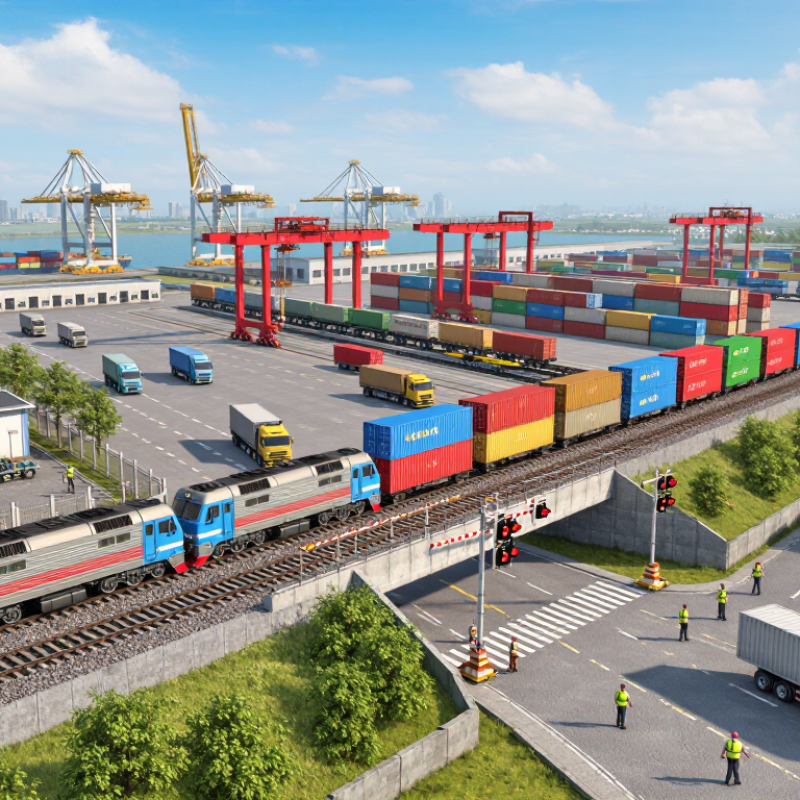
Rail freight connects inland production centers with ports, distribution hubs, and neighboring markets. For global shipping, it can balance cost and transit time, especially when cargo moves over long distances in steady volumes. It is not simply a train ride. A shipment may travel in a container, cross several borders, and transfer between rail networks before reaching its destination.
Details matter. Ask how often departures run, which terminals serve the route, and whether container handling is included. A few hours’ drive from a terminal can add a day or more to delivery. Differences in track gauge may also require cargo or containers to transfer between trains at a border. That handoff can affect schedules. Not every route is equally predictable.
When comparing rail freight providers, look beyond advertised transit times. Check how they report delays, track shipments, and coordinate road transport for pickup and final delivery. Request a route-specific estimate that includes terminal fees and likely transfer points. Small print counts. Rail can be a strong option for planned shipments, but urgent or highly time-sensitive cargo may need another mode. Even a carefully planned route can run late, so leaving a little schedule buffer is sensible.
Evaluating international rail freight companies starts with the route, not the brochure. Ask which border crossings, terminals, and transfer points they use. A shipment may change trains or modes several times. Request a sample route plan showing estimated transit time, handoffs, and contingency options. Small details matter: a missed terminal cutoff can leave a container waiting overnight.
Compare service quality with measurable evidence. The World Bank’s Logistics Performance Index 2023 assessed 139 economies across six dimensions, including infrastructure, logistics competence, tracking and tracing, and timeliness. Ask providers how they report these areas on your specific corridor. Look for shipment milestones, schedule reliability, claims handling, and clear explanations of charges. A low quote can exclude terminal fees or final-mile delivery. Check the assumptions line by line.
It is tempting to rank providers by price alone. That shortcut can be costly. Ask for recent performance data, and check whether it covers the same route and cargo type you need. Request a named operations contact and a realistic escalation process. No score predicts every delay. I would also ask what happens when connections fail, even if that question feels pessimistic. The answer may reveal more than a polished sales presentation.
Choosing a rail freight partner depends on corridor access, border handling, equipment, and reliable schedules. “Leading” is not a single global ranking. A practical shortlist includes seven operator types: North American transcontinental carriers, European intermodal networks, Eurasian cross-border operators, Chinese long-haul services, Indian domestic freight networks, Australian bulk specialists, and southern African mineral corridors. Each fits different cargo flows. A container moving between inland terminals needs dependable transfers; ore trains need capacity and specialized wagons.
Locomotive energy sources, detours, terminal moves, and first- and last-mile trucking all affect the result. Details matter. Ask providers for route-level transit times, interchange points, wagon availability, and emissions methods—not just network maps. The UIC’s International Railway Statistics offers a useful reference for comparing national rail activity, though reporting coverage differs by country. No comparison is perfect.
For a real shipment, test the route with a specific origin, destination, cargo weight, and delivery window. Ask how delays are communicated and where containers can be stored during disruption. A provider with fewer headline routes may still perform better on your corridor. I would verify service history before treating a broad network as proof of dependable delivery.
A useful comparison of seven leading rail freight providers starts with the route, not the rate. Check whether each provider offers direct service between your origin and destination, or depends on transfers across borders. UIC’s 2023 railway statistics place global rail freight traffic at roughly 10 trillion tonne-kilometres. That scale hides big differences: one network may offer frequent departures and terminal access, while another relies on a single weekly connection. Ask for the full transit plan, including gauge changes, border handoffs, and first- and last-mile delivery. A map can look reassuring. The timetable may not.
Compare services that matter to the cargo: container availability, temperature control, tracking updates, and help during delays. Network coverage is more than track length; terminal locations and intermodal links shape the real reach. The World Bank’s Logistics Performance Index 2023 highlights that reliable logistics depend on factors such as infrastructure and shipment timeliness. Request recent performance data for your specific corridor, not just company-wide averages. Averages can blur weak links.
Tips: Match the provider’s route map against your pickup and delivery addresses. Confirm how often trains depart, where cargo changes hands, and who handles exceptions. I would also ask about seasonal capacity; published schedules do not always tell the whole story.
A route-length comparison illustrating the geographic reach of selected freight corridors.
How to read this chart: Longer routes span greater distances, but distance alone does not indicate transit time, capacity, reliability, or service quality. Actual routings can vary.
Approximate published route lengths; figures may vary by endpoints and measurement method. Reference points include railway and corridor operators’ published route descriptions and commonly reported freight-service distances.
Choosing the right rail freight provider starts with the route, not the headline rate. Confirm that the service covers every rail leg, border crossing, and final-mile delivery. Ask who arranges transfers between different rail gauges, and request typical border dwell times. Details matter. A container waiting overnight can disrupt a carefully planned delivery.
The World Bank’s 2023 Logistics Performance Index assessed 139 economies and included tracking and tracing, timeliness, and logistics service quality. Use these measures to shape your questions, not as a direct ranking of individual rail providers. Ask for recent, lane-specific performance data, departure schedules, and written procedures for delays or damaged cargo. A polished global average may hide weak performance on your corridor.
The International Energy Agency’s 2019 report, The Future of Rail, estimates rail carries about 7% of global freight movement while using around 2% of transport energy. That is useful context, not a shipment-level emissions guarantee. Request the provider’s calculation method and clarify whether it includes road collection and delivery. Compare complete quotes, including terminal handling, fuel adjustments, and storage charges. I would not choose on speed alone; published schedules can still slip at borders.
| Anonymous service profile | Main corridor or network | Rail-gauge and transfer considerations | Typical strengths | Best suited to | Check before booking |
|---|---|---|---|---|---|
| 1. Northern Eurasian rail | China–Kazakhstan–Russia–Belarus–Poland connections between East Asia and Europe. | Most of the route uses 1,520 mm gauge; much of the European network uses 1,435 mm. Freight may need a gauge-change transfer or transloading at the interface. | Offers a land-based option for containerized shipments between major Asian and European logistics hubs. | Time-sensitive manufactured goods and container loads moving between connected terminals. | Confirm current route availability, transit estimates, sanctions and customs requirements, and the exact border transfer plan. |
| 2. Trans-Caspian Middle Corridor | China and Central Asia via Kazakhstan, the Caspian Sea, Azerbaijan and Georgia, with onward connections toward Turkey and Europe. | Includes rail and Caspian Sea crossings; port handling and changes between rail and vessel are part of the route. | Provides an east–west route that avoids some northern Eurasian transit countries. | Container shipments for which a multimodal rail-and-sea route is acceptable. | Check sailing frequency, port capacity, handoff arrangements, end-to-end documentation, and schedule variability. |
| 3. European cross-border intermodal | Rail-connected terminals across continental Europe, with onward road delivery where needed. | Most continental networks use 1,435 mm standard gauge; gauge and technical interfaces differ in some regions, including the Iberian Peninsula and Finland. | Dense rail and terminal networks can support intermodal movement across multiple countries. | Regular container or swap-body traffic between European production, distribution, and port hubs. | Verify terminal pairs, train frequency, loading-unit compatibility, and the road distance at each end. |
| 4. North American intermodal | Rail-connected freight networks in the United States, Canada, and Mexico, commonly paired with truck drayage. | The principal networks use 1,435 mm standard gauge. International moves may involve border inspections and customs clearance. | Well suited to inland container movements over long distances, with road transport connecting shippers and receivers to rail terminals. | Domestic or cross-border container freight with accessible intermodal terminals at both ends. | Compare door-to-door service rather than rail-only distance; confirm drayage, border processing, equipment, and cut-off times. |
| 5. Indian broad-gauge rail | Domestic freight routes connecting inland industrial areas with ports and logistics hubs in India. | The main Indian network uses 1,676 mm broad gauge. International ocean legs are arranged separately when cargo is moving overseas. | Can connect inland freight flows to major port and inland-container facilities within the country. | Domestic freight and export or import cargo with an Indian inland rail leg. | Check the specific terminal connection, train and container availability, port cut-offs, and coordination with the ocean carrier. |
| 6. Brazilian rail and port corridors | Regional freight corridors linking inland production areas with Brazilian ports and industrial markets. | Brazilian networks include both 1,000 mm and 1,600 mm gauges, so interchange and transloading can matter where networks meet. | Rail is established for long-distance bulk and export flows; container options depend on the corridor and terminal. | Bulk commodities and shipments whose origin and destination align with an operating rail corridor. | Confirm gauge interfaces, route coverage, available container service, port connection, and first- and last-mile transport. |
| 7. Southern African rail corridors | Rail routes connecting inland freight origins with regional markets and seaports in Southern Africa. | The regional network commonly uses 1,067 mm Cape gauge; cross-border handoffs and network conditions vary by route. | Established for long-distance freight, including mineral and other bulk traffic; container service is route-specific. | Bulk or container shipments with confirmed rail access along the selected corridor. | Check corridor availability, border procedures, service frequency, port handoffs, and current operating conditions. |
This website uses cookies to ensure you get the best experience possible. Learn more.