What Types of Boys Leather Shoes Are Best?
Choosing Boys Leather Shoes is less about finding one perfect style and more about matching construction to a child’s day. A polished Oxford may suit a school uniform, while a flexible loafer or lace-up derby can feel easier during long hours of walking. The material matters, too. Soft leather can adapt with wear, but stiff seams and narrow toe boxes may cause rubbing. Small details count: heel grip, secure fastening, and room for toes to move.
The APICCAPS World Footwear Yearbook 2024 estimates global footwear production reached 22.4 billion pairs in 2023. That figure shows the scale of the footwear industry, but it does not reveal which boys’ leather styles fit best or last longest. Market totals cannot replace a careful fit check. A child’s foot should feel comfortable in both shoes, with space at the toes and no slipping at the heel. Try them on later in the day, when feet may be slightly larger. It helps. Leather quality, sole flexibility, and stitching are useful points to compare, yet labels alone do not guarantee comfort. There is no universal winner. This guide explores Oxfords, loafers, derbies, and practical everyday designs, weighing appearance against comfort, durability, and ease of use. Some advice depends on the child, and that is worth acknowledging.
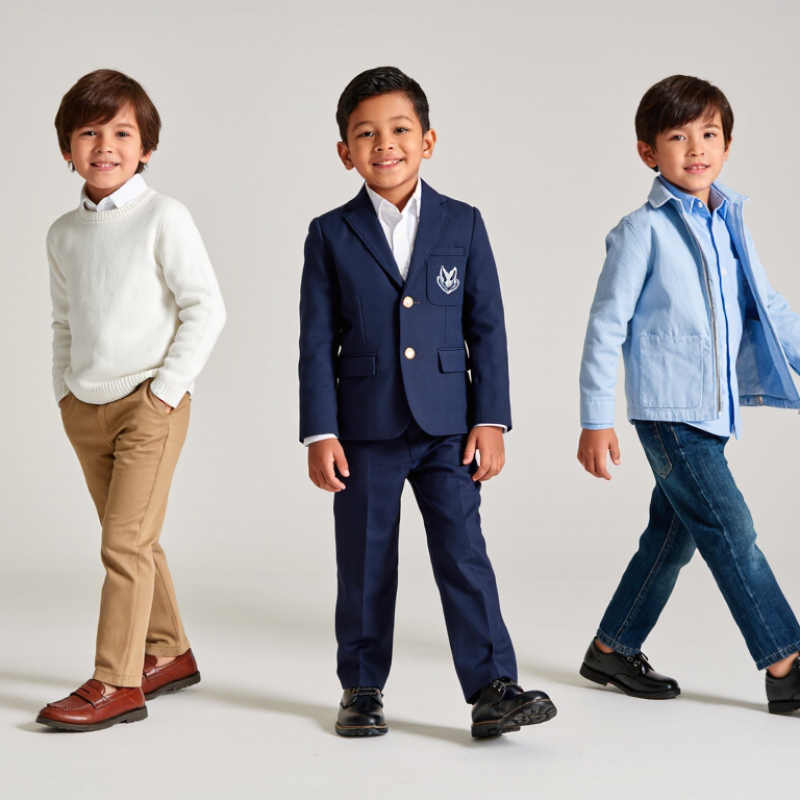
How to Evaluate Leather Shoes for Boys
What Types of Boys Leather Shoes Are Best?
How to Evaluate Leather Shoes for Boys
A good pair of boys’ leather shoes should fit the child’s foot, suit its daily use, and feel comfortable during movement. Check both feet while the child is standing, since one may be slightly larger. Leave a thumb’s width of space at the toe, but make sure the heel does not slip with each step. Leather should bend near the ball of the foot, not fold sharply across the middle. Some new shoes feel stiff at first; that alone does not prove they are poorly made.
Inspect the stitching, sole, and lining in bright light. Even stitches and firmly attached soles are useful signs, though appearance cannot guarantee durability. The lining should feel smooth against a hand, with no rough seams or raised edges. Ask whether the leather has a finish that needs special care, and follow the maker’s cleaning instructions. A shoe that looks elegant but rubs the heel is not a good fit.
Tips: Have the child walk on a firm floor and turn in both directions. Check for pinching, heel movement, or toes pressing against the front. Try shoes with the socks they will usually wear. Recheck the fit after a few months; children’s feet change quickly, and my first estimate may not stay accurate.
| What Types of Boys Leather Shoes Are Best? - How to Evaluate Leather Shoes for Boys | ||||
|---|---|---|---|---|
| Shoe Type | Best Suited For | Leather and Construction to Look For | Fit and Comfort Check | Evaluation Notes |
| Oxford | School uniforms, ceremonies, and other formal occasions | A smooth leather upper and a securely attached sole; a rubber sole can offer more traction than a smooth leather sole. | Check that the closed lacing does not pinch the instep and that toes can move freely. | A neat, low-profile style; assess whether the sole is flexible enough for comfortable walking. |
| Derby | School wear and smart everyday outfits | A leather upper with open lacing, which generally allows the throat of the shoe to adjust more than closed-lacing styles. | Lace the shoe comfortably and check for heel slippage, pressure across the top of the foot, and adequate toe space. | Often a practical option when a child needs more adjustment at the instep; the actual fit depends on the shoe's shape. |
| Leather Loafer | Smart-casual wear and settings where slip-on shoes are suitable | A well-finished upper and a sole firmly attached around the perimeter; avoid relying on appearance alone to judge construction. | Check carefully for heel lift and a secure fit, since loafers do not have laces to adjust them. | Convenient to put on and take off, but not ideal if the shoe slips or the child needs a highly adjustable closure. |
| Leather Ankle Boot | Cooler weather and everyday outfits that benefit from more upper coverage | A leather upper with a securely fastened sole; a rubber outsole may provide useful grip on ordinary wet or slippery surfaces. | Try on with the socks the child will normally wear and check that the collar does not rub the ankle. | Check the boot's weight and flexibility as well as its coverage; a taller upper does not automatically mean better support. |
| Leather Mary Jane or T-Bar | Dress occasions and outfits that call for a strap-fastened style | A smooth, well-finished leather upper and a strap with a secure, usable fastening. | Ensure the strap holds the foot without pressing on the instep; check that the toe area is not narrow or cramped. | A strap can help keep the shoe on the foot, but the shoe still needs to match the child's foot shape and length. |
| Leather Sneaker-Style Shoe | Casual daily wear and light walking | A leather or leather-combination upper, a flexible sole, and a fastening that can be adjusted securely. | Walk in both shoes and check for rubbing, toe pressure, and excessive heel movement. | Assess outsole grip and flexibility for the intended use; a leather upper alone does not make a shoe suitable for sports. |
| How to Evaluate Leather Shoes for Boys | ||||
| Leather Label | Read the materials description. Full-grain leather retains the outer surface of the hide; corrected-grain leather has a surface that has been altered or finished; split leather comes from a lower layer of the hide and may be coated. Terms and finishes vary, so check the product label. | |||
| Fit | Try shoes on while the child is standing, ideally with usual socks. Check both feet, toe room, width, heel security, and comfort while walking. Do not assume a shoe will stretch enough to fix a poor fit. | |||
| Sole and Finish | Look for a sole attached evenly, no obvious gaps or loose stitching, and edges without rough spots. Choose sole flexibility and tread appropriate to the child's normal activities and surfaces. | |||
| Care | Follow the care instructions for the specific leather and finish. Wipe off dirt, allow damp shoes to dry naturally away from direct heat, and use only a compatible leather conditioner or protector. | |||
This website uses cookies to ensure you get the best experience possible. Learn more.