Top Menstrual Cup Manufacturers in China for Global Buyers?
Choosing reliable Menstrual Cup Manufacturers in China requires more than comparing prices, colors, or attractive product photographs. Global buyers must examine material safety, mold precision, production consistency, and transparent quality records. A menstrual cup touches sensitive tissue for several hours, so small details matter. The rim should feel smooth. The stem should remain stable. The silicone should show no visible particles, odor, or uneven thickness.
Gynecologist Dr. Jen Gunter has described menstrual cups as “a safe and effective option” for many users. Her practical view supports a careful sourcing approach, rather than a purely commercial one. Buyers should request material specifications, independent laboratory testing, batch records, and clear cleaning instructions. ISO 13485 certification may strengthen confidence, but it should be verified directly. A logo on a brochure proves very little.
China has a broad manufacturing base, including factories serving private-label, retail, medical, and sustainability-focused brands. Some suppliers can provide customized molds, packaging, colors, and size ranges. Others may offer impressive samples but lack reliable process control. That difference can become obvious after thousands of units are produced. It can also affect leakage complaints, returns, and customer trust.
This guide introduces leading Menstrual Cup Manufacturers for international buyers and explains how to assess them fairly. We will consider experience, material choices, factory capability, quality assurance, minimum order quantities, communication, and export readiness. No supplier is perfect. That is worth remembering. A responsible buyer should compare evidence, not promises, and test samples before signing a large order.
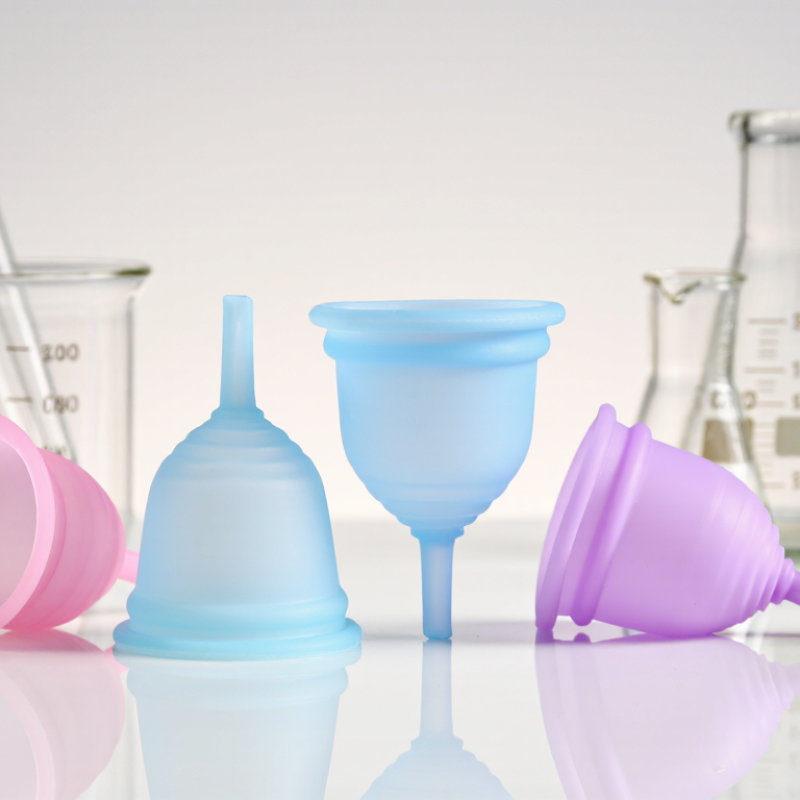
What Makes China a Major Source of Menstrual Cups for Global Buyers
China has become a major source of menstrual cups because its manufacturing network combines silicone molding, tooling, packaging, and international logistics. Suppliers can often adjust cup firmness, stem length, color, and packaging for different markets. This flexibility matters to global buyers serving varied user preferences.
Grand View Research estimated the global menstrual cup market at about USD 1.2 billion in 2023, with continued growth expected through 2030. That demand encourages Chinese factories to improve production capacity and quality controls. Experienced manufacturers commonly use medical-grade silicone, automated molding, dimensional inspection, and batch traceability. Independent laboratory testing can also assess biocompatibility, tensile strength, odor, and material composition.
Cost remains important, but it should not be the only selection criterion. A low quotation may reflect thinner silicone, inconsistent sizing, or weak documentation. Buyers should review factory audits, sample records, test reports, and corrective-action procedures. They should also confirm whether certificates match the actual production site.
UN Comtrade export data can indicate China’s strong position in related plastic and hygiene-product trade. However, some customs categories combine menstrual cups with broader product groups. The data is useful, but imperfect. Buyers still need direct supplier verification. Factory videos are not enough. A physical audit or independent inspection provides stronger evidence. Small details matter, such as clean molding edges, readable batch codes, and packaging that protects each cup from dust and deformation.
How to Identify Reliable Menstrual Cup Manufacturers in China
Choosing reliable menstrual cup manufacturers in China requires more than comparing prices. Start by checking their production experience, material controls, and quality management records. Ask whether they use tested, body-safe silicone and can provide recent laboratory reports. The reports should identify test methods, sample details, and issuing laboratories. Vague documents deserve careful questioning.
Request product samples from different production batches. Inspect the cup’s rim, stem, firmness, surface finish, and packaging. A strong manufacturer should explain mold maintenance, cleaning procedures, batch coding, and final inspections. During a factory video call, watch how workers handle materials and pack finished products. If possible, arrange an independent factory audit. My experience is that polished presentations can hide weak traceability. I once focused too much on sample appearance and overlooked inconsistent carton labeling.
Tips: Compare written specifications, not promises. Confirm material grades, dimensions, color limits, packaging artwork, lead times, and defect standards. Ask how complaints are recorded and corrected. Reliable suppliers usually answer with evidence, timelines, and responsible contacts. They should also explain export documents and market-specific requirements without making unsupported legal claims. A low minimum order quantity can help new buyers, but it does not prove production capability. Check whether the same quality standard applies to small and large orders. Good communication matters, yet it should never replace testing. Record every agreement before production begins. Mistakes still happen, so leave time for reinspection and approval.
Private Label, Custom Design, Packaging, and Order Requirements
China’s menstrual cup manufacturers increasingly support private-label programs for global buyers. Grand View Research valued the global menstrual cups market at about USD 963 million in 2022, with continued growth expected through 2030. Estimates vary between reports, so buyers should not build forecasts from one figure alone.
Private-label development usually starts with material selection, mold design, firmness, stem length, and size grading. Medical-grade silicone, traceable batches, and documented biocompatibility testing should be requested. Custom design can include embossed measurements, color matching, storage bags, instruction cards, and multilingual artwork. Small details matter. A logo that looks sharp on paper may blur after molding. Request a pre-production sample.
Packaging affects both protection and compliance. Buyers should confirm carton dimensions, recycled-content claims, barcode placement, warning language, and sealing methods before approving artwork. ISO 13485-based quality systems can strengthen supplier evaluation, while applicable market rules may require additional testing or registration. The exact route depends on the destination and product classification.
Order requirements deserve equal attention. Confirm minimum order quantities, mold fees, sample charges, lead times, inspection points, payment milestones, and replacement terms in writing. A common mistake is comparing unit prices before adding tooling, packaging, testing, and freight. That number can mislead. International buyers should also request batch records, inspection reports, and a corrective-action process. Some factories answer quickly but document poorly; that gap needs careful review.
How to Compare Suppliers, Costs, Quality, and Export Support
Comparing menstrual cup manufacturers in China requires more than checking the lowest quotation. Start with material transparency. Ask whether the cup uses medical-grade silicone, and request material certificates, inspection records, and production samples. A reliable supplier should explain hardness, sizes, pigmentation, and cleaning instructions clearly.
Cost comparisons need several details. Compare sample fees, mold charges, minimum order quantities, packaging, testing, and shipping separately. A cheaper unit price may hide expensive tooling or weak packaging. Request a complete quotation under the same trade terms, such as FOB or CIF. Small differences matter. Also review payment schedules and replacement policies for defective goods.
Quality depends on repeatable production, not one attractive sample. Check factory hygiene, molding consistency, edge smoothness, odor, and dimensional accuracy. Independent laboratory testing can verify material safety and product performance. Ask for batch records and a realistic inspection plan before shipment. Export support is equally important. Suppliers should provide commercial invoices, packing lists, carton details, certificates, and answers for customs inquiries. Experienced teams may support private packaging and multilingual documents, but confirm ownership and approval responsibilities in writing. Communication can still fail, especially across time zones. Use a written specification sheet with photographs and measurable tolerances. Do not rely on promises alone. A trial order may reveal problems that an audit misses, so leave time and budget for correction.
Top Menstrual Cup Manufacturers in China: Supplier Comparison Benchmark
Benchmark scores compare typical supplier profiles across cost competitiveness, quality verification, minimum order flexibility, lead-time reliability, and export support.
Scores are based on common China OEM/ODM sourcing benchmarks: unit prices typically range from about US$0.80–4.50 depending on silicone grade, customization, packaging, and order volume; standard MOQs commonly range from 300–3,000 units. Higher scores indicate stronger overall buyer value and export readiness.