China’s private-label skincare sector is attracting brands that want tailored formulas, flexible production, and shorter routes from concept to shelf. The opportunity is real, but choosing a manufacturer takes more than comparing unit prices. A clear brief, sample testing, and careful review of production capabilities matter.
Grand View Research estimated the global private-label cosmetics market at USD 9.3 billion in 2022, with growth projected through 2030. This figure covers cosmetics broadly, not skincare alone, so it should be read as market context rather than a skincare forecast. Mintel beauty analyst Andrew McDougall has emphasized that consumers increasingly expect beauty products to deliver efficacy and value; this is a paraphrase of his commentary, not a direct quotation. That expectation raises practical questions for buyers: Can a supplier explain its ingredient choices? Can it provide consistent batches? Does the finished cream feel right after repeated use, not just during a first sample test?
Details matter. A smooth serum in a glass bottle, a stable sunscreen texture, or a cleanser that rinses clean can shape a customer’s view of an entire brand. Yet supplier profiles rarely tell the whole story. Some capabilities need direct verification, and an impressive catalog is not proof of reliable execution.
This guide introduces ten China-based private-label skincare manufacturers and the factors worth comparing. It is a starting point, not an endorsement. Use it to frame supplier discussions, check evidence, and identify which partner fits your product plan.
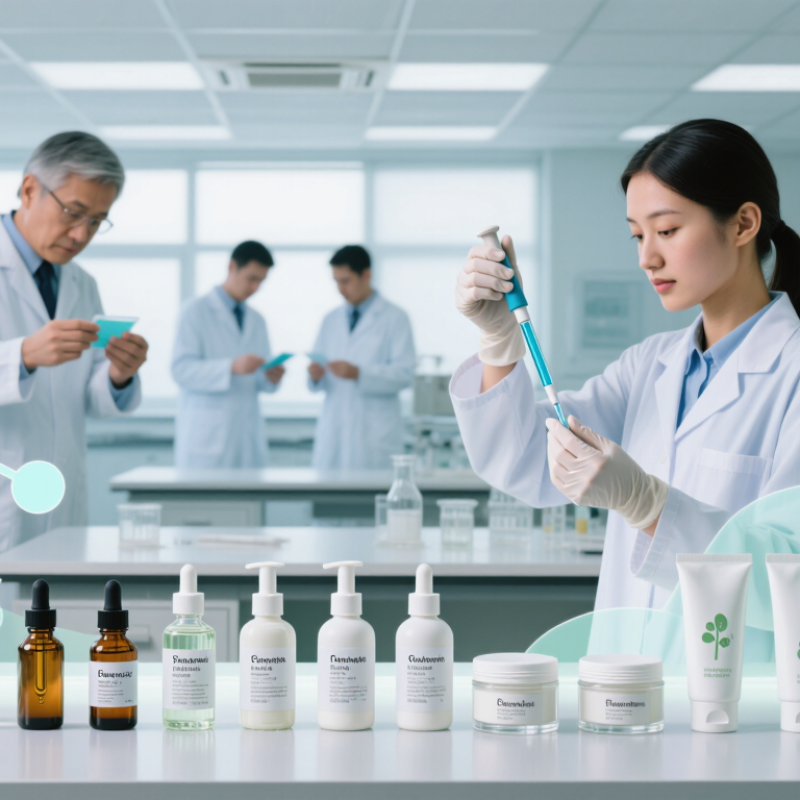
In China, private label skincare means a manufacturer makes products that another company sells under its own identity. The work may include formula development, ingredient sourcing, testing, filling, and packaging. With OEM production, a buyer often supplies a defined formula or specification; ODM services may include a manufacturer’s existing or developed formula. The boundary is not always neat. Ask who owns the formula, what testing supports its claims, and which party controls batch records before signing.
The market is substantial, but category size is not the same as private-label demand. China’s National Bureau of Statistics reported cosmetics retail sales of RMB 414.2 billion in 2023, down 5.1% year on year. The figure describes the wider cosmetics market, not contract manufacturing. Under China’s Cosmetics Supervision and Administration Regulation, effective from 2021, products are subject to registration or filing according to category, while manufacturers need appropriate production licensing. Buyers should check licenses, quality procedures, stability evidence, and traceability for each batch. Look closely. A polished sample does not prove consistent factory output. I would also avoid assuming that a popular formula transfers unchanged across packaging, climates, or use habits; that part deserves real testing.
China’s skincare manufacturing industry is structured around different levels of service, not one standard factory model. Some manufacturers focus on filling and packing formulas supplied by clients. Others provide formulation development, stability testing, packaging coordination, and production under one roof.
The National Bureau of Statistics of China reported cosmetics retail sales of RMB 414.2 billion in 2023, up 5.1% year on year. This is a demand-side measure, not factory output. Still, it helps explain why manufacturers often build capacity for varied product formats and order sizes.
For private-label projects, the practical differences are visible on the production floor. One facility may run small batches in glass jars, while another is optimized for high-volume bottles and automated filling. Many suppliers operate as OEM or ODM partners, though these labels do not guarantee the same depth of technical support. Buyers should check who owns formula documentation, how sample revisions are recorded, and whether quality checks cover bulk product as well as finished packs. The boundary between a development partner and a contract producer is not always neat. Ask for evidence, not just a polished capability sheet. A factory visit can clarify what a brochure leaves out.
The Top 10 Private Label Skincare Manufacturers in China should be assessed by more than catalog size. A useful shortlist compares formulation support, production capacity, quality systems, packaging options, and communication. The ranking should reflect these capabilities, not imply an independently verified sales order. Details matter.
Grand View Research estimated the global skincare market at USD 146.7 billion in 2023, with continued growth projected. McKinsey’s 2023 beauty industry analysis also forecast roughly 6% annual growth through 2027. These figures point to opportunity, but they do not guarantee demand for any individual product. Buyers should request current capacity data and test samples before committing to large orders.
During factory reviews, examine batch records, ingredient traceability, stability testing, and the cleanliness of filling areas. Ask how the manufacturer handles formula revisions and packaging defects. A reliable supplier should explain these processes clearly and provide relevant quality documentation. One caveat: factory presentations can look polished, while day-to-day execution varies. Verify claims through audits, sample testing, and written specifications before selecting a partner.
| No. | Evaluation Dimension | What to Check | Why It Matters |
|---|---|---|---|
| 1 | Regulatory readiness | Confirm the supplier can provide product formulas, ingredient information, safety assessment materials, and documentation needed for the intended sales market. | Cosmetic requirements differ by destination. Documentation and product compliance should be checked for each market and product. |
| 2 | Manufacturing quality system | Request current certificates, their scope and validity dates, plus written quality procedures and audit information. | A certificate should be verified with its issuer and checked against the actual facility and product scope. |
| 3 | Product development capability | Ask whether the supplier offers formula development, customization of existing formulas, or both, and clarify ownership and change-control terms. | Development options affect project timelines, customization, and rights to use or modify a formula. |
| 4 | Product-category fit | Review documented experience with the requested formats, such as creams, lotions, serums, cleansers, or masks. | Relevant process experience can help assess whether the facility and equipment suit the product brief. |
| 5 | Testing and product stability | Ask for the proposed testing plan, stability data, packaging compatibility assessment, and available microbiological testing records. | Testing helps evaluate product quality over time and compatibility between the formula and its packaging. |
| 6 | Ingredient traceability | Check how raw materials are approved, documented, sourced, and traced by batch, including the handling of supplier changes. | Traceable records support investigations and consistent control of incoming materials. |
| 7 | Minimum order quantity | Obtain written minimums for formula, packaging components, and finished goods, including any pilot or sampling quantities. | Minimums can vary by formula and packaging, so a single general figure may not represent the full project cost. |
| 8 | Packaging and filling capability | Confirm supported container types, filling formats, decoration options, component sourcing, and responsibility for packaging compatibility checks. | Packaging choices affect filling feasibility, product protection, appearance, and lead time. |
| 9 | Production planning and lead times | Request a project schedule covering sampling, revisions, material procurement, production, quality release, and shipment preparation. | Lead times depend on approvals, component availability, testing, and production scheduling; confirm them for each order. |
| 10 | Commercial terms and communication | Review quotations, payment terms, change-order procedures, quality agreements, and the named contacts responsible for the project. | Clear written terms help define responsibilities, manage changes, and reduce misunderstandings during production. |
When comparing China’s top 10 private label skincare manufacturers, look beyond product catalogs. Check whether each facility can handle your formula, packaging, production volume, and launch schedule. Ask for recent examples of similar projects, not just polished sample jars. Small details matter: Can the team explain how it controls filling temperature or prevents formula separation?
Compliance should be documented and specific. Request current quality certificates, product specifications, ingredient records, and batch traceability procedures. Ask how stability and compatibility tests are performed, and whether you can review sample reports. A certificate alone does not prove that every process is well managed. Verify its scope and validity with the issuing body where possible. Check that proposed packaging and product claims suit your intended sales markets, and get qualified regulatory advice before launch.
Communication is part of capability. Send the same brief to each manufacturer, including target texture, package type, forecast volume, and required testing. Compare response times and whether answers address your actual questions. A neat factory tour can still leave gaps. I would want to see how deviations are recorded, who approves changes, and how delayed materials are handled. Price matters, of course, but a low quote may exclude testing or inspection. I have to admit, comparison tables can make uncertain judgments look too precise; keep notes on unanswered questions and confirm key promises in writing.
Choosing among China’s top private label skincare manufacturers starts with your product brief, not a price list. Define the formula type, target packaging, expected order volume, and intended sales markets. Then ask each manufacturer for its production scope, quality-control procedures, minimum order quantities, and realistic lead times. Request recent, relevant documentation, such as ingredient specifications, batch records, and test reports. Check that the records match the product and facility being offered. Ask for a factory visit or a live video walkthrough. Look closely at storage areas, filling lines, and how staff handle samples. Details matter.
Test a sample before discussing a large order. Check its texture, scent, dispensing, and packaging after repeated use and temperature changes. A polished sample is not proof of consistent bulk production; it is one data point. Ask how the manufacturer handles rejected batches, formula changes, and delayed materials. Put agreed specifications, inspection steps, payment milestones, and ownership of custom formula work in writing. Keep communication practical: share a clear product brief and ask for written answers. Small misunderstandings happen. Notice how quickly they are corrected, not just how warmly a sales contact responds. A careful partnership needs records, open questions, and room to revise assumptions.
This website uses cookies to ensure you get the best experience possible. Learn more.