How to Choose the Best Ride On Toy for Kids?

Choosing the right ride on toy for kids can feel overwhelming. With so many options available, parents often wonder which one will best suit their child's needs. A ride on toy not only provides entertainment but also encourages physical activity and imaginative play. They come in various styles, from cars to animals, each designed for different age groups and interests.

Safety is paramount when selecting a ride on toy. Checking weight limits, stability, and age recommendations can prevent accidents. Materials used in the toy should be durable, ensuring longevity and safe use. However, it's easy to overlook details when caught up in the excitement of choosing a new toy. Reflecting on your child's preferences and abilities can help narrow down the choices significantly.

Moreover, consider the environment where the ride on toy will be used. Some toys are better for indoor spaces, while others thrive outdoors. This can impact your child's experience and enjoyment. Remember, a well-chosen ride on toy not only entertains but also fosters creativity and gross motor skills. Take your time to evaluate various options, keeping in mind the balance between fun and safety.
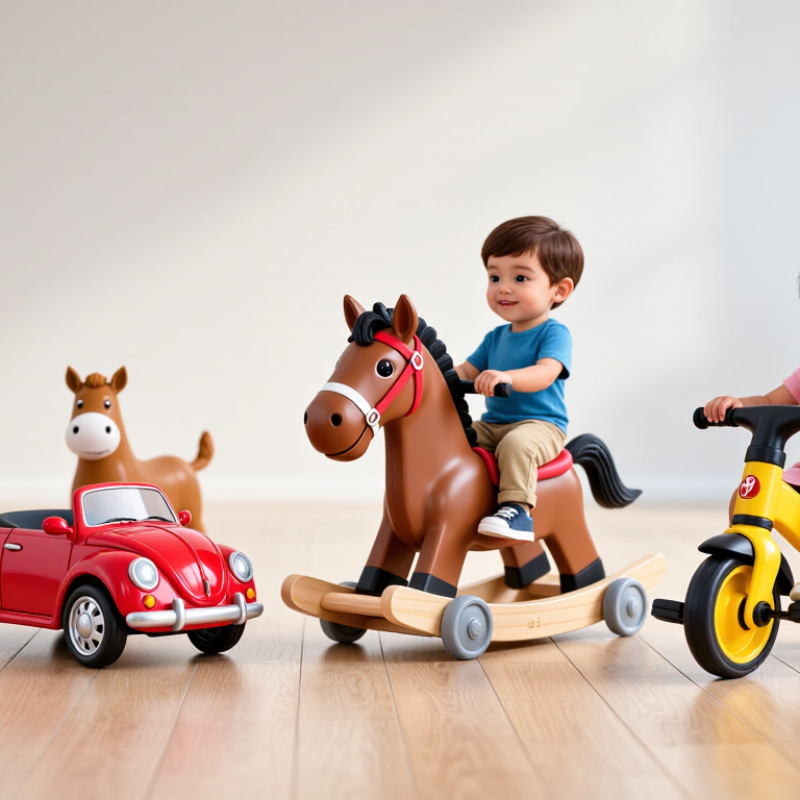
How to Choose the Best Ride On Toy for Kids?

Understanding Ride-On Toys and Their Main Types

Ride-on toys are best understood by how they move and what skills they ask children to use. Foot-to-floor models let toddlers push along with their feet, making them simple to steer on flat ground. Pedal-powered toys require coordinated leg movement and usually suit children who can reach the pedals comfortably. Battery-powered versions move with a motor, so adults should check speed controls, braking, and the child’s ability to stop reliably. Not all feel alike.

The U.S. Consumer Product Safety Commission estimated 231,700 toy-related injuries were treated in emergency departments in 2023. That figure covers toys broadly, not ride-ons alone, but it supports careful age and skill matching.

For wheeled ride-ons, inspect the manufacturer’s age guidance, weight limit, stability, and intended surface. A toy that rolls smoothly indoors may behave differently on rough pavement. Small details matter. Check that feet can reach the ground or pedals, and that controls feel manageable before regular use. A larger model may appear more durable, yet size alone does not make it safer or easier to handle.

A helmet is sensible for ride-ons used outdoors, especially when they have wheels or higher speeds.

Matching a Ride-On Toy to a Child’s Age and Abilities

A child’s age is only a starting point. Balance, coordination, leg strength, and confidence matter just as much. The CDC’s 2022 developmental milestone guidance lists walking without support by 18 months as a milestone most children reach. That does not mean every toddler is ready to steer a ride-on toy. Watch how your child moves: can they sit steadily, push with both feet, and stop without tipping?

For younger or less confident riders, choose a low, stable toy that moves slowly and lets both feet reach the ground. Keep the first ride on a flat, open surface. Older children may manage steering or pedals, but check whether they can turn, slow down, and follow simple safety directions. A U.S. Consumer Product Safety Commission report estimated 231,700 toy-related emergency department injuries in 2023. The estimate covers many toy types, not ride-ons alone, but it is a reminder to supervise play and match equipment to ability.

Fit can change quickly. Recheck seat height and controls as your child grows, and stop using a toy they can no longer control comfortably. A helmet may be appropriate for faster or wheeled models. Still, no checklist replaces watching the child ride. Some children need more time. That is normal.

Choosing Between Manual, Battery-Powered, and Pedal Models

Manual, battery-powered, and pedal ride-on toys suit different children and play spaces. Start with the child’s age, coordination, and usual riding area. A push-powered model gives children direct control and needs little setup. It works well indoors or on smooth paths, but rough ground can make steering tiring. Not effortless.

Battery-powered models can help children who tire quickly or enjoy longer rides. Check the toy’s age and weight limits, speed settings, and charging instructions before buying. A slow model may still feel fast to a cautious child. Keep rides on flat, open surfaces, and supervise closely; motors do not make steering skills appear overnight.

Pedal models encourage children to coordinate steering with leg movement. They need enough room to turn, and the seat and pedals should fit comfortably. Let the child try a few turns, if possible. Watch for knees crowding the steering wheel or feet slipping off the pedals. I would not assume a child is ready just because they can pedal a bicycle; these skills overlap, but they are not identical. A little hesitation during a test ride can be useful information.

Assessing Safety, Durability, and Where the Toy Will Be Used

Choosing a ride-on toy starts with the child, not the color or extra features. Check the maker’s age and weight guidance, then consider whether your child can sit steadily and reach the controls. A broad wheelbase and a low seat can help reduce tipping, but they do not make every surface safe. Inspect the steering, fasteners, and any small detachable parts. Look for smooth edges and sturdy joints. Give the toy a gentle push before use. No wobble? Good, but check it again after regular play; parts can loosen over time. A showroom test alone tells you little.

Where the toy will be used matters just as much. Smooth indoor floors call for wheels that grip without leaving marks, while patios and paths need wheels suited to rougher surfaces. Grass, gravel, and steep driveways can make steering harder than expected. Keep early rides on a flat, clear area, away from stairs, pools, and vehicle traffic, and supervise closely. A helmet may be appropriate for some ride-on styles; check the toy’s instructions and fit protective gear correctly. It is easy to assume “slow” means harmless. It doesn’t. Durability also depends on storage: rain and strong sun can wear down materials, so bring the toy indoors when practical. A quick check before each ride is sensible, even if it feels fussy.

Comparing Features and Costs to Find the Right Fit

When comparing ride-on toys, look beyond the sticker price. A low-cost model may have a short battery run time, while a higher price may reflect adjustable speed settings or sturdier tires. Check the listed age, weight, and charging requirements against your child’s needs. That matters.

Think about where the toy will be used. Small plastic wheels can work well on smooth floors, but may struggle on grass or uneven paths. A wider seat, easy-to-reach controls, and a stable base can make daily play more comfortable. For younger children, simple steering and a slow starting speed may be more useful than extra lights or sounds. Not always.

Ongoing costs deserve a place in the comparison. Consider replacement batteries, charging time, assembly, and whether the toy needs much storage space. A useful check is to measure the doorway or garage area before buying; an exciting toy can become awkward if it has nowhere to go. Read the manual for maintenance details and follow the maker’s age and weight limits. I would not assume the most expensive option is automatically the safest or best fit. Sometimes, the simpler model suits a child’s play space better.

Article Source:

This website uses cookies to ensure you get the best experience possible. Learn more.