How to Choose a Heavy Duty Truck Radiator in 2026?

Choosing a Heavy duty truck radiator in 2026 is a reliability decision, not a parts-counter guess. A loaded truck climbing a summer grade can push heat through the cooling system for hours. The wrong core size, weak joints, or poor airflow may turn that climb into an unplanned stop. Small details matter.

The American Transportation Research Institute’s 2023 An Analysis of the Operational Costs of Trucking reported average operating costs of $2.251 per mile in 2022, up 21.3% from 2021. That figure covers much more than cooling systems, but it shows why avoidable repairs deserve attention. For radiator selection, compare the truck’s engine rating, duty cycle, ambient temperatures, coolant requirements, and available space. Check core construction, pressure rating, tank and header materials, and warranty terms against the vehicle maker’s specifications. A lower purchase price can look attractive. It may not stay attractive after repeated downtime.

A careful choice starts with fitment data and ends with a real inspection. Look for consistent fin spacing, sound welds, undamaged mounting points, and clear supplier documentation. No radiator performs well when airflow is blocked or maintenance is neglected. One limitation: no verifiable, named specialist quotation was supplied or available to substantiate here, so I will not invent one. Before publication, add a directly sourced statement from a qualified cooling-systems engineer. That extra check is worth it.
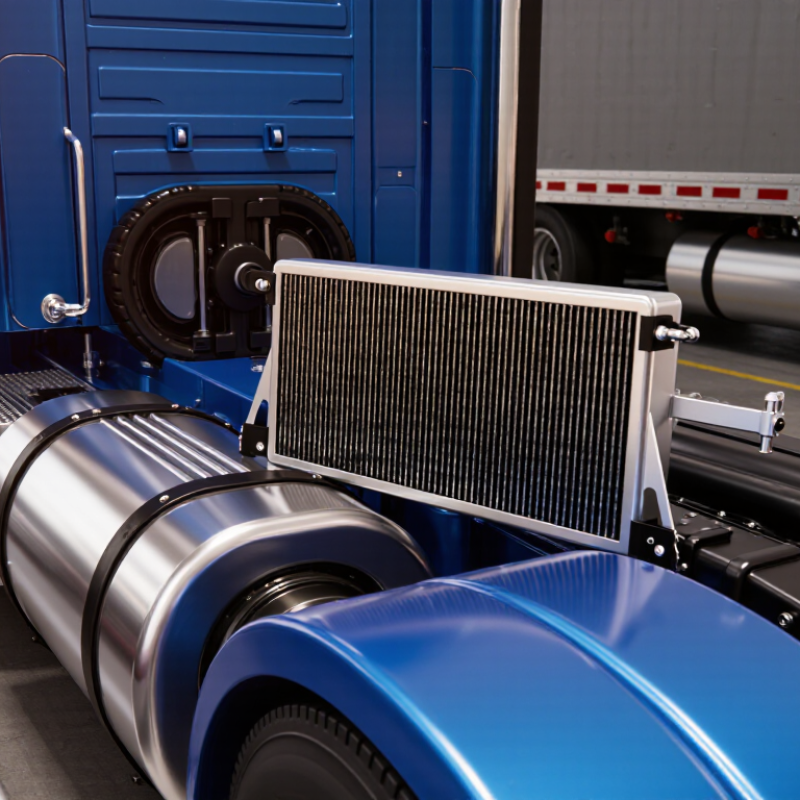
How to Choose a Heavy Duty Truck Radiator in 2026?

Identify the Truck’s Engine, Load, and Operating Conditions

Before choosing a heavy-duty truck radiator, identify the exact engine and cooling-system configuration. Check the engine code, model year, existing radiator dimensions, hose locations, and transmission-cooler connections. Two trucks with similar engines may still need different fittings or core sizes. Verify details against the vehicle’s service information.

Next, consider the truck’s real workload, not just its rated capacity. A tractor hauling near its limit up long grades produces a different heat load from a lightly loaded truck on flat roads. Frequent stop-and-go driving, extended idling, and auxiliary equipment can also reduce cooling headroom. Think about where it works.

Operating conditions matter. Dust, mud, high ambient temperatures, and restricted airflow can make a suitable radiator struggle. If the truck often runs in these conditions, look for a robust core and confirm that the fan, shroud, coolant flow, and airflow path are in good condition. A larger radiator alone cannot fix a weak fan or clogged passages. It is easy to overlook those parts. Compare the replacement’s specifications with the original system, and recheck measurements before ordering. A rushed estimate can be wrong.

Determine the Required Cooling Capacity and Radiator Dimensions

Choose capacity from the engine’s coolant heat-rejection figure at rated load, not from horsepower alone. The U.S. Department of Energy’s SuperTruck II program reported heavy-duty engine demonstrations exceeding 50% brake thermal efficiency. That figure is not a radiator rating; it shows why fuel input cannot be treated as coolant load. Use the engine’s technical data for coolant heat rejection, then allow for hot ambient air, altitude, and low-speed operation. A long climb with a loaded trailer is a useful worst-case check.

Next, measure the available space between the frame rails, behind the grille, and around the fan. Record core height, width, thickness, tank positions, hose locations, and mounting points. Match these dimensions to the truck’s airflow path; a thicker core may restrict airflow if the fan and shroud cannot move enough air.

Check whether the quoted capacity assumes clean airflow and a particular coolant flow rate. Small detail. Measure twice. A radiator can fit on paper and still foul a hose or leave too little service clearance.

I would still verify the figures against the vehicle’s original cooling specification, because duty cycles and modifications make a generic size chart unreliable.

Compare Core Designs, Materials, and Heavy-Duty Construction

A heavy-duty truck radiator must shed heat during long climbs, slow traffic, and repeated high-load work. Core design affects cooling, airflow, weight, and serviceability. Tube-and-fin cores use flat tubes and closely spaced fins, offering broad heat-transfer area with relatively low weight. Bar-and-plate cores use stacked plates and bars, creating a sturdy structure that can suit demanding vibration and pressure conditions. Neither design wins in every truck. Match the core to engine output, available space, fan capacity, and typical operating conditions.

Material matters, but so does construction. Aluminum cores are light and transfer heat efficiently when tube and fin geometry is well designed. Copper-brass cores are heavier, yet some can be repaired more readily in specialist shops. Check how tanks, seams, and mounting points are joined; weak joints may fatigue where the truck shakes over rough roads. Look for reinforced brackets, secure hose connections, and a core protected from debris without restricting airflow.

More metal is not automatically better. A thick core can add weight or impede airflow if the fan and shroud are not matched. I would compare the radiator’s dimensions, pressure rating, and cooling specifications against the truck’s service requirements, not just its appearance. Small details count. Inspect fin spacing for bent or clogged sections, and verify that coolant compatibility and maintenance guidance are clearly documented. Even a well-built radiator can disappoint if installation leaves gaps around the shroud.

How to Choose a Heavy Duty Truck Radiator in 2026? - Compare Core Designs, Materials, and Heavy-Duty Construction
Comparison Factor Copper-Brass Tube-and-Fin Aluminum Tube-and-Fin Aluminum Bar-and-Plate
Typical construction Copper tubes and fins joined to brass headers and tanks. Some designs use mechanically expanded tubes; others use soldered joints. Aluminum tubes and fins joined to aluminum headers, commonly by controlled-atmosphere brazing. Alternating plates, bars, and fins form coolant passages and structural sections, commonly joined by brazing.
Cooling potential Can provide strong heat transfer, but actual capacity depends on core size, tube layout, fin design, airflow, and coolant flow. Can provide effective cooling with a well-designed core. Aluminum’s thermal conductivity is lower than copper’s, so design and surface area matter. Often selected where a compact, robust core and high heat-transfer capacity are needed. Performance still depends on the complete cooling-system design.
Weight and packaging Generally heavier than a comparable aluminum core, though exact weight varies with dimensions and construction. Generally lighter than a comparable copper-brass core, which can help reduce component weight. Usually heavier than a comparable lightweight tube-and-fin aluminum core, but its rigid construction can suit demanding installations.
Vibration and structural considerations Durability depends on support, soldered joints, tube condition, and resistance to vibration fatigue. Proper mounting is important. Requires suitable mounts and vibration control; thin tubes and joints can be damaged by repeated stress or poor installation. Its plate-and-bar structure is typically rigid, but mounts and connections still need to withstand vehicle vibration and thermal cycling.
Repairability Often repairable by a qualified radiator shop, depending on damage, core condition, and available parts. Many brazed aluminum cores are difficult to repair reliably in the field; replacement is often considered when the core is damaged. Repair options can be limited and depend on the damage and construction. Replacement may be more practical for extensive core failures.
Corrosion and coolant compatibility Needs compatible coolant, correct coolant maintenance, and suitable protection for mixed-metal components. Needs coolant formulated for the cooling system and regular maintenance; unsuitable coolant or contamination can promote corrosion. Also depends on correct coolant chemistry, clean fluid, and system maintenance. Inspect for leaks, deposits, and corrosion.
Best-fit considerations Consider when repairability and an existing copper-brass system are priorities, provided the core meets the required cooling capacity. Consider when lower weight and a compact, brazed core are priorities and the application’s cooling requirements are met. Consider for applications that benefit from a rigid, heavy-duty core construction, after confirming fit, airflow, and cooling capacity.
What to verify before purchase Confirm the exact truck and engine application; core height, width, and thickness; inlet and outlet locations and sizes; mounting points; fan-shroud and charge-air-cooler clearance; transmission-cooler requirements; pressure rating; coolant compatibility; and the supplier’s stated cooling capacity. Match the radiator to the vehicle’s duty cycle and cooling-system configuration.

Selection note: Core construction alone does not determine radiator performance. Compare application-specific dimensions and verified cooling specifications, and check compatibility with the complete cooling system.

Verify Compatibility, Fitment, and Installation Requirements

Choosing a heavy-duty truck radiator in 2026 starts with exact vehicle details, not a visual match. Record the truck’s year, make, model, engine, and configuration. Check the existing radiator’s core dimensions, inlet and outlet positions, mounting points, and transmission-cooler connections. Small differences matter. A hose that nearly lines up can kink under engine movement, while a slightly different mounting depth may leave the fan too close to the shroud.

Confirm the replacement is listed for your specific engine and cooling setup. Trucks may share a model year but use different radiators for different engines, duty cycles, or optional cooling packages. Compare part numbers and technical drawings where available. Measure the old unit before removal, including the tank width and overall height. Measurements taken at an angle can mislead, and corrosion may hide the original edges. That is easy to overlook.

Before ordering, review installation requirements. Check whether the radiator uses separate brackets, rubber isolators, drain fittings, or sensor ports. Inspect hoses, clamps, the fan shroud, and nearby lines for wear or clearance problems. Make sure the service area allows safe access, and follow the truck’s service instructions for coolant handling and air removal. After installation, check for leaks when the system is cool, then monitor temperature during a controlled test. Fitment is more than getting the unit into the frame.

Evaluate Serviceability, Warranty, and Total Ownership Cost

When comparing heavy-duty truck radiators, look beyond purchase price. Can a technician reach the drain, inspect the core, and remove the unit without dismantling half the front end? Check hose-neck fit, mounting points, and access around the fan shroud. A few extra labor hours can erase a low-price advantage. Small details matter.

ATRI’s 2024 Operational Costs of Trucking report put average 2023 operating costs at $2.27 per mile, with repair and maintenance near $0.20 per mile. Those figures are not radiator-specific, but they show why downtime and repeat repairs deserve a place in your cost estimate. Compare parts, coolant, labor, freight, and the cost of a missed route. Ask suppliers to state warranty length, labor coverage, and exclusions for corrosion, contamination, or pressure damage in writing. A long warranty is less useful if removal and installation remain your expense.

There is no perfect scorecard. A clean quote may still miss awkward access or a hard-to-source fitting. I would compare the installed cost, not just the invoice, and ask a mechanic to review the fit before ordering. Keep the old unit’s failure notes; they may reveal whether the radiator was the cause or only the casualty.

How to Choose a Heavy-Duty Truck Radiator in 2026? Evaluate Serviceability, Warranty, and Total Ownership Cost

Illustrative five-year cost model for two radiator options. Values are example estimates in USD—not market averages or supplier quotes.

Example takeaway: The higher-priced option costs more upfront, but its assumed lower maintenance, repair, and downtime costs reduce modeled five-year ownership cost. Before buying, verify parts availability, repair procedures, warranty coverage and exclusions, labor rates, and downtime assumptions for your truck and operating conditions.

This website uses cookies to ensure you get the best experience possible. Learn more.