How to Choose a Tricycle Electric Bike at Canton Fair?
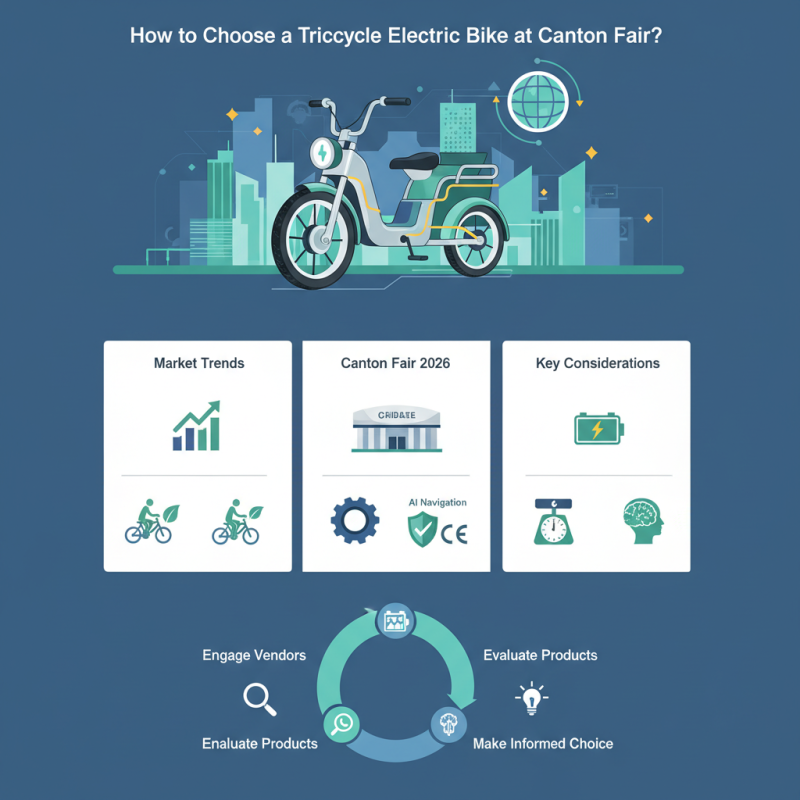
The Tricycle Electric Bike market is witnessing significant growth, driven by urban mobility and eco-friendly transportation trends. According to industry reports, the global electric bike market is projected to reach $23.83 billion by 2027, with tricycle electric bikes gaining popularity among various demographics. This trend is particularly noticeable in trade exhibitions, such as the Canton Fair, where buyers seek innovations in design and technology.
At the upcoming Canton Fair in April 2026, the focus on advanced manufacturing and smart technology will be crucial for those looking to invest in tricycle electric bikes. Potential buyers should consider the certifications of suppliers, such as ISO and CE, which ensure quality and safety standards. Efficient navigation within the fairgrounds will be enhanced by AI features, helping attendees identify leading manufacturers quickly.
While exploring options, it's essential to examine the finer details, like battery life, weight capacity, and comfort features. Understanding these specifics can influence purchasing decisions. However, challenges remain in discerning reliable suppliers amidst a crowded marketplace, necessitating careful evaluation of offerings. Engaging with different vendors will reveal both strengths and weaknesses in their products, and reflection on these factors is necessary for making informed choices.
Understanding the Basics of Tricycle Electric Bikes
When choosing a tricycle electric bike, understanding the basics is crucial. These bikes are increasingly popular, especially among urban commuters. According to recent industry reports, the global electric tricycle market is projected to reach $1.8 billion by 2026, driven by sustainability and convenience.
Tricycle electric bikes usually come in several configurations. They can have a two-wheel front or back design. The choice impacts stability and cargo capacity. Consumers often overlook the importance of weight. A heavier bike may handle differently than a lighter one. It's essential to consider your local terrain. Hilly areas may demand stronger motors.
Battery life is another key factor. Many bikes have lithium-ion batteries, which vary in capacity. Data shows that most models offer ranges between 30 to 70 miles per charge. However, real-world conditions affect this significantly. Weather, rider weight, and terrain play roles. Sometimes the advertised range can deceive. Riders need to think about their daily needs carefully.
Key Features to Consider When Selecting a Tricycle Electric Bike
When selecting a tricycle electric bike, consider several key features. The battery capacity is essential. A larger battery allows for longer rides and less frequent charging. Most users prefer a range of at least 30 miles. The motor power also plays a significant role. A 250W to 500W motor is usually efficient for urban commuting.
Another critical factor is the frame structure. A sturdy frame can provide safety and stability. Make sure it can support your weight comfortably. Check the wheel size as well. Larger wheels can handle rough terrains better, providing a smoother ride. Comfort is key; try different seats to find the most suitable one for you.
Brakes are often overlooked. Opt for reliable braking systems, especially with heavier tricycles. Hydraulic brakes can offer better stopping power. Additionally, consider the overall design. A stylish tricycle might catch attention but ensure it meets your functional needs. Sometimes, getting all features right means compromising on aesthetics; reflect on what matters most to you.
How to Choose a Tricycle Electric Bike at Canton Fair? - Key Features to Consider When Selecting a Tricycle Electric Bike
| Feature | Description | Importance |
| Motor Power | Typically ranges from 250W to 750W. Higher wattage offers more power for hills and heavier loads. | High |
| Battery Type | Lithium-ion batteries are preferred due to their long life and light weight. | High |
| Range | The distance the bike can travel on a single charge, typically 30-70 miles. | Medium |
| Weight Capacity | Maximum weight limit that the tricycle can support, often up to 400 lbs. | High |
| Braking System | Disc brakes are recommended for better stopping power compared to rim brakes. | High |
| Foldability | Some models can be folded for easier storage and transport. | Medium |
| Comfort Features | Look for adjustable seats and ergonomic design for a comfortable ride. | High |
| Price | Price ranges depend on features, generally from $600 to $2000. | Medium |
Assessing Your Needs: Passenger Capacity and Usage
When selecting a tricycle electric bike, it's crucial to assess your needs. Passenger capacity and usage play a vital role in this choice. The market report indicates that consumer preferences vary significantly. Many users prioritize comfort for both short and long rides. Knowing how many passengers will frequently use the bike is essential.
If you transport children or goods, prioritize larger capacity models. A tricycle with a spacious rear can accommodate more. You might need features like adjustable seating and storage options. According to industry data, models with a payload capacity of over 500 pounds are increasingly popular. They offer reliability for various uses, from family outings to delivery services.
Tips: Always consider terrain types. City dwellers often face uneven roads. If you’re in such an area, focus on bikes with robust suspension systems. Review local regulations too. Some regions might have restrictions on electric bike types. Reflecting on your environment helps ensure you choose wisely.
Evaluating the Performance Specifications of Electric Tricycles
When evaluating electric tricycles, performance specifications are crucial. Key parameters include battery capacity, motor power, and weight. A quality battery typically ranges from 36V to 48V. This voltage impacts range significantly. Reports indicate a 48V system can offer up to 50 miles on a single charge. It’s essential to assess the real-world usability, as advertised ranges often differ from actual performance.
Motor power also plays a vital role. Most electric tricycles feature motors between 250W and 750W. Higher wattage generally means better performance on inclines and rough terrains. However, it may also increase weight and reduce maneuverability. A 500W motor strikes a balance between power and agility, making it a popular choice among riders. Keep in mind that motor efficiency can fluctuate based on load and conditions.
Weight is another important factor to consider. Heavier tricycles might provide stability but can be less energy-efficient. The optimal weight for maneuverability is around 50-70 lbs. However, durability can often require heavier materials, which complicates this balance. Potential buyers should strive to find a tricycle that offers both strength and weight efficiency. This criterion can heavily influence overall rider satisfaction.
Navigating the Canton Fair: Tips for Finding the Right Supplier
Navigating the Canton Fair can be overwhelming. This massive trade show provides a unique opportunity to find suppliers for tricycle electric bikes. With over 25,000 exhibitors, it's crucial to have a plan. According to industry reports, the electric bike market is expected to grow by 7.5% annually. Finding the right supplier can significantly impact your business.
Tips for efficiently navigating the fair include prioritizing your needs. Make a list of features you want in an electric bike. This can include battery life, weight capacity, and design. Don't hesitate to approach multiple suppliers. Some may offer better terms or products. Take photos to compare options later.
Observe suppliers’ booths closely. Are their products displayed well? Are they responsive? A supplier's presentation can reflect their professionalism. Sometimes, a seemingly small detail can be a red flag. Keep your communication clear. Misunderstandings can lead to missed opportunities. The right supplier should understand your language and expectations.
In the end, remember to reflect on your experiences. Each encounter can provide insights into the market's direction. Perfection is elusive in trade shows. Aim for informed decisions rather than flawless executions. Embrace the journey; it will lead to valuable connections.