What Are Decorative Plush Toys Used For?
Decorative Plush Toys do more than fill an empty shelf. They bring softness, color, and personality to bedrooms, nurseries, reading corners, and living rooms. A plush fox on a bedside table can make a room feel warmer. A tiny bear beside framed photos adds a familiar touch. These toys can also complement themed displays, seasonal decorations, and thoughtful gifts. Their appeal is practical as well as emotional: many are lightweight, easy to move, and simple to store. Small details matter. Texture, stitching, size, and color can affect how well a toy suits a space. Some pieces are designed mainly for display, while others are made for cuddling too. Check before choosing.
This guide explores common uses, from personal room styling to shop displays, party tables, and cozy spaces. It also considers how fabric, color, size, and care instructions affect a toy’s suitability. For example, a pale plush rabbit may look lovely on a nursery shelf, but it can show dust sooner than a darker design. Follow the maker’s care guidance, and keep display pieces away from spills, direct heat, and crowded edges. For young children, check the product label for age guidance and small-part details. A decorative item should not automatically be treated as a sleeping toy. Not every room needs one. Sometimes a single well-chosen plush toy works better than a crowded collection. Decorating is personal, and no guide can predict every household’s taste or needs. These practical points can help readers decide where plush toys add charm, function, or simply a little softness.
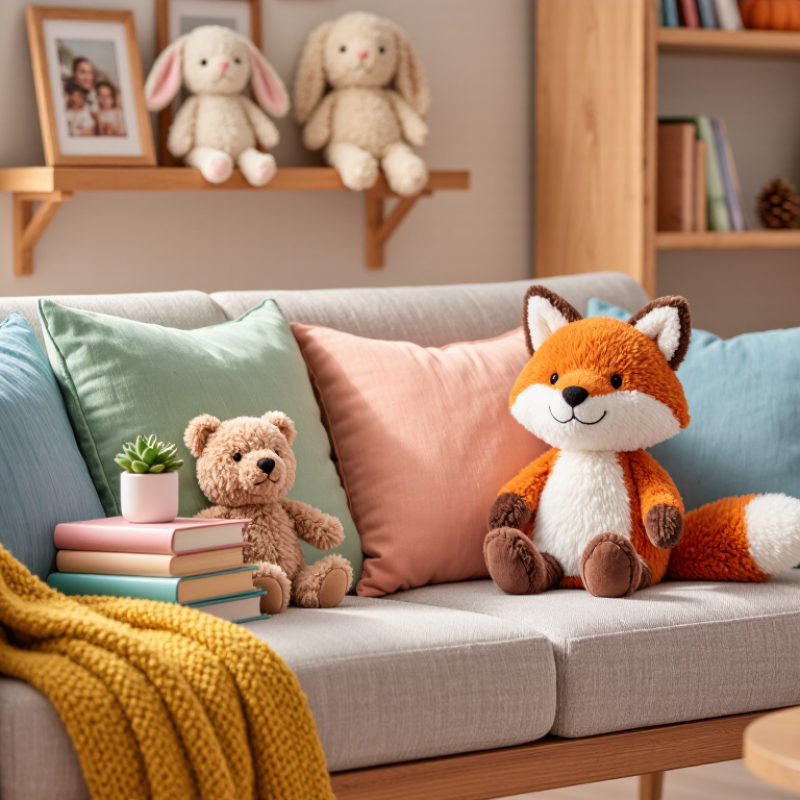
What Defines a Decorative Plush Toy
A decorative plush toy is a soft, stuffed object designed to contribute to a room’s appearance, not just to be handled during play. Its defining features are visible design choices: a recognizable shape, coordinated colors, embroidered details, and fabric suited to display. It might sit on a nursery shelf, soften a reading nook, or add texture to a bed. Some are still cuddled or carried around; the boundary is not always neat. That distinction matters.
Market figures show the scale of the category, but not every item’s purpose. Grand View Research estimated the global stuffed and plush toys market at USD 11.4 billion in 2022 and projected a 7.2% compound annual growth rate from 2023 to 2030. This market estimate covers plush toys broadly, rather than decorative pieces alone. In practice, assess a toy by its intended setting, finish, and care needs. A long-pile surface may gather dust, while small stitched features can make an object feel more crafted than a standard play toy. Still, appearance alone does not prove durability or safety; check the maker’s age guidance and care instructions before placing it within a child’s reach.
How Plush Toys Add Color, Texture, and Character to a Space
Decorative plush toys can soften a room while adding color and personality. A mustard-yellow bear brightens a pale shelf. A moss-green frog brings a playful note to a reading corner. Their fuzzy surfaces also contrast with smooth wood, glass, or cotton, making a space feel more layered. Even one small toy can make a neat display feel less formal.
Tips: Choose a color already found in the room, such as a cushion or rug. Vary sizes, but leave breathing space around each toy. Keep frequently handled plush toys within easy reach, and check care labels before washing. A crowded shelf can feel busy.
Texture matters, too. Long, shaggy fur looks cozy beside crisp bedding, while short plush feels tidier on a desk. Try placing a toy near a lamp or stack of books to give an empty corner more character. In my experience, rotating a few pieces seasonally keeps a display fresh without buying more. Still, matching every toy perfectly can make a room feel staged. A slightly unexpected color often works better.
Where Decorative Plush Toys Are Commonly Displayed
Decorative plush toys are often displayed on beds, sofas, and bedroom chairs, where their soft shapes make a room feel more welcoming. On a bed, place one or two near the pillows rather than covering the whole surface. This keeps the arrangement comfortable and leaves room for everyday use. A small plush toy can also sit on a nightstand beside a lamp or a stack of books.
Small details matter.
Keep fabric away from candles, heaters, and other sources of heat.
Living rooms offer another natural place for plush toys. A toy on an armchair or a low shelf can add a gentle accent without competing with framed art or cushions. In children’s rooms, open shelves make toys easy to see and put back; avoid placing heavy objects above them.
Entryway benches can work too, though toys there may collect dust or get bumped by bags. Rotate pieces occasionally, especially near sunny windows, since strong light can fade fabric over time. Display choices are personal, and a perfectly arranged shelf may feel less inviting than one slightly lived in.
How Plush Toys Reflect Personal Interests and Memories
Decorative plush toys often reveal what someone enjoys without needing a label. A soft whale beside a stack of travel books may hint at a love of the sea. A tiny mushroom on a desk might reflect an interest in forests, illustration, or simply its cheerful shape. Small details matter. A faded ribbon, hand-sewn patch, or slightly lopsided smile can make a toy feel chosen rather than merely displayed.
Some plush toys hold memories of particular people and places. A well-worn bear from childhood may sit on a shelf beside newer souvenirs, connecting different parts of a person’s life. A toy bought during a family trip can bring back a hotel room, a rainy afternoon, or a shared joke. Even the way it is arranged can carry meaning: tucked beside a reading lamp, it becomes part of a familiar evening routine. The connection may be personal, even if visitors do not notice it.
Interests and memories can change, too. A plush animal once linked to a favorite story might later remind someone of the friend who gave it to them. That is enough. Keeping a toy clean and away from direct sunlight can help preserve its color and fabric, especially if it is older or delicate. Still, display choices are rarely perfect; a toy may collect dust or look out of place for a while. That small imperfection can be part of its story.
What to Consider When Choosing and Caring for Display Plush Toys
Decorative plush toys can soften a room, add color to a shelf, or mark a cherished memory. When choosing one for display, consider its size, fabric, and how it will sit. Measure the shelf depth before buying; a large toy can block books or lean forward. Look for even stitching, firmly attached features, and fabric that feels pleasant without shedding. For sunny windowsills, be cautious: repeated direct sunlight may fade colors. A small, stable seat or clear shelf space helps prevent falls. Dust settles.
Care depends on the material and its care label. For routine cleaning, use a soft brush or clean, dry cloth, working gently around embroidered details. If a spot appears, test a barely damp cloth on a hidden area first. Avoid soaking the toy unless its care instructions allow washing; trapped moisture can affect stuffing and seams. Keep plush displays away from heaters, humid corners, and food spills. Rotate toys now and then so one side does not collect all the light and dust. A spotless display is not always the most welcoming one. Still, a little upkeep can help a toy stay attractive.
What Are Decorative Plush Toys Used For? — What to Consider When Choosing and Caring for Display Plush Toys
| Use or Consideration | What to Look For | Display or Care Tip |
| Room decoration | Choose a color, shape, and size that suit the room and the available shelf, chair, or bed space. | Keep plush toys away from damp areas and prolonged direct sunlight, which can affect fabric color and condition. |
| Personal collections | Consider whether the toy can sit securely and whether its size works with the rest of the display. | Use a stable shelf and leave enough space to avoid crushing or distorting the plush. |
| Gifts and keepsakes | Think about the recipient’s preferences, available display space, and any relevant age or safety guidance on the product label. | Keep care instructions with the toy so the recipient can clean it appropriately. |
| Photography and themed displays | Look for a pose and shape that remain presentable without complicated supports. | Use clean, dry display surfaces and avoid pins or clips that could snag or damage the fabric. |
| Fabric and construction | Check seams, attached details, surface texture, and whether the filling feels evenly distributed. | Inspect periodically for loose seams or damaged parts, especially if the toy is handled often. |
| Cleaning and maintenance | Check the care label before washing; materials and construction determine whether surface cleaning or machine washing is suitable. | For routine upkeep, gently remove dust with a clean, soft brush. Follow label directions and allow the toy to dry fully before displaying it. |
| Storage between displays | Choose a clean, dry storage space that protects the toy from dust, moisture, and excessive pressure. | Store it loosely rather than compressing it for long periods, which can flatten the pile or alter its shape. |