Choosing the right Mountain Bike manufacturer is not simply a matter of comparing logos or counting gears. Global buyers must examine frame design, suspension performance, factory quality, warranty support, and regional service access. A bike that feels excellent on a dry Alpine trail may perform differently on humid forest paths or rough urban roads. Small details matter. Weld consistency matters. So does replacement-part availability.
Gary Fisher, widely recognized as a pioneer of mountain biking, once said, “Mountain biking is a way of life.” That idea remains useful when evaluating manufacturers today. Leading companies should support more than aggressive specifications. They should demonstrate engineering experience, transparent testing, responsible production, and dependable communication with distributors and riders. Buyers also need to consider intended use, including cross-country racing, trail riding, enduro, electric assistance, or recreational cycling.
This guide, “Top Mountain Bike Manufacturers for Global Buyers,” introduces brands with strong industry visibility and practical export potential. It considers product range, material choices, technology, customization, certifications, and after-sales reliability. Reputation alone is not enough. Some famous manufacturers offer excellent performance but limited regional support. Others provide flexible pricing yet require closer quality inspection. That difference can affect ownership for years.
There is no perfect manufacturer.
The most suitable choice depends on terrain, budget, rider expectations, and local market conditions. Readers should verify current specifications and dealer policies before placing orders. Even experienced buyers can overlook shipping damage, service delays, or unclear warranty terms. A careful comparison creates fewer surprises and a more dependable riding experience.
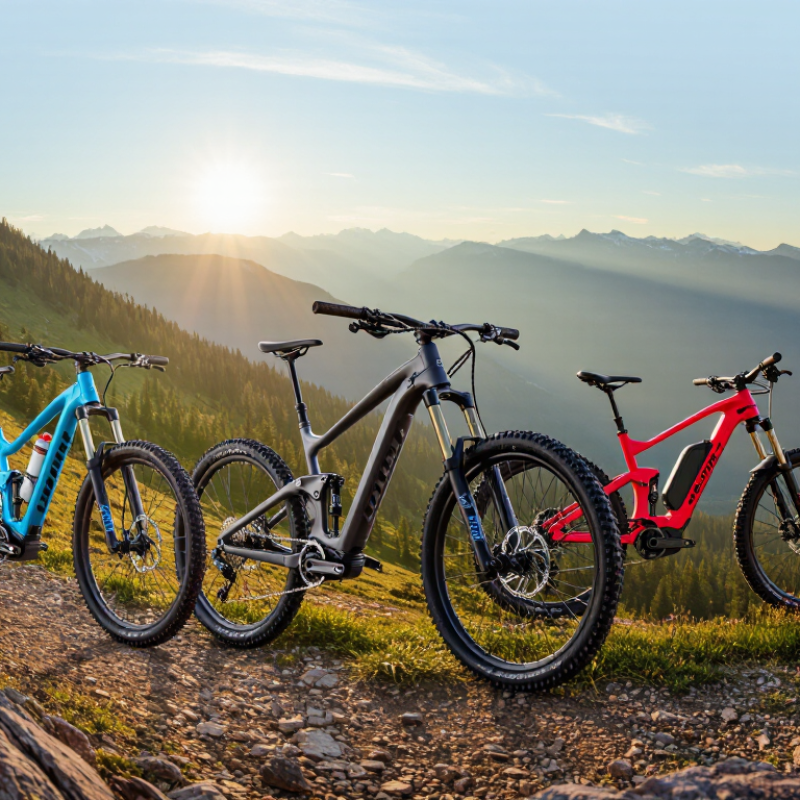
The mountain bike industry serves commuters, trail riders, racers, and rental operators worldwide. Global buyers usually encounter four manufacturer categories: mass-market producers, specialist builders, custom workshops, and contract manufacturers. Each category follows different priorities. Mass-market companies focus on volume and accessible pricing. Specialist builders often develop refined suspension systems, lightweight frames, or trail-specific geometry. Custom workshops offer personal sizing, but production times can be longer.
Contract manufacturers produce frames or complete bicycles for international distributors. Their quality depends on engineering controls, material traceability, and factory inspection. Buyers should examine frame alloy or carbon specifications, weld consistency, bearing seals, and brake performance. A clean weld matters. So does a clear warranty. Reliable suppliers provide test records, replacement-part policies, and support in the buyer’s market. These details often reveal more than attractive product photography.
Electric mountain bikes add motor, battery, and software considerations. Buyers must check charger compatibility, battery certification, service access, and regional transport rules. Product categories can overlap, which makes comparison less simple. A specialist producer may still outsource frames or electronics. A low-cost model may perform well, but its long-term support could be weak. That uncertainty deserves attention. I would request sample units before placing a large order, then test them on wet roots, loose gravel, and repeated climbs. Specifications can look impressive on paper. Real handling may disagree.
Leading mountain bike manufacturers distinguish themselves through engineering discipline, not flashy specifications. Experienced teams test frame stiffness, fatigue resistance, and braking performance across repeated trail conditions. They study muddy climbs, rocky descents, and sudden temperature changes before approving production designs. A reliable manufacturer also explains its testing methods clearly. Buyers should find information about material grades, suspension travel, axle standards, and replacement parts.
Manufacturing quality depends on consistent processes. Skilled technicians inspect carbon layups or aluminum welds under controlled procedures. Precise alignment matters. A small headset or derailleur error can become obvious after several hours on rough terrain. Strong manufacturers use measurement tools, documented inspections, and sample testing from different production batches. They also protect workers and maintain traceable supply chains, which supports long-term reliability for international buyers.
Practical support separates capable suppliers from merely attractive ones. Clear assembly guides, accurate geometry charts, and responsive technical communication reduce costly mistakes. Spare hangers, bearings, and suspension hardware should remain available across markets. Packaging deserves attention too; reinforced corners can prevent damage during long-distance shipping. I have found that impressive prototypes do not always predict dependable ownership. Some manufacturers still improve their quality systems after customer feedback, and that honesty can be more valuable than polished advertising. Ask difficult questions before placing a large order.
European mountain bike manufacturers often emphasize refined handling, lightweight frames, and suspension performance. Their products commonly target trail riders, racers, and premium touring customers. Buyers should inspect frame geometry, service access, and replacement-part availability before ordering. A beautiful frame is not enough.
North American manufacturers usually focus on durable trail bikes, aggressive downhill models, and practical all-mountain designs. Their engineering often suits rocky terrain, long descents, and demanding local riding conditions. Some factories also offer flexible sizing and custom setup support. However, shipping costs and regional warranty limits can change the real purchase price.
Asian manufacturers serve a broad market, from entry-level bicycles to advanced carbon models. Their strengths may include efficient production, varied specifications, and competitive pricing. Buyers should verify testing standards, battery safety for electric models, and the seller’s technical support. Quality can vary between production lines, even within one supplier. That detail deserves attention.
Oceania-based producers often prioritize rugged trail use and corrosion resistance, while Latin American manufacturers may design for mixed urban and mountain conditions. Market focus matters more than origin alone.
I have found that clear after-sales communication sometimes predicts ownership satisfaction better than a polished catalog.
Top Mountain Bike Manufacturers for Global Buyers
Global buyers should compare mountain bike manufacturers through evidence, not polished photographs. Product testing, warranty terms, spare-parts access, and dealer training reveal operational strength. A low factory price can become expensive when a derailleur hanger takes six weeks to arrive.
The World Bicycle Industry Association’s 2024 market overview shows uneven recovery across regions, so local support deserves serious weight. PeopleForBikes’ 2023 participation study reported 112 million U.S. residents rode bicycles in 2022. That figure signals strong demand, but it does not prove every mountain bike segment is growing equally. Grand View Research projects a 7.8% compound annual growth rate for the wider bicycle market from 2023 to 2030. The category boundary matters.
Fit matters more. Compare frame reach, stack, wheel size, suspension travel, and rider weight limits. Then check whether testing follows ISO 4210 requirements and whether replacement parts use common standards. Ask for documented fatigue testing, not vague claims about “race durability.” Numbers can mislead.
I would also score manufacturers on warranty response time, repair manuals, regional warehouses, and crash-replacement policies. For importers, inspect packaging before shipment; crushed dropout areas and loose rotors are practical warning signs. I still tend to overvalue component lists. A lighter drivetrain may impress a spreadsheet while poor assembly ruins the first trail ride. Buyers should request sample units, verify serial-number records, and compare landed cost with three-year maintenance costs.
| Comparison Dimension | Value-Oriented OEM Supplier | Performance-Focused OEM Supplier | Premium Custom Manufacturer | Electric Mountain Bike Specialist |
|---|---|---|---|---|
| Typical product positioning | Entry-level and recreational mountain bikes | Trail, cross-country and all-mountain bicycles | High-specification, lightweight or customized bicycles | Hardtail and full-suspension electric mountain bikes |
| Common frame materials | 6061 aluminum alloy; steel on selected low-cost models | Hydroformed aluminum alloy and carbon fiber options | Carbon fiber, titanium or advanced aluminum alloy | Aluminum alloy is common; carbon fiber is available on premium models |
| Typical wheel sizes | 27.5 in and 29 in; 26 in remains available for some youth or legacy designs | 29 in, with 27.5 in used for smaller frames and some agile trail bikes | 29 in or mixed-wheel configurations depending on geometry | 27.5 in and 29 in; mixed-wheel setups are used on some full-suspension designs |
| Suspension configuration | Front suspension fork, commonly with approximately 80–100 mm travel | Air or coil fork; approximately 100–160 mm travel depending on riding category | Weight-optimized air suspension with category-specific tuning | Front suspension or full suspension; approximately 100–170 mm travel by model type |
| Braking system | Mechanical or hydraulic disc brakes, commonly 160–180 mm rotors | Hydraulic disc brakes, commonly with 180–203 mm rotors for trail use | Lightweight hydraulic disc systems selected for power-to-weight performance | Hydraulic disc brakes with larger rotors to manage higher system weight |
| Drivetrain range | 8–10 speeds are common; 1x and 2x configurations are available | 1x11 or 1x12 systems are common for modern trail and cross-country models | 1x12 systems with wide-range cassettes are frequently specified | 1x9 to 1x12 systems, usually paired with a mid-drive motor |
| Electric drive options | Hub motors or basic mid-drive systems on selected models | Integrated mid-drive systems with torque sensors are typical | Compact, lightweight mid-drive systems with integrated battery designs | Mid-drive motors, removable batteries and electronic display systems |
| Battery capacity range for e-MTBs | Approximately 400–500 Wh on common configurations | Approximately 500–750 Wh depending on motor and frame design | Approximately 400–750 Wh, with emphasis on weight integration | Approximately 500–800 Wh on long-range trail and enduro configurations |
| Customization potential | Color, decal, component and packaging customization | Geometry, suspension tune, component and specification customization | Extensive frame geometry, finish, component and fitting customization | Battery, motor, display, firmware and component configuration options |
| Common compliance considerations | ISO 4210 bicycle safety requirements and market-specific labeling | ISO 4210 plus applicable testing for intended riding category | ISO 4210, material traceability and additional fatigue or impact testing | Bicycle standards plus regional electrical, battery, charger and transport regulations |
| Best fit for global buyers | Large-volume retail programs and price-sensitive markets | Specialty dealers and markets seeking stronger riding performance | Premium distributors, private-label programs and high-margin products | Markets with established e-bike infrastructure and after-sales service capability |
| Key verification points before purchase | Actual component specification, quality-control records, packaging and spare-parts availability | Frame fatigue results, suspension compatibility, drivetrain availability and dealer support | Carbon or titanium process control, traceability, testing documentation and warranty terms | Battery certification, software support, replacement-battery policy, charger compatibility and local regulations |
Note: The figures and specifications represent common market ranges and supplier profiles rather than the specifications of any named company or brand. Exact values should be confirmed through current technical documents, samples and compliance certificates.
Buying mountain bikes internationally requires more than comparing frame prices. A reliable manufacturer should provide clear specifications, material details, test records, and production photographs. Ask whether frame sizes, wheel standards, brake mounts, and drivetrain interfaces match your market. Small mismatches can create expensive delays.
Standards deserve careful checking. Request documents for safety testing, quality control, packaging procedures, and applicable import requirements. Certificates alone are not enough. Confirm the issuing body, testing date, product scope, and batch coverage. A factory may meet one market’s expectations but miss another’s documentation rules. Independent pre-shipment inspection can reveal loose headset bearings, uneven paint, or incorrect components before loading.
After-sales support often determines the real purchasing cost. Require a written warranty, spare-parts list, response timeline, and clear responsibility for shipping damage. Ask how the manufacturer handles cracked frames, missing pedals, or replacement derailleur hangers. Keep serial numbers and inspection photos. They make claims easier. Communication quality is also evidence. Slow replies before payment may become slower support later.
No supplier is perfect. A polished catalog can hide weak follow-up. Buyers should test a small order before committing to large volumes. This approach costs more time, but it exposes packaging flaws and assembly confusion early. One practical weakness remains: many agreements describe warranty coverage vaguely. That wording deserves revision before any deposit is sent.
For international purchasing, wheel compatibility is a critical specification when comparing mountain bike suppliers. The chart shows the ISO/ETRTO bead seat diameters used by common mountain bike wheel formats: 26-inch wheels use 559 mm, 27.5-inch wheels use 584 mm, and 29-inch wheels use 622 mm. Buyers should also verify axle spacing, brake rotor interface, replacement-part availability, warranty terms, and response procedures before placing an order.
This website uses cookies to ensure you get the best experience possible. Learn more.