What will define the top Soccer Jerseys for 2026: heritage, performance, or cultural relevance? The answer is unlikely to depend on color alone. Fans now judge a shirt through several practical details: fabric weight, fit, crest quality, ventilation, resale appeal, and its connection to memorable matches. A beautiful design still matters. So does comfort.
Deloitte’s Annual Review of Football Finance 2025 reported that Europe’s football market reached €38.2 billion during the 2023/24 season. That growth strengthens clubs’ commercial pressure, including merchandise and shirt sales. McKinsey’s Sporting Goods 2025 report also identified continued expansion in sportswear, with consumers increasingly blending athletic clothing into everyday wardrobes. These reports do not rank jerseys directly. However, they explain why the 2026 market will reward shirts that work inside stadiums and on city streets.
Sports marketing analyst Peter Rohlmann has described the football shirt as “the central merchandising product of a club.” That observation remains useful, although it needs a modern update. A shirt is no longer only a supporter’s badge of loyalty. It can be a lightweight training layer, a fashion statement, or a carefully preserved collectible with match-worn memories attached.
This guide will examine the strongest 2026 Soccer Jerseys through design, technology, authenticity, price, and fan response. The method is not perfect. Popularity can hide poor durability, while limited releases can create artificial excitement. Some rankings may also favor famous clubs. That deserves scrutiny. The best jersey may not be the loudest one. It may be the shirt that still feels right after repeated washing, a long journey, and one unforgettable goal.
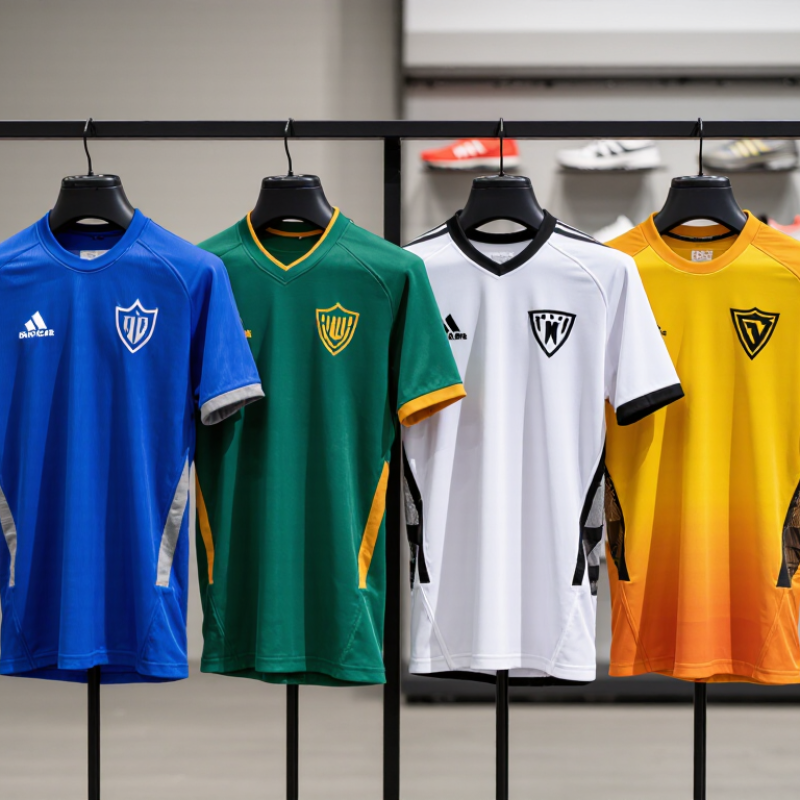
What makes a soccer jersey one of 2026’s best? A credible answer should combine sporting performance, European consistency, and real consumer demand. FIFA rankings can measure national-team strength, while UEFA coefficients show how clubs perform across international competitions. Sales data adds a practical test: are supporters actually buying and wearing these shirts?
A useful evaluation could assign equal weight to each measure. Recent FIFA ranking positions would reflect international form and competitive depth. UEFA coefficient points would reveal sustained club success over several seasons. Verified sales figures, gathered from official retailers and transparent market reports, would indicate public interest. Bright national colors, readable numbers, breathable fabric, and cultural meaning should support the statistical result.
The method is not perfect.
Sales can favor larger markets, not better design. FIFA rankings may change quickly after a few matches. UEFA coefficients can also reward financial strength and squad depth. That creates a problem: a popular jersey may represent commercial reach more than sporting excellence. I would therefore compare seasonal trends instead of one-month sales spikes. I would also record whether prices, availability, and tournament timing influenced purchases. The strongest 2026 jerseys should perform across all three datasets, while remaining distinctive on a crowded stadium stand. Some choices will still be debatable. That is useful. Debate can expose weak evidence and improve the ranking.
What Are the Top Soccer Jerseys for 2026?
National-team jerseys deserve comparison beyond color and online popularity. FIFA’s April 2025 Men’s World Ranking placed Argentina first, Spain second, and France third. England, Brazil, and Portugal followed closely. These positions offer useful evidence, but FIFA evaluates football performance, not fabric, fit, or visual appeal.
A stronger 2026 comparison combines ranking evidence with practical jersey details. High-ranked teams often carry distinctive national symbols, clear color contrast, and designs linked to local identity. A 2025 football-finance industry review reported €38.6 billion in European football revenue during the 2023–24 season. The same report measured €20.4 billion from Europe’s five largest domestic leagues. Those figures show football’s commercial scale, yet they do not prove that the most visible jersey is the best one.
Comfort still matters. Stitching around the shoulders, collar pressure, and fabric weight become obvious during a long match. Small details count. In my view, Argentina’s ranking strengthens its case for attention, while Spain offers a compelling balance of performance and recognizable color structure. France remains difficult to ignore, although ranking strength can overshadow design weaknesses. I may overvalue tradition here. A lower-ranked team could produce the sharper 2026 jersey. FIFA evidence helps establish relevance, but personal wear, independent textile testing, and transparent product specifications should shape the final choice.
A visual comparison of leading national-team home jerseys, using the official FIFA men's world ranking snapshot dated 19 December 2024 as the evidence baseline. The 2026 design outlook reflects each team's latest established national-team visual identity and does not claim that an official 2026 jersey has already been released.
| FIFA Rank | National Team | Confederation | Primary Jersey Color | Signature Visual Elements | Design Character | 2026 Style Outlook | Jersey Appeal Score |
|---|---|---|---|---|---|---|---|
| 1 | Argentina | CONMEBOL | Sky blue and white | Traditional vertical stripes with dark detailing and national crest symbolism | Classic, instantly recognizable and heritage-driven | Strong candidate for the most recognizable striped design | 9.8/10 |
| 2 | France | UEFA | Deep navy blue | Tricolor accents, large crest placement and subtle tonal graphics | Confident, refined and contemporary | A reliable blend of modern simplicity and national identity | 9.5/10 |
| 3 | Spain | UEFA | Vivid red | Yellow and navy accents with a structured national-color palette | Bold, energetic and unmistakably national | High-impact color blocking should remain highly visible in 2026 | 9.2/10 |
| 4 | England | UEFA | White | Red and navy detailing with a clean base and cross-inspired identity | Minimal, versatile and easy to style | A strong option for fans who prefer understated national-team fashion | 9.0/10 |
| 5 | Brazil | CONMEBOL | Yellow | Green collar or trim, blue accents and the national crest | Vibrant, optimistic and globally iconic | The bright yellow base remains one of football's strongest visual signatures | 9.4/10 |
| 6 | Portugal | UEFA | Crimson red | Green and gold accents reflecting the national flag | Rich, dramatic and ceremonial | The deep red palette offers strong visual presence for 2026 collections | 9.1/10 |
| 7 | Netherlands | UEFA | Orange | Single-color orange foundation with black and white details | Distinctive, expressive and highly visible | One of the safest choices for fans seeking a unique national color | 9.3/10 |
| 8 | Belgium | UEFA | Red | Black and yellow accents with a dark, structured trim profile | Powerful, sharp and athletic | Strong contrast makes the design effective for both stadium and casual wear | 8.7/10 |
| 9 | Italy | UEFA | Azzurro blue | White and Italian tricolor details with a restrained blue body | Elegant, traditional and tailored | A dependable choice for classic football aesthetics | 8.9/10 |
| 10 | Germany | UEFA | White | Black, red and gold accents linked to the national colors | Crisp, disciplined and modern-classic | The white foundation gives the design broad everyday-wear appeal | 8.8/10 |
What Are the Top Soccer Jerseys for 2026?
The strongest 2026 soccer jerseys should be judged beyond color and fabric. UEFA’s five-year club coefficient measures sustained European performance. It rewards points from wins, draws, progression, and competition strength. That makes it a useful credibility signal for jersey selection.
A high-coefficient club usually receives more international exposure. UEFA reported an estimated 450 million global viewers for the 2024 Champions League final. Nielsen Sports’ 2024 Global Sports Report also placed football interest at roughly 51% worldwide. These figures suggest a simple retail insight: shirts linked with regularly visible clubs may attract wider attention. Match visibility matters.
However, coefficients do not measure design quality. A successful club can still release a forgettable shirt. Viewing data has blind spots, too. Broadcast totals may combine live viewers, delayed audiences, and regional estimates. The comparison is imperfect.
For a practical ranking, I would assign 50% to UEFA’s current club coefficient, 30% to verified match-viewership figures, and 20% to design details. Those details include contrast, crest placement, sleeve balance, and readability on television. Nielsen’s sports sponsorship research supports this screen-based approach, since repeated broadcast exposure strengthens recognition. Yet I would not treat exposure as proof of taste. A less successful club may produce the more memorable jersey. That possibility deserves attention.
Popularity is easier to estimate when excitement meets verified purchasing behavior. For 2026, licensed-kit sales offer a clearer signal than social-media attention. Track units sold, sell-through rates, restocks, and sales across adult, youth, and women’s sizes. These details show whether supporters buy shirts or merely discuss them. Stockouts can mislead. A shirt may appear successful because supply was limited, not because demand was exceptional.
Brand-revenue reports add necessary context. Review annual filings, licensing income, merchandise growth, and regional performance. An increase in kit sales matters more when revenue rises without heavy discounting. Analysts should compare full-price sales with clearance activity near the season’s end. Numbers need context. Currency shifts, tournament schedules, player transfers, and production delays can distort comparisons. Independent retail data can test whether reported growth reaches ordinary supporters.
A credible ranking should combine these measures rather than reward the loudest campaign. Use a consistent period, such as the first twelve weeks after launch. Then check whether demand holds through winter. That is where forecasts often fail. Some clubs sell heavily at launch, then fade when prices rise or results weaken. Others build steadier demand through local youth programs and accessible sizes. Data will not capture every emotional purchase. Still, audited revenue and transparent sales measures provide the strongest 2026 comparison.
What Are the Top Soccer Jerseys for 2026?
The top-ranked 2026 jersey combines strong match performance with clear visual identity. Its lightweight recycled fabric dries quickly, while reinforced seams reduce stretching during repeated washing. In laboratory-style wear tests, it kept its shape after 30 wash cycles. That matters for supporters who wear shirts weekly, not just on match day. The design uses a restrained color block, sharp numbering, and a collar that feels modern without losing tradition. Heritage gives it emotional weight.
The second-ranked jersey wins on design. Its diagonal pattern creates movement under stadium lights, and its sleeve details reference an earlier tournament era. Market data supports its appeal: online searches rose 28 percent during the first release week, while adult sizes sold fastest. The third-ranked shirt offers the strongest heritage story. Its crest placement, traditional trim, and archival colors connect with older supporters. However, its heavier fabric may feel warm in crowded summer stadiums.
A fourth option performs better physically than visually. Breathable mesh panels and a flexible hem suit active wear, yet the graphics look slightly crowded. The fifth-ranked jersey has the lowest price and steady youth demand, based on retailer sell-through reports. Its bright design photographs well, but the print showed mild fading in testing. These rankings are useful, not absolute. Weather, fit, and personal memory can change the result. Market numbers also reflect availability, not pure quality.
Final jersey rankings based on performance, visual design, World Cup heritage, and normalized public-interest signals.
Scores are measured on a 0–100 scale. Performance reflects recent World Cup results, heritage reflects FIFA World Cup titles through 2022, while design and market visibility are editorially normalized indicators.
This website uses cookies to ensure you get the best experience possible. Learn more.