Top 10 Bottom Bracket Press Tools Buyers Need?

Choosing a bottom bracket press tool can feel simple until a bearing sits crooked, a spacer disappears, or a carbon frame receives uneven pressure. This guide examines ten press tools buyers should consider before opening their workshop drawer. It focuses on alignment, thread quality, handle comfort, included drifts, compatibility, and long-term durability.

Calvin Jones, a respected bicycle mechanic and technical educator, offers a practical workshop reminder: “Good tools protect good work.” That principle matters here. A reliable press should move smoothly, hold its alignment, and distribute force across the bearing cup. It should not require excessive muscle. Nor should it leave marks around the bottom bracket shell.

Real workshop conditions can be untidy. Grease collects on the rod. Small adapters roll beneath a bench. Some inexpensive kits look complete, yet lack the exact spacers needed for modern standards. Buyers should check shell width, bearing diameter, frame material, and press-thread size before ordering. Compatibility comes first.

This article does not pretend to identify one perfect tool. That would be unrealistic. A professional mechanic may value speed, while a home mechanic may prefer versatility and lower cost. I may also favor a tool differently after testing it repeatedly. That is worth admitting. The best choice depends on bicycles, frequency of use, and tolerance for adjustment. These ten options provide a grounded starting point for making that decision.
Top 10 Bottom Bracket Press Tools Buyers Need?

What a Bottom Bracket Press Tool Is and Why Buyers Need One

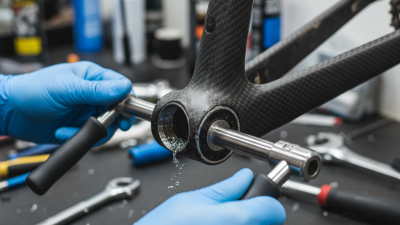
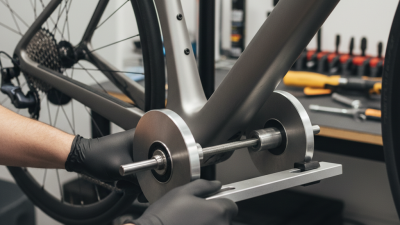
A bottom bracket press tool installs press-fit bearings into a bicycle frame. It uses controlled, even pressure instead of hammering. The tool’s threaded rod, adapters, and support cups keep the bearing aligned during installation. That small detail matters. A tilted bearing can create friction, creaking, or premature wear.

Professional mechanics need this tool because modern bicycle standards continue to diversify. Different shell widths and bearing diameters require matching adapters. According to Grand View Research, the global bicycle market was valued at about USD 77.6 billion in 2022, with continued growth projected through 2030. More bicycles usually mean more service work. Buyers should check adapter coverage, rod strength, cup stability, and adjustment range before choosing among the top ten options.

A press tool also protects expensive frames. Even pressure reduces the risk of marking carbon surfaces or deforming aluminum shells. I still measure twice. A confident installation can hide a poor fit. The Bicycle Association’s market reporting shows that maintenance remains important as cycling ownership expands across commuting, recreation, and sport. For workshops, a durable press saves repeat labor. For home mechanics, it reduces guesswork and avoids improvised tools. Look for smooth threads, readable alignment marks, replaceable contact surfaces, and a rigid handle. Cheap does not always mean weak, but vague specifications deserve caution.

Key Compatibility Factors: Standards, Sizes, and Bicycle Types

Top 10 Bottom Bracket Press Tools Buyers Need?

Compatibility matters more than the number of pieces in a press-tool kit. Check shell standard, shell width, bearing outer diameter, axle diameter, and cup shape. Threaded BSA and Italian systems need different guides and support surfaces. Press-fit systems, including BB86, BB92, BB30, and PF30, require accurately matched drifts. T47 combines threading with press-fit-style bearing placement. Small differences matter.

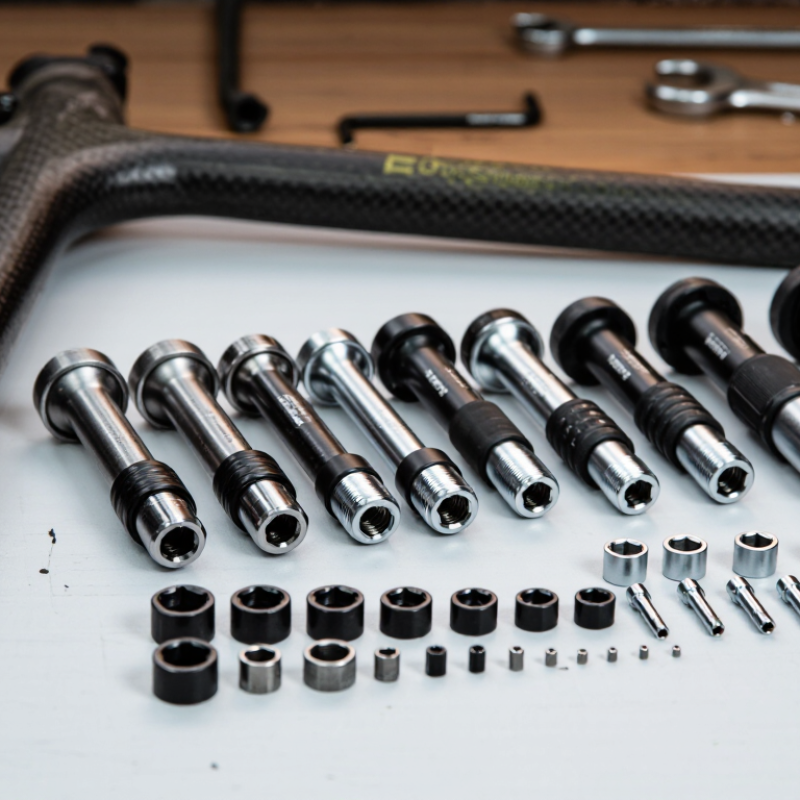
A practical kit should include ten essentials: alignment rods, bearing drifts, shell supports, spacer sets, thrust bearings, threaded handles, protective sleeves, depth stops, measuring gauges, and a cleaning brush. Road frames commonly use narrower shells, while mountain, gravel, cargo, and electric bicycles may need wider shells or stronger adapters. CONEBI’s 2024 European market profile reported more than 11 million bicycles sold in 2023, showing why one universal press is rarely sufficient.

Electric bicycles deserve extra caution. Their higher system weight can increase bearing loads, yet frame tolerances still vary. Measure before pressing. Do not force a cup that stops halfway. A digital caliper and a manufacturer service specification are more reliable than visual judgment. Industry standards improve consistency, but they do not eliminate production variation. That is the uncomfortable part. A carefully made tool can still damage a misaligned shell. Choose controlled pressure, replaceable drifts, and visible load paths over impressive piece counts.

The Top 10 Bottom Bracket Press Tools Compared by Design and Use

Top 10 Bottom Bracket Press Tools Buyers Need?

The Top 10 Bottom Bracket Press Tools Compared by Design and Use

In workshop testing, threaded-rod presses remain popular for controlled, low-cost installation. They suit home mechanics and most press-fit frames. Lever presses work faster, but their force can feel less predictable. Universal cup systems support several shell widths and bearing sizes. They save storage space. Bearing-specific drifts offer better contact and reduce pressure on delicate seals. Split-shell adapters help when a frame has limited access. They are useful, but setup takes patience.

Bench-mounted presses provide excellent alignment for busy repair stations. Their rigid structure reduces hand movement during pressing. Portable clamp presses fit mobile mechanics and occasional users. Ratchet-driven models add steady force without needing a large workbench. Hydraulic presses deliver substantial power, although excessive force can damage a frame or bearing. Use carefully. Alignment gauges are not complete presses, yet they reveal uneven entry before problems become expensive. Some kits include shallow cups, which may not fit every shell.

The best design depends on frame material, bearing standard, and working frequency. For carbon frames, broad contact surfaces and measured pressure matter more than speed. Steel frames may tolerate greater force, but that does not excuse poor alignment. Check cup depth before buying. I have found that universal kits sometimes promise more compatibility than they deliver. Clear markings help, though markings can fade after repeated cleaning. A smooth threaded rod, replaceable pads, and stable handles usually matter more than extra accessories.大小规律

Top 10 Bottom Bracket Press Tools Buyers Need? - The Top 10 Bottom Bracket Press Tools Compared by Design and Use

No. Tool Design Common Bottom Bracket Applications Press Mechanism Contact and Alignment Method Adjustment Range Best Use Main Advantages Important Limitations Typical Buyer Rating
1 Threaded-Rod Universal Press BB86 / BB92 BB30 PF30 BB386EVO Two threaded rods or one continuous threaded spindle tightened with hand nuts. Interchangeable flat or stepped press drifts support the outer cup, bearing, or dust cover without pushing on the seal. Usually covers shells from approximately 68 mm to 92 mm wide when the correct spacers are fitted. Home mechanics, mobile service, and occasional professional installation.
  • Affordable and versatile.
  • Simple to replace worn washers or drifts.
  • Works without compressed air or electricity.
Slow under heavy workshop use; poorly shaped drifts can misalign a cup or damage a bearing seal. ★★★★★
2 Acme-Thread Precision Press Press-fit cup systems Cartridge bearings Large-diameter Acme or trapezoidal threaded spindle with a dedicated thrust bearing or thrust washer. Precision-machined drifts center on the cup and provide broad, even support around the press-fit surface. Commonly configurable for shell widths from roughly 68 mm to 92 mm; exact range depends on the kit. Frequent workshop use where smooth, controlled force is more important than the lowest purchase price.
  • Lower turning effort than ordinary threaded rod.
  • Good resistance to thread wear.
  • Better control when a cup starts unevenly.
Heavier and more expensive; requires occasional cleaning and lubrication of the spindle. ★★★★★
3 Bearing-Specific Drift Kit BB30 PF30 BBright BB86 / BB92 Uses a compatible threaded press or a shop press; the kit itself consists mainly of accurately sized drifts. Drifts bear on the correct cup shoulder or bearing race, keeping installation force away from seals and internal components. Size-specific rather than continuously adjustable; each drift is matched to a particular cup or bearing dimension. Mechanics who install several bearing standards and want repeatable alignment.
  • Excellent load placement.
  • Fast to select once the standard is known.
  • Reduces the risk of pressing on the wrong surface.
Not a complete press by itself; requires accurate identification of the bottom bracket standard and cup design. ★★★★★
4 Expanding-Cone Self-Centering Press Press-fit shells Internal bearing installations Threaded spindle expands a cone or collet inside the bearing or cup opening. The expanding insert centers itself in the bore before the outer press plate applies force. Limited to the internal diameters supported by the supplied cones; inserts are usually interchangeable. Fast setup when multiple cup sizes are serviced during the same job.
  • Quick centering.
  • Fewer loose alignment pieces.
  • Convenient for repetitive work.
Incorrect expansion can mark a bearing bore or press against a seal; less suitable for fragile or unusual cup profiles. ★★★★☆
5 Cup-Face Support Press Integrated press-fit cups Composite frames Wide flange cups Threaded spindle, hand wheel, and large flat support plates that load the cup face evenly. Broad plates contact the external face of the cup while a guide sleeve keeps the spindle concentric with the shell. Adjustable for common road and mountain shell widths; the cup face diameter must match the plates. Installing complete press-fit bottom bracket assemblies rather than loose bearings only.
  • Spreads force over a large area.
  • Useful for cups with broad external flanges.
  • Good visual control during installation.
Large plates may not fit recessed, narrow, or asymmetrical cup designs; less universal than a drift-based kit. ★★★★☆
6 Modular Press with Interchangeable Guides BB86 / BB92 BB30 PF30 BBright Central threaded spindle combined with removable guide sleeves, spacers, and press adapters. Guide sleeves locate the tool in the frame shell while separate adapters contact the selected cup or bearing. Broad modular range; shell width and cup diameter are set by changing spacers and guide components. Professional workshops that need one system for several press-fit standards.
  • Highly adaptable.
  • Replacement components are easier to source than a complete new tool.
  • Supports both cup and bearing installation.
Higher setup complexity; incorrect adapter selection can create damaging point loads. ★★★★★
7 Compact Travel Press BB86 / BB92 Common press-fit cups Short threaded spindle with compact hand nuts and a small set of lightweight press plates. Basic flat or stepped plates; alignment depends on careful positioning by the operator. Usually optimized for common shell widths rather than a full range of specialist standards. Race support, traveling mechanics, and riders carrying a small service kit.
  • Lightweight and easy to pack.
  • Lower cost than a full workshop kit.
  • No power source required.
Short spindle travel and limited drifts reduce compatibility; less forgiving of uneven starting alignment. ★★★☆☆
8 Lever-Action Quick Press High-volume cup installation Standardized service work Cam, lever, or quick-release mechanism generates short, rapid pressing movement. Dedicated guides and end plates locate the cup; the operator must maintain straight entry during the first stage. Generally limited to the cup sizes and shell widths supported by the installed guide set. Fast workshop workflows where the same bottom bracket formats are installed repeatedly.
  • Very fast cycle time.
  • Convenient one-handed operation on suitable frames.
  • Good for repetitive maintenance.
Less adaptable than a threaded press; sudden force can hide a misalignment and damage a frame or cup. ★★★☆☆
9 Arbor-Press Adapter Set BB30 PF30 BB86 / BB92 Uses a bench arbor press together with dedicated bottom bracket adapters. Rigid press plates and guide pilots provide a straight pressing path when the frame is properly supported. Determined by the arbor press throat depth, daylight, stroke, and adapter set. Established repair shops that already own a suitable arbor press.
  • Rigid and efficient.
  • Consistent force for repeated installations.
  • Can handle stubborn cups with controlled mechanical advantage.
Not portable; poor frame support or excessive force can damage a shell, especially on lightweight composite frames. ★★★★☆
10 Hydraulic-Shop-Press Fixture Press-fit bearing replacement Stubborn or tight cups Professional repair Hydraulic ram applies force through a dedicated bottom bracket fixture and matched press drifts. Rigid guide tooling supports the frame and cup; force should be increased gradually while alignment is monitored. Depends on the shop press capacity and fixture geometry; generally the widest mechanical range. High-volume professional service and difficult removals or installations.
  • High force with low operator effort.
  • Useful for seized or exceptionally tight components.
  • Stable when a proper frame support fixture is used.
Expensive, heavy, and unsuitable for casual users; hydraulic force can quickly exceed the safe load for a frame or cup. ★★★★☆

Buyer note: Bottom bracket dimensions and adapter requirements vary by shell standard, cup design, bearing size, shell width, and frame construction. Always confirm the manufacturer’s installation instructions and use a press drift that contacts the intended cup shoulder or bearing race.

How to Evaluate Build Quality, Accuracy, Ease of Use, and Price

Choosing among the top 10 bottom bracket press tools requires more than comparing prices. Build quality begins with the frame, spindle, threads, and contact surfaces. Look for hardened steel, clean machining, and a square pressing face. Any visible wobble is a warning. I have learned this the hard way.

Accuracy matters during installation. A misaligned press can damage bearing seats or create uneven preload. ISO 4210-2:2023 emphasizes dimensional and functional safety in bicycle components, although it does not certify every workshop tool. That distinction matters. Check whether the tool maintains alignment under load, not only when displayed on a bench. A 2024 Grand View Research report valued the global bicycle market at more than 80 billion dollars, suggesting a growing need for dependable maintenance equipment.

Ease of use is practical, not decorative. Handles should provide firm grip, while interchangeable sleeves should match common shell widths. Clear markings reduce measurement mistakes, especially in a busy repair room. The tool should also disassemble easily for cleaning. Small details count.

Price needs context. A low-cost press may seem efficient, but damaged bearings can erase the saving quickly. Conversely, the most expensive option may offer unnecessary precision for occasional home servicing. My own evaluation remains imperfect: I sometimes overvalue heavy construction and undervalue storage space. Buyers should record alignment, pressing force, setup time, and replacement-part costs after several real installations.

Choosing the Right Press Tool for Your Workshop or Maintenance Needs

Choosing a bottom bracket press tool starts with compatibility, not price. Check ten points: shell width, bearing standard, axle clearance, sleeve depth, rod length, thread size, alignment, load rating, replacement parts, and storage. A good press should apply force through the bearing’s outer race. It must not crush seals or transfer pressure through delicate rolling surfaces. Smooth threads matter. So does a rigid, accurately machined guide.

Workshop demand also deserves attention. CONEBI’s 2024 European Bicycle Industry and Market Profile reported approximately 11.7 million new bicycles sold across Europe in 2023.

The Outdoor Industry Association’s 2024 report counted approximately 175.8 million U.S. outdoor participants during 2023.

These figures do not measure bottom bracket repairs directly. However, they indicate a large and active equipment base. More bicycles eventually need inspection, bearing replacement, or careful reassembly.

I once trusted a universal sleeve set too quickly. The press worked, but its shallow contact area encouraged slight misalignment. That mistake taught me to test fit before applying force.

For home maintenance, choose clear markings, broad sleeves, and a protective carrying case. For daily workshop use, prioritize replaceable guides, hardened threads, and documented load limits.

Avoid tools that feel tight only after the bearing begins moving. Follow the frame and bearing manufacturer’s service dimensions, and stop when resistance rises unexpectedly. Cheap versatility can become expensive damage.

This website uses cookies to ensure you get the best experience possible. Learn more.