Choosing reliable Foot Support Insoles suppliers in China requires more than comparing factory prices. The right partner should understand foot biomechanics, production consistency, and the practical needs of different users. This guide introduces ten notable suppliers for buyers seeking private-label, wholesale, or custom insole solutions. Each supplier should be assessed through product evidence, manufacturing experience, communication quality, and documented quality controls. Comfort matters. So does repeatability.
Strong suppliers may offer EVA, PU, gel, memory foam, carbon fiber, or breathable fabric options. They can adjust arch height, heel cushioning, firmness, and surface texture for different applications. A professional evaluation should examine samples under real conditions, such as daily walking, standing shifts, sports training, or work boots. Ask for material specifications, test reports, factory audit records, and clear minimum order terms. Certifications can support trust, but they should be verified against the actual product and facility. Paperwork alone is not proof.
China’s footwear supply chain offers fast prototyping and broad manufacturing capacity, yet quality can vary between suppliers. Some factories communicate well before an order, then become less responsive during production. That risk deserves attention. This overview therefore treats supplier claims carefully and encourages independent sample testing before commitment. It also considers export experience, packaging accuracy, lead times, and after-sales support. No ranking is perfect. Buyer requirements differ. Use these insights as a practical starting point, then confirm every important detail directly with the supplier.
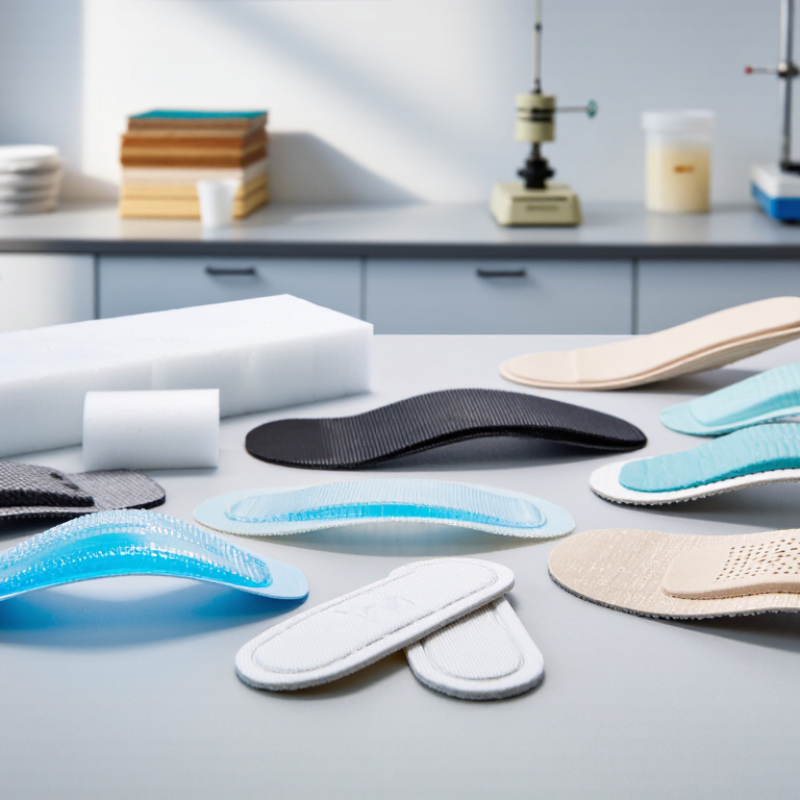
China’s 2024 foot support insole market reflects a shift from low-cost volume toward tested comfort and repeatable production. The top ten supplier group includes factories serving orthopedic clinics, workwear distributors, sports retailers, and private-label importers. Their capabilities vary widely. Some specialize in EVA and PU foam, while others use carbon fiber, gel, cork, or breathable mesh. Buyers should inspect actual samples, not rely on catalog claims. A firm heel cup, stable arch contour, and smooth edge finishing matter during daily wear.
This market snapshot weighs manufacturing experience, material traceability, design support, quality controls, and export readiness. Suppliers with in-house molding can adjust density and arch height faster. Those using external workshops may offer lower prices, but consistency needs closer checking. Useful evidence includes batch records, dimensional inspection, compression testing, and documented odor-control procedures. Fit data should cover different foot lengths and widths. One sample size is not enough. That is a common weakness.
The leading ten are not identical in strengths. One may deliver excellent medical-style prototypes, while another handles large work-boot programs efficiently. Custom packaging, barcode support, and low minimum orders also influence practical value. Buyers should request production samples after approval, because pilot pieces can differ from mass output. I would also question unusually broad claims about pain relief. Comfort is personal, and performance depends on footwear, activity, and user anatomy. The 2024 picture looks promising, but supplier verification remains essential.
China’s foot-support insole sector combines large export capacity with flexible OEM production. The World Footwear Yearbook 2024 reports that China produced about 54.6% of global footwear in 2023. That scale supports faster tooling, material sourcing, and private-label development. However, footwear volume does not automatically prove orthotic expertise.
This ranking weighs four practical indicators: OEM capacity, ISO 9001 certification, MOQ, and export evidence.
The ISO Survey 2022 recorded more than 1.2 million ISO 9001 certificates worldwide, so certification alone is not enough.
Each shortlisted supplier should provide a valid certificate, factory address, scope, and recent audit trail. Export records from customs databases and ITC Trade Map are stronger than website claims. Public quotations often show MOQs near 500–1,000 pairs for standard designs, while custom molds may require higher volumes.
Product testing matters. Ask for EVA or TPU density, hardness data, arch-support measurements, and wear-test results. A supplier with CNC mold equipment may handle small revisions better.
Still, many published factory profiles omit failure rates and complaint data. That weakness deserves attention. Some suppliers also report OEM capability without showing sample approval records, packaging photos, or shipment history.
Buyers should request three documents before ranking:
a recent export declaration, an ISO certificate verification link, and a sample inspection report.
Prices can look attractive, but inconsistent heel cups or poor adhesive bonding quickly increase return costs.
When reviewing China’s top ten foot support insole suppliers, material selection matters more than polished catalog images. EVA is lightweight, affordable, and easy to shape. It suits daily walking and moderate cushioning. However, low-density EVA can compress under the heel. PU feels denser and often keeps its form longer. It may suit work shoes needing steady support, but it can add weight and retain warmth.
TPU offers strong resilience and abrasion resistance. It works well in slim, structured designs. Its firmer feel may require careful arch profiling. Gel inserts soften heel impact, especially on hard floors. They should not replace proper shell support. Gel can migrate, tear, or feel unstable when temperatures change. Small details matter. Suppliers should provide hardness, density, compression-set, and fatigue-test data. Batch traceability also supports dependable purchasing.
Custom orthotic designs use foot scans, molds, or adjustable templates. They can address different arch heights and shoe shapes more precisely than flat stock insoles. A dependable supplier should confirm fitting methods, material tolerances, sample revisions, and hygiene controls. Ask for wear trials with real footwear, not only laboratory samples. One common mistake is choosing the softest option. It feels excellent for ten minutes, then may lose structure. My own evaluation would still leave room for doubt: comfort varies with gait, climate, and shoe volume. A supplier willing to discuss failed samples often appears more credible than one promising universal relief.
China Top 10 Foot Support Insoles Suppliers
When evaluating China’s top foot support insole suppliers, compliance should begin with product classification. CE marking may apply when an insole is marketed as a medical device in Europe. FDA expectations depend on intended use, claims, and United States classification. A supplier should explain this clearly, not simply display a logo.
Ask for current test reports, declarations, technical files, and traceable batch records. REACH checks should address restricted substances, dyes, adhesives, and plastic components. Biocompatibility testing may include skin irritation, sensitization, and cytotoxicity under relevant ISO 10993 methods. Pay attention to the footbed surface. It touches skin for hours.
Factory visits reveal practical details. Inspect incoming foam, cutting accuracy, adhesive storage, and final packaging. Request samples from different production batches. Compare odor, hardness, rebound, and edge finishing. Small differences matter. A certificate folder can look complete, yet production controls may remain weak.
Strong suppliers welcome independent laboratory testing and provide realistic lead times. They should also document corrective actions when results fail. I have found that communication quality often predicts compliance quality. However, supplier claims still require verification. No checklist replaces testing. Some reports may be genuine but outdated, incomplete, or unrelated to the exact insole material. That limitation deserves honest attention.
China Top 10 Foot Support Insoles Suppliers
When comparing China’s top foot support insole suppliers, judge the full offer, not only the quoted unit price. Standard EVA or PU insoles may cost less, while layered foam, gel, or custom arch structures increase pricing. Ask for a sample before approving production. A sample can reveal edge trimming, heel stability, odor, and actual arch height. These details often matter more than a polished catalogue.
Lead time commonly ranges from 15 to 35 days after sample approval, depending on materials and order volume. Initial samples may require 5 to 10 days. MOQ can start near 500 pairs for basic designs, but custom molds may require 1,000 pairs or more. Confirm whether the supplier includes tooling, packaging, printing, and inspection in its quotation. Private-label capability should cover logo placement, retail boxes, size labels, barcode preparation, and color matching. Request production photos and a clear pre-shipment inspection process. A low quote can mislead.
Tips: Compare three written quotations using the same specifications. Ask for material density, hardness, packaging dimensions, and replacement terms. Check whether the factory produces in-house or outsources molding. Keep one approved sample as your reference. Do not rush.
A useful warning: supplier rankings can change quickly. Capacity, export experience, and quality control may differ between factories and trading companies. Verify current certificates and test reports directly. Also, comfort is subjective. A technically accurate insole may still feel wrong to some users. Pilot testing with several foot types is worth the extra time.
Indicative OEM market benchmarks for common insole categories. Prices are quoted per pair, excluding packaging, tooling, freight, and taxes.
Custom-molded TPU and orthotic products generally require longer lead times because of sampling, tooling, and fit validation. Private-label services commonly include logo printing, custom packaging, color matching, and product inserts.
This website uses cookies to ensure you get the best experience possible. Learn more.