Top China Menstrual Cup Brands for Global Buyers
Choosing among Menstrual Cup Brands requires more than comparing prices and colorful packaging. Global buyers need evidence of material quality, production consistency, and responsible business practices. This guide examines leading Chinese manufacturers through a practical sourcing perspective. It considers silicone type, cup design, size options, surface finish, packaging, and private-label support. Product documentation matters. So does communication.
Reliable suppliers should explain their manufacturing process clearly and provide relevant test reports. Buyers may also review quality-management systems, batch control, factory experience, and export records. Certifications can support evaluation, but they should never replace independent verification. A polished website proves little. A traceable sample tells more. Physical samples can reveal uneven edges, strong odors, unclear markings, or uncomfortable stems before large orders begin. These details affect user confidence and repeat purchasing.
The discussion also considers how brands serve different markets and body needs. Menstrual cup comfort depends on anatomy, firmness, capacity, and personal preference, not marketing claims alone. Product instructions should explain insertion, removal, cleaning, storage, and replacement clearly. Health-related information must remain careful and evidence-based. Buyers should confirm local labeling, packaging, import, and consumer-product requirements before distribution. Requirements vary.
No supplier is perfect, and available information may change over time. Some manufacturers present impressive capabilities but offer limited independent evidence. That gap deserves attention. The strongest candidates combine consistent samples, responsive communication, transparent documentation, and realistic delivery promises. This approach helps global buyers build safer, more credible, and more sustainable menstrual-care product lines.
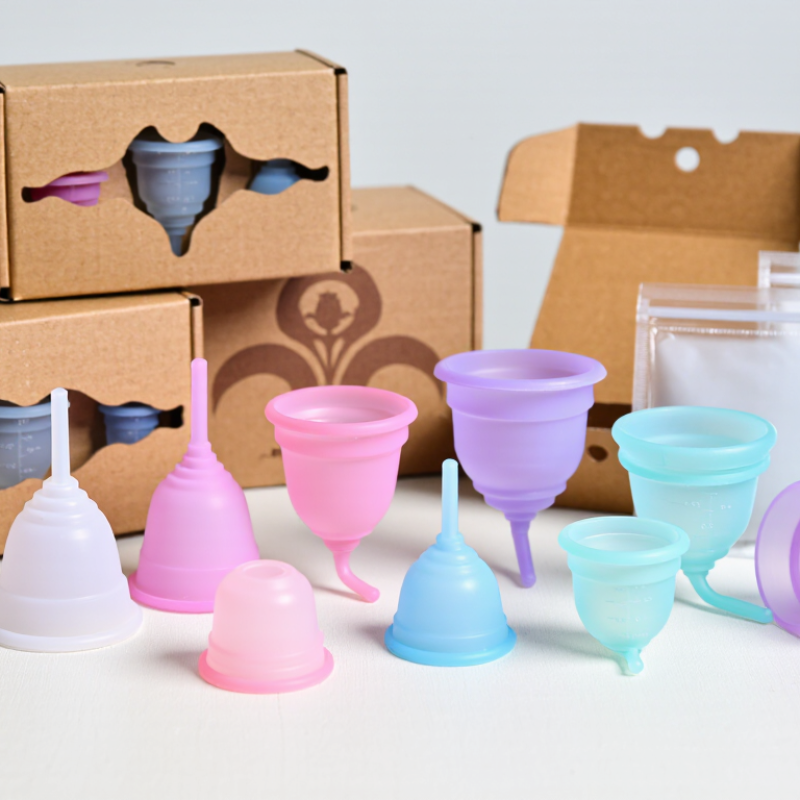
What Makes China a Leading Source of Menstrual Cups
China has become a leading source of menstrual cups for global buyers. Its advantage is not based on low pricing alone. Established manufacturing clusters combine medical-grade silicone processing, mold making, packaging, and export services. These capabilities shorten development cycles for new shapes, sizes, and firmness levels. That matters when users need different body profiles and comfort preferences.
Quality begins with material control. Reliable producers can provide silicone documentation, batch records, and controlled production conditions. Some facilities also use ISO 13485-aligned quality systems, where applicable. Buyers should request independent testing for biocompatibility, durability, odor, and dimensional consistency. Factory visits can reveal practical details, such as clean storage areas, sealed packing lines, and traceable samples. Small details matter.
China also supports flexible private-label and contract manufacturing programs. Engineering teams can adjust rim thickness, stem length, surface texture, and opening design. Tooling experience helps turn a tested sample into stable mass production. Pilot orders help. They expose problems before a large shipment. Yet customization can create risk. A softer cup may improve comfort but reduce opening reliability for some users. Design decisions need user trials, not assumptions.
Major ports, multilingual teams, and established inspection workflows support regular international shipments. However, export history does not prove current compliance. Importers must verify labeling, packaging, product claims, and applicable market requirements themselves. Standards differ between countries. Clear technical files and responsive communication make issues easier to resolve.
| Buyer Evaluation Dimension | Relevant Market Data or Technical Range | Why This Matters to Global Buyers | What to Verify with a China-Based Supplier |
|---|---|---|---|
| Product Material | Medical-grade silicone Common premium material for reusable menstrual cups; latex-free and suitable for buyers seeking a soft, durable elastomer. | Silicone offers flexibility, chemical stability, and repeated-use performance when the formulation and manufacturing process are properly controlled. | Request material composition, supplier declarations, batch traceability, pigment information, and biocompatibility test reports for the finished product. |
| Typical Product Capacity | Approximately 15–50 mL Capacity varies by cup diameter, length, firmness, and stem design. Product capacity should be measured using a consistent test method. | Capacity helps buyers develop size options for different flow levels and user preferences. It is more meaningful when listed together with dimensions. | Confirm usable capacity, overflow holes, internal volume, dimensions, weight, and tolerance limits on the technical drawing. |
| Recommended Emptying Interval | Up to 8–12 hours The actual interval depends on menstrual flow, cup capacity, fit, and the product instructions. | Clear usage guidance supports consumer safety and reduces the risk of leakage caused by overfilling. | Ensure the instruction leaflet includes wearing limits, cleaning steps, removal guidance, and warnings for discomfort or unusual symptoms. |
| Expected Reusable Life | Several years with proper care Many reusable cups are marketed for approximately 5–10 years, but replacement timing depends on wear, cleaning, discoloration, odor, and product instructions. | A long service life is a major selling point compared with single-use menstrual products and can support sustainability positioning. | Ask for validated durability data, repeated compression testing, cleaning compatibility, storage requirements, and replacement recommendations. |
| Available Size Structure | Usually 2–3 size categories Size systems are not globally standardized. Common variables include diameter, length, capacity, rim shape, and firmness. | Offering more than one size can improve fit across different body types, age groups, and flow levels. | Request a complete size chart, dimensional tolerances, firmness description, and guidance explaining how customers should select a size. |
| Manufacturing Process | Liquid silicone molding or compression molding These processes can support repeatable shapes, embossed markings, and scalable production. | China's established mold-making, silicone-processing, packaging, and logistics networks can simplify multi-stage sourcing for overseas buyers. | Audit mold maintenance, clean-room or controlled-area practices, process validation, in-process inspection, and final visual inspection procedures. |
| Quality Management | ISO 13485 is the relevant medical-device QMS benchmark Certification should be checked for scope, issuing body, validity, and the actual manufacturing site. | A documented quality system improves consistency across batches and supports regulatory and customer-audit requirements. | Verify the certificate directly, confirm the product scope, review corrective-action records, and check whether the certificate covers the exporting factory. |
| Biocompatibility Evidence | ISO 10993 test framework Applicable testing depends on the nature and duration of body contact, material formulation, and regulatory market. | Biocompatibility evidence helps demonstrate that the finished cup is appropriate for prolonged mucosal contact. | Request finished-product test reports rather than relying only on raw-material certificates; verify sample identity, test method, laboratory, and report date. |
| United States Market Considerations | FDA-regulated medical-device pathway Menstrual cups are regulated as medical devices in the United States; applicable submission and listing requirements should be confirmed for the specific product. | U.S. buyers need a regulatory strategy before importing, labeling, advertising, or distributing the product. | Confirm the intended U.S. device classification, establishment registration status, applicable submission requirements, labeling, complaint handling, and post-market procedures. |
| European Market Considerations | EU MDR 2017/745 framework Classification, conformity assessment, technical documentation, labeling, and post-market obligations depend on the product and intended use. | Meeting European requirements supports compliant distribution throughout applicable European markets. | Verify the responsible economic operator, technical file, risk management, clinical evaluation, declaration of conformity, UDI requirements, and language versions. |
| Private Label and OEM/ODM Capability | Highly customizable product category Common options include color, firmness, stem shape, logo embossing, retail packaging, instruction leaflets, and bundled accessories. | Customization allows importers to build differentiated product lines without developing a completely new manufacturing process. | Confirm minimum order quantity, mold ownership, color tolerances, artwork approval, sample charges, tooling fees, lead time, and change-control procedures. |
| Packaging and Sustainability | Reusable product with lower unit packaging demand Paperboard cartons, recycled paper inserts, and reusable storage pouches are common packaging choices. | Packaging can reinforce a low-waste positioning while helping buyers meet retail, transport, and labeling requirements. | Check packaging material specifications, recycling marks, ink compliance, moisture protection, barcode requirements, carton dimensions, and drop-test performance. |
| Export and Supply-Chain Advantages | Integrated manufacturing ecosystem China offers broad access to mold production, silicone processing, printing, packaging, inspection, freight forwarding, and international logistics. | Coordinated sourcing can reduce supplier-management complexity and make small-to-large product programs easier to scale. | Evaluate production capacity, peak-season planning, raw-material continuity, export documentation, Incoterms, inspection points, and contingency plans. |
| Pre-Shipment Quality Checks | AQL-based inspection plus functional checks Typical checks include appearance, dimensions, hardness, odor, flash, holes, stem integrity, packaging, and quantity. | Independent inspection before shipment can reduce defects, labeling mistakes, and costly returns in the destination market. | Agree on the inspection standard, sampling plan, critical defects, major defects, minor defects, acceptance limits, and corrective-action process before production. |
| Best Fit for Global Buyers | OEM, ODM, private-label, and wholesale programs Suitable for distributors, e-commerce sellers, pharmacy channels, retailers, and menstrual-health organizations. | China can serve both standardized catalog requirements and customized programs that need multiple sizes, colors, packaging formats, or regional compliance documentation. | Compare suppliers on verified compliance, finished-product testing, consistency, communication, total landed cost, minimum order quantity, and after-sales support—not price alone. |
| Primary Buyer Risks | Unverified claims and inconsistent documentation Common risks include unclear material grades, copied certificates, unsupported “medical-grade” claims, variable dimensions, and incomplete labeling. | Regulatory, safety, and reputational risks can outweigh the initial purchasing-price advantage. | Use factory audits, laboratory verification, document authentication, approved samples, production inspections, and a written quality agreement. |
| Recommended Supplier-Selection Weighting | Quality and compliance first Suggested buyer scorecard: compliance and safety 30%, product quality 25%, manufacturing capability 20%, total landed cost 15%, service and lead time 10%. | A weighted scorecard creates a more reliable comparison than ranking suppliers only by quotation price. | Use the same scoring criteria for every supplier and require documentary evidence for each high-risk claim before approval. |
This website uses cookies to ensure you get the best experience possible. Learn more.