Top 10 HDPE Floater Manufacturers for Global Buyers
Choosing the right Hdpe Floater manufacturer can shape a project’s safety, service life, and operating cost. Floating docks, aquaculture platforms, marina walkways, and pontoon systems face sunlight, waves, saltwater, and repeated loading. A reliable supplier must understand these conditions, not simply offer attractive product photos.
This guide introduces the Top 10 HDPE Floater Manufacturers for Global Buyers. It considers manufacturing experience, material consistency, welding quality, buoyancy performance, customization, and export support. Practical details matter, including wall thickness, connection points, UV resistance, load calculations, and replacement-part availability. Factory audits, technical drawings, test records, and customer references can reveal more than a polished website. Small details matter.
The selected manufacturers represent different strengths. Some focus on modular dock systems, while others support marine construction, fish farming, or industrial flotation applications. Their capabilities may vary by region, production scale, and project complexity. Buyers should confirm resin specifications, dimensional tolerances, packaging methods, and delivery responsibilities before placing an order. No ranking remains perfect forever. Market conditions change, and product quality can differ between batches. That deserves attention.
This overview is written for procurement teams, engineers, distributors, and project owners seeking dependable international partners. It does not replace site-specific engineering or independent inspection. Instead, it provides a practical starting point for comparing suppliers with greater confidence. A strong manufacturer should answer technical questions clearly, document its process, and acknowledge limitations honestly. That is often where real reliability begins.
What HDPE Floaters Are and Why Global Buyers Use Them
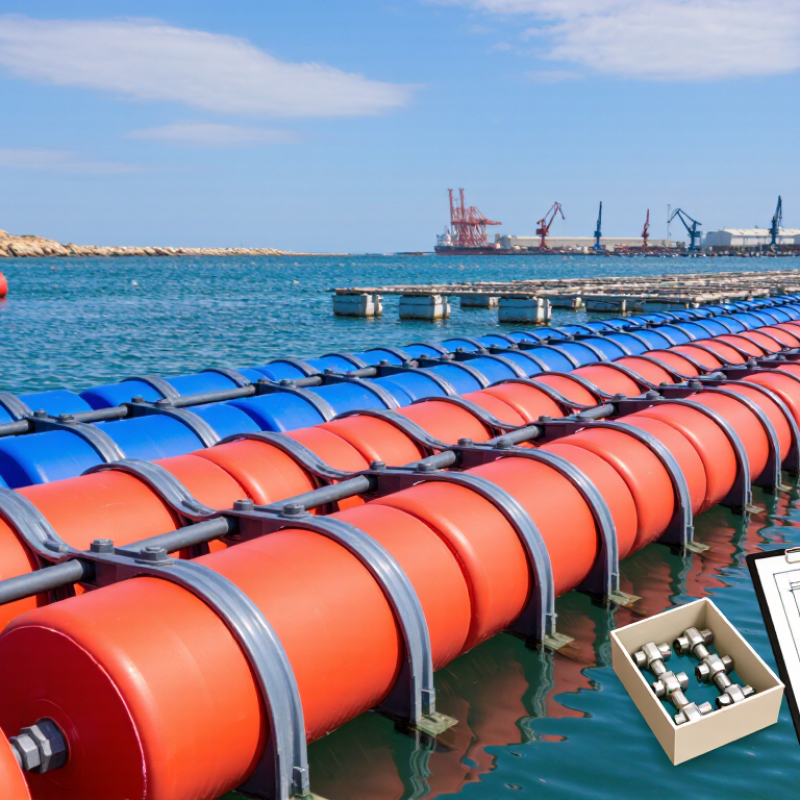
HDPE floaters are buoyant units made from high-density polyethylene, a tough thermoplastic used in marine and industrial environments. They support floating walkways, aquaculture cages, solar platforms, and temporary work pontoons. Most designs use hollow chambers, rotational molding, or sealed foam-filled structures. Their low density keeps them afloat while their thick walls resist impact, moisture, and many common chemicals.
Global buyers choose HDPE floaters because they are lightweight, modular, and easier to transport than concrete or steel alternatives. A single unit can be moved by truck, lifted with basic equipment, and connected with bolts or specialized brackets. This matters when projects operate near remote harbors, inland lakes, or sites with limited lifting capacity. Textured surfaces can improve foot grip, while UV-stabilized material helps reduce damage from long sunlight exposure.
Performance still depends on details. Buyers should check buoyancy calculations, wall thickness, connector strength, and expected wave loads. Practical inspections often reveal overlooked issues, such as water entering through damaged fittings or uneven load distribution. HDPE does not mean maintenance-free. It can deform under excessive heat, sharp impacts, or poor storage. I have also seen specifications that looked impressive but lacked clear test data. That should raise questions. Reliable suppliers provide drawings, load ratings, material information, and inspection guidance before shipment. Temperature, salinity, wind, and local installation habits should shape the final selection.
Key Criteria for Evaluating HDPE Floater Manufacturers
Top 10 HDPE Floater Manufacturers for Global Buyers
Key Criteria for Evaluating HDPE Floater Manufacturers
Choosing an HDPE floater manufacturer requires more than comparing prices. A reliable supplier should explain resin quality, wall thickness, buoyancy, and expected service life. Ask for technical drawings and test reports. Clear documents reveal engineering discipline.
Review the material grade and UV protection carefully. Floaters exposed to saltwater, sunlight, and temperature changes need stable formulations. Check welding quality around seams, corners, and connection points. Small irregularities can become serious leaks. Confirm load capacity through practical testing, not only computer calculations.
Manufacturing experience matters. Suppliers should provide traceable batch records, inspection procedures, and evidence from comparable installations. Examine how they manage dimensional tolerances, surface defects, and replacement parts. Factory photos help, but an independent inspection offers stronger assurance. Lead times should include tooling, production, packing, and shipping delays.
Communication is another useful measure. A technically capable team asks about water conditions, wave movement, anchoring, and maintenance access. Vague answers deserve caution. Customization is valuable, but unnecessary modifications may increase risk and cost. No checklist is perfect. I would still request a sample inspection before placing a large order. A polished brochure is not proof. The strongest evaluation combines documents, factory evidence, and realistic field requirements.
Top 10 HDPE Floater Manufacturers for Global Buyers
Top 10 HDPE Floater Manufacturers for Global Buyers
Choosing among the top 10 HDPE floater manufacturers requires more than comparing online prices. Experienced buyers inspect material certificates, production records, and welding quality. High-density polyethylene should resist sunlight, saltwater, impact, and repeated loading. Ask for wall thickness, buoyancy data, and dimensional tolerances. A reliable factory can explain each figure clearly. It should also provide sample testing before full production. Small details matter, especially around bolt holes and connecting joints.
Global projects need suppliers that understand packing, documentation, and delivery conditions. Review factory capacity, inspection procedures, replacement policies, and communication speed. A manufacturer may offer attractive specifications but lack consistent output. That weakness can delay installation. Factory audits and independent inspections reduce this risk. No ranking is permanent. Market performance changes, and buyer feedback may reveal problems that brochures hide. This is where careful judgment remains necessary.
Tips: Request a trial unit before ordering large quantities. Check buoyancy after adding real fittings and loads. Examine weld seams for uneven surfaces, gaps, or discoloration. Confirm UV protection and storage guidance in writing. Keep drawings and inspection photos together. One overlooked connector can affect an entire floating system.
Comparing Product Quality, Certifications, Capacity, and Customization
Top 10 HDPE Floater Manufacturers for Global Buyers: Comparing Product Quality, Certifications, Capacity, and Customization
When comparing ten leading HDPE floater manufacturers, start with material performance, not catalog design. Virgin or certified recycled HDPE should show stable density, impact strength, UV resistance, and weld quality. Ask for batch test reports, including tensile strength, water absorption, and dimensional tolerance. ASTM and ISO test methods improve comparison, but a certificate alone proves little. Factory audits matter.
Production capacity also needs evidence. Review monthly output, mold availability, lead times, and backup suppliers for resin and hardware. A large factory may still struggle with small customized orders. Check whether floats support modular joints, stainless-steel fittings, drainage ports, and color matching. Confirm load calculations for waves, currents, and equipment weight. The details are practical. They prevent expensive replacement.
Tips: Request three recent inspection records and one sample before signing. Verify ISO 9001 for quality systems and ISO 14001 for environmental management. Also examine traceability from resin batch to finished unit. The OECD Global Plastics Outlook reported 353 million tonnes of plastic waste in 2019, while only 9% was recycled. This makes material documentation increasingly important. However, recycled content can affect impact performance if poorly controlled. That risk is often underexplained. Ask for independent laboratory validation, not only factory statements. A supplier with lower capacity may offer better customization, yet limited tooling can create delays. Leave room for that uncomfortable possibility.
How to Choose the Right HDPE Floater Supplier for Your Project
Choosing the right HDPE floater supplier starts with the project environment, not the catalogue. Record wave height, tidal range, salinity, water temperature, and expected loading. A marina float may face constant sunlight, while an aquaculture platform may endure rope abrasion and biofouling. Ask for density, wall thickness, buoyancy calculations, UV-stabilizer details, and welding procedures. A confident supplier should provide batch records and test reports, not only attractive photographs.
Independent data supports this caution. The OECD’s Global Plastics Outlook reports that global plastic waste reached 353 million tonnes in 2019, with only 9% recycled. Therefore, request material traceability and clear statements about recycled content. Recycled feedstock is not automatically unsuitable, but inconsistent composition can affect impact strength and weld quality. Check whether the supplier follows relevant ISO quality systems and uses documented tests for tensile strength, impact resistance, water absorption, and dimensional stability. Certification helps. It does not replace inspection.
Visit the production site when possible. Examine pellet storage, rotational-molding controls, seam finishing, and pressure testing. Ask for samples from current production, then measure their mass, dimensions, and buoyancy independently. Small differences matter. A supplier may promise a fifty-year service life, yet provide no site-specific aging evidence. That should slow the decision. Also compare replacement parts, repair guidance, packing methods, and delivery records. The cheapest quotation can become expensive after one damaged float, one delayed shipment, or one poorly supported installation.