Choosing reliable lighting equipment requires more than comparing brightness claims. The global LED lighting market continues to expand, while the International Energy Agency reports that lighting accounts for approximately 15% of worldwide electricity consumption. This shift increases demand for efficient, portable products, including the Zooming Led Headlamp. For global buyers, supplier selection should connect measurable performance with practical field use.
A credible supplier should provide verified lumen output, beam distance, runtime, charging details, and battery protection information. ANSI/PLATO FL 1 testing offers useful guidance for evaluating beam distance, impact resistance, water resistance, and operating time. However, buyers should check whether testing covers the complete headlamp, not only its LED component. The U.S. Department of Energy has also documented the strong efficacy potential of modern LED technology, but real performance still depends on optics, thermal control, and driver quality.
Look closely at the beam mechanism. A smooth zoom should move without grinding, while the headband should remain stable during climbing, maintenance, or emergency work. IP ratings matter in rain, dust, and cold warehouses. They do not guarantee every type of misuse. That distinction is often overlooked.
This guide examines leading Zooming Led Headlamp suppliers serving international buyers. It considers manufacturing experience, quality systems, customization capability, certifications, packaging, and after-sales support. Market research reports can indicate growth, but they rarely reveal inconsistent switches or weak hinges. Field evidence matters more.
No supplier is perfect. Buyers should request samples, inspect charging ports, compare measured runtime, and confirm documentation before placing large orders. A lower price may look attractive, yet unstable quality creates hidden costs through returns, delays, and safety concerns. Reliable sourcing begins with evidence, not impressive catalog language.
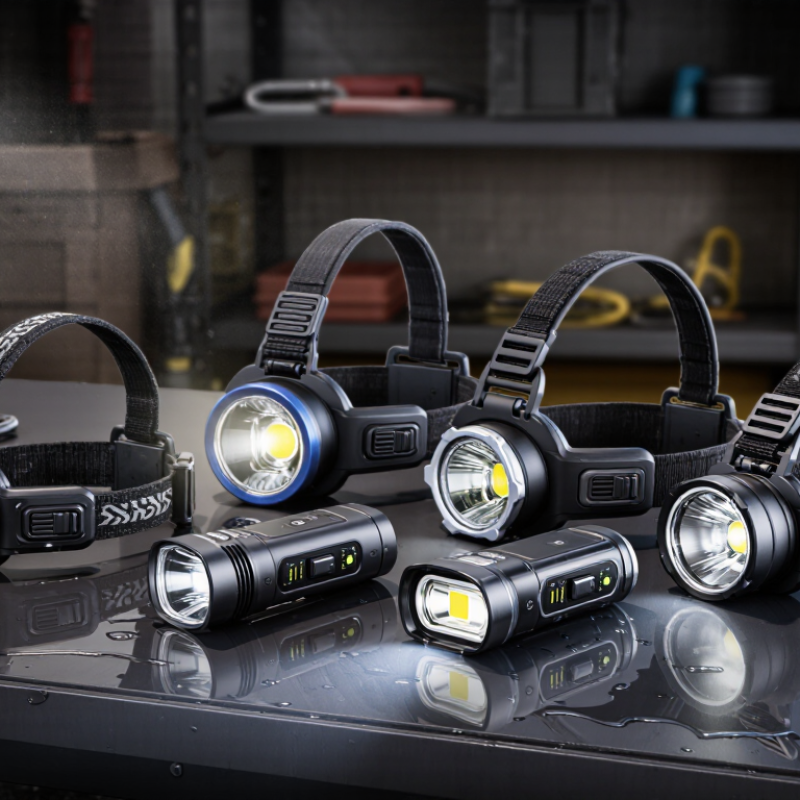
Top Zooming LED Headlamp Suppliers for Global Buyers
LED Headlamp Supplier Market Overview for Global Buyers
The global LED headlamp supplier market is shifting toward adjustable-beam designs for outdoor, industrial, and emergency work. For buyers, the key issue is not brightness alone. A dependable supplier should explain beam distance, flood coverage, runtime, charging type, and heat control clearly. Ask for samples before placing a large order. Test the zoom mechanism with gloves, dust, and repeated adjustments. Small details matter.
Experienced sourcing teams compare suppliers through technical documents and production evidence. Useful records include battery test results, ingress protection ratings, photometric data, and inspection reports. Buyers should also review LED consistency between samples and mass-production units. A headlamp that reaches 300 meters may produce a narrow, uncomfortable beam. That specification needs context. Packaging quality matters too, especially when products travel through humid warehouses or long sea shipments.
Pricing varies with battery capacity, housing material, optics, and order volume. My sourcing experience suggests that the cheapest quotation often hides weaker switches or uncertain runtime. No supplier is flawless. I once found a promising sample with excellent brightness but poor charging-port sealing. That mistake changed the evaluation process. Buyers now check warranty terms, replacement parts, minimum order quantities, and lead times in writing. Some suppliers answer quickly but provide vague test evidence. Others communicate slowly yet maintain stronger production controls. This market still rewards careful verification.
Zooming LED headlamps are judged by more than brightness. A practical model should deliver a clear beam from close reading distance to roughly 100 meters. The adjustable lens matters here. It can change a wide flood beam into a tighter spot beam within seconds. According to the U.S. Department of Energy’s LED technology reports, modern LEDs can exceed 100 lumens per watt under suitable conditions. However, higher output also creates more heat and faster battery drain. More light is not always better.
Buyers should compare tested output, runtime, beam distance, and charging performance. The ANSI/PLATO FL 1 standard provides useful methods for measuring these features. A reliable headlamp should state runtime at each brightness level, not only its maximum lumen figure. Look for impact resistance, an IP rating, and a stable head strap. A 120-gram unit may feel comfortable at first, yet become distracting after several hours. Small details matter. A rear battery pack can improve balance, but it may catch on a helmet or backpack.
Battery efficiency deserves careful attention. Grand View Research’s 2024 outdoor lighting analysis identifies energy efficiency and portable performance as continuing purchasing drivers. USB-C charging, battery indicators, and replaceable cells can improve field usability. Cold weather still reduces battery capacity, sometimes noticeably. Suppliers should provide independent test records, clear warranty terms, and production consistency data. Some advertised figures remain optimistic. Buyers should question them. A short hands-on trial often reveals more than a bright specification sheet.
Evaluating LED headlamp suppliers requires more than comparing lumen claims. The 2024 Grand View Research market report identifies growing demand for compact, rechargeable lighting in outdoor and industrial applications. Buyers should therefore inspect production capacity, battery sourcing, and quality-control records. Ask for test reports covering brightness, runtime, beam distance, impact resistance, and water resistance under ANSI/PLATO FL 1 methods.
Look for measurable engineering details. A supplier should explain its zoom mechanism, lens material, LED bin, thermal design, and charging protection. The U.S. Department of Energy’s LED research shows that thermal management strongly affects efficiency and service life. A headlamp that becomes hot after ten minutes may lose brightness quickly. Request LM-80 and TM-21 data when long-term LED performance matters. Also verify IP ratings through independent laboratory testing, not only factory claims.
Check samples in realistic conditions. Test the lamp on a wet trail, with gloves, and during repeated charging cycles. Battery capacity can look impressive on paper. Actual runtime may be shorter at maximum output. Supplier audits should review incoming materials, calibration records, defect rates, and corrective actions. ISO 9001 certification is useful, but it does not guarantee every shipment. No scorecard is perfect. I would still require pre-shipment inspection, traceable batch numbers, and clear warranty terms before placing a large order.
| Evaluation Dimension | Recommended Benchmark for a Zooming LED Headlamp | Evidence to Request from the Supplier | Common Risk or Warning Sign | Priority |
|---|---|---|---|---|
| Light Output | Request measured output in lumens, with separate readings for high, medium and low modes. Avoid relying only on an advertised maximum figure. | Independent integrating-sphere test report, test conditions, operating time at each mode and sample photographs of the test setup. | Maximum lumen claims without test conditions, runtime data or a clear measurement method. | High |
| Beam Adjustment | Smooth and repeatable spot-to-flood adjustment with no visible flicker, loose movement or sudden beam distortion. | Video demonstration, repeated adjustment test and sample inspection under both close-range and long-range conditions. | A narrow beam is marketed as “zooming” even though the focus mechanism cannot maintain a stable beam. | High |
| LED Efficiency and Thermal Control | Stable brightness during continuous operation, controlled housing temperature and a design that prevents rapid thermal throttling. | Continuous-runtime test, temperature records, LED specification sheet and thermal protection description. | Brightness drops sharply after a few minutes or the housing becomes uncomfortable to handle. | High |
| Runtime Performance | Runtime should be reported by operating mode and measured from a fully charged battery until the defined low-voltage cutoff. | Runtime chart, battery capacity, discharge test procedure and results from at least three production samples. | Runtime is calculated only from battery capacity and nominal LED power rather than measured in a complete product test. | High |
| Battery and Charging Safety | Protected rechargeable cells, overcharge protection, short-circuit protection and a charging design suitable for the destination market. | Battery cell specification, protection-circuit details, charger test report and applicable transport documentation for lithium batteries. | Unmarked cells, inconsistent capacity, unsafe charging accessories or unclear battery traceability. | High |
| Ingress Protection | For outdoor use, an IPX4 or higher rating is a practical minimum; products exposed to heavy rain may require a higher verified rating. | IP test report issued for the complete assembled product, including the battery compartment and charging-port cover. | The supplier lists an IP rating without a report or tests only the lamp housing rather than the complete product. | High |
| Materials and Mechanical Durability | Impact-resistant housing, corrosion-resistant external parts, secure lens retention and a stable zoom mechanism. | Material declaration, drop-test results, switch-cycle test, hinge or slider-cycle test and pre-production sample review. | Thin housing, sharp edges, loose battery cover or a focus mechanism that becomes loose after repeated use. | Medium |
| Headband Comfort and Fit | Adjustable elastic straps, stable top support when needed, washable or replaceable strap components and balanced weight distribution. | Product dimensions, total weight with battery, strap material information and fit testing on different head sizes. | Front-heavy construction, weak strap stitching or adjustment range that is unsuitable for helmet or winter use. | Medium |
| Compliance Documentation | Documentation should match the exact model, battery configuration and destination-market requirements. | Applicable electrical-safety, electromagnetic-compatibility, battery-transport and chemical-compliance documents, with model numbers cross-checked. | Generic certificates, expired documents, mismatched model numbers or reports issued for a different product. | High |
| Quality-Control System | Defined incoming-material inspection, in-process checks, final inspection and traceable corrective-action procedures. | Quality manual, inspection checklist, defect classification, sample inspection records and production traceability process. | Quality control depends only on visual inspection with no documented acceptance criteria. | High |
| Sampling and Pre-Shipment Inspection | Use an agreed sampling plan and written acceptance criteria before mass production and shipment. | Approved golden sample, inspection standard, test checklist, defect limits and independent inspection access. | The supplier refuses third-party inspection or changes the approved sample without written approval. | High |
| Customization Capability | Ability to support approved changes to housing color, packaging, labeling, beam modes or battery configuration without reducing compliance. | Engineering-change procedure, prototype samples, tooling information, artwork approval process and revised test documents. | Custom changes are accepted informally but are not reflected in drawings, samples or inspection specifications. | Medium |
| Minimum Order Quantity | Evaluate the minimum order separately for standard products, customized products, custom packaging and custom tooling. | Written quotation showing quantity breaks, setup charges, tooling fees, packaging requirements and sample-order terms. | A low initial quantity is offered but hidden packaging, tooling or customization fees appear later. | Medium |
| Lead Time and Capacity | Compare sample lead time, mass-production lead time, peak-season capacity and component availability. | Production schedule, capacity statement, component lead-time assumptions and on-time delivery records for comparable orders. | Lead-time promises exclude battery sourcing, testing, packaging approval or port-handling delays. | High |
| Warranty and After-Sales Support | Written warranty scope, replacement or repair procedure, response time and spare-parts policy should be defined before ordering. | Warranty terms, defect-return process, failure-analysis procedure, spare-parts list and service contact structure. | Warranty exclusions are broad or the supplier cannot explain how defective units will be handled internationally. | Medium |
| Packaging and Export Readiness | Packaging should protect the lens, switch, battery compartment and charging accessories during international transport. | Packaging drawings, carton drop-test results, carton dimensions, shipping marks and battery transport classification. | Insufficient inner protection, incorrect carton information or missing documentation for battery shipments. | High |
| Commercial Transparency | Quotation should clearly separate product price, tooling, packaging, testing, shipping terms, payment terms and revision costs. | Itemized quotation, pro forma invoice, contract terms, approved specifications and change-control agreement. | Important costs or product specifications remain verbal and are not included in the purchase documents. | High |
Use this framework to compare suppliers on verified evidence rather than advertised specifications. Product performance, compliance status and battery documentation should always be confirmed for the exact model and final configuration being purchased.
Global buyers can divide zooming LED headlamp suppliers into four practical categories: OEM factories, ODM developers, component specialists, and contract assemblers. OEM suppliers usually provide stable tooling and repeat production. ODM teams add optical design, housing changes, and packaging support. Component specialists focus on LEDs, lenses, drivers, or battery modules. Contract assemblers suit buyers with established designs but limited production capacity.
Manufacturing depth matters more than catalog variety. A capable supplier should operate SMT lines, injection-molding equipment, CNC stations, and automated aging tests. Photometric testing can verify beam distance, intensity, and color consistency. The U.S. Department of Energy’s 2023 SSL R&D Opportunities report highlights ongoing gains in LED efficacy, thermal control, and optical management. These areas directly affect a headlamp’s brightness and runtime. Look for IP testing aligned with IEC 60529 and photobiological safety checks based on IEC 62471.
Market data also supports careful supplier screening. Grand View Research valued the global LED lighting market at over USD 80 billion in 2023, with continued double-digit growth expected in several regions. However, lighting-market figures include many products beyond headlamps. That limitation matters. Ask suppliers for batch traceability, battery-cycle records, lumen test conditions, and quality-system documentation. ISO 9001 certification helps, but it does not replace factory audits. No category is perfect. Some suppliers quote low prices while weakening thermal materials or switch quality, a mistake buyers may notice only after field testing.
International buyers should evaluate zooming LED headlamp suppliers beyond catalog prices. Request production samples before discussing large orders. Test beam adjustment, switch response, battery contact stability, charging performance, and water resistance under practical conditions. A headlamp that feels strong indoors may disappoint on a cold outdoor site. Ask suppliers for material specifications, test records, packaging details, and production lead times. Clear documents reduce costly misunderstandings across borders.
Tips: Use one approved sample as the quality reference. Record brightness, runtime, weight, and beam movement. Check several units from each carton, not only the first piece. Confirm labeling, manuals, carton marks, and electrical information before shipment. A simple inspection checklist helps different teams measure the same details. Keep photos and test results with the purchase order.
International purchasing also requires careful supplier communication. Confirm payment terms, sampling charges, replacement procedures, and tolerance limits in writing. Independent pre-shipment inspection can reveal loose hinges, uneven plastic seams, damaged lenses, or inconsistent charging ports. However, inspection is not perfect. It may miss failures appearing after repeated use. Buyers should consider small pilot orders and collect field feedback from workers. Sometimes the cheapest offer creates higher costs through returns, delays, and rework. Suppliers with stable records, transparent answers, and responsive quality teams are usually safer long-term partners. Still, records need regular review. Past performance can change.
This website uses cookies to ensure you get the best experience possible. Learn more.