Why Choose a Film Cutting Machine for Your Business?
Choosing a Film Cutting Machine can change how a business handles daily production, but the right choice depends on the work. A sign shop preparing window graphics has different needs from a packaging team trimming protective film. On a busy bench, even small delays—repositioning a sheet or correcting a rough edge—can add up across a full shift. Clean cuts matter. So do repeatability, operator training, and the space available beside other equipment.
Before comparing machines, consider the films you actually use, their thickness, roll width, and how often designs change. Ask suppliers about cutting accuracy, compatible software, blade availability, and service support. If possible, run a sample using your own material; a product demonstration may not reflect your real workflow. A precise machine can reduce manual trimming and material waste, yet it will not fix poor artwork, inconsistent film, or an unsuitable blade. That matters. Look beyond the purchase price, too: include setup time, maintenance, consumables, and the cost of training staff. These details are easy to overlook.
This guide explores the practical reasons businesses invest in film-cutting equipment, the features worth comparing, and the trade-offs behind different models. It also considers when outsourcing or keeping a manual process may make more sense. There is no perfect machine for every shop. A careful choice starts with honest production needs, not the longest feature list.
What a Film Cutting Machine Does in Modern Converting Operations
Why Choose a Film Cutting Machine for Your Business?
What a Film Cutting Machine Does in Modern Converting Operations
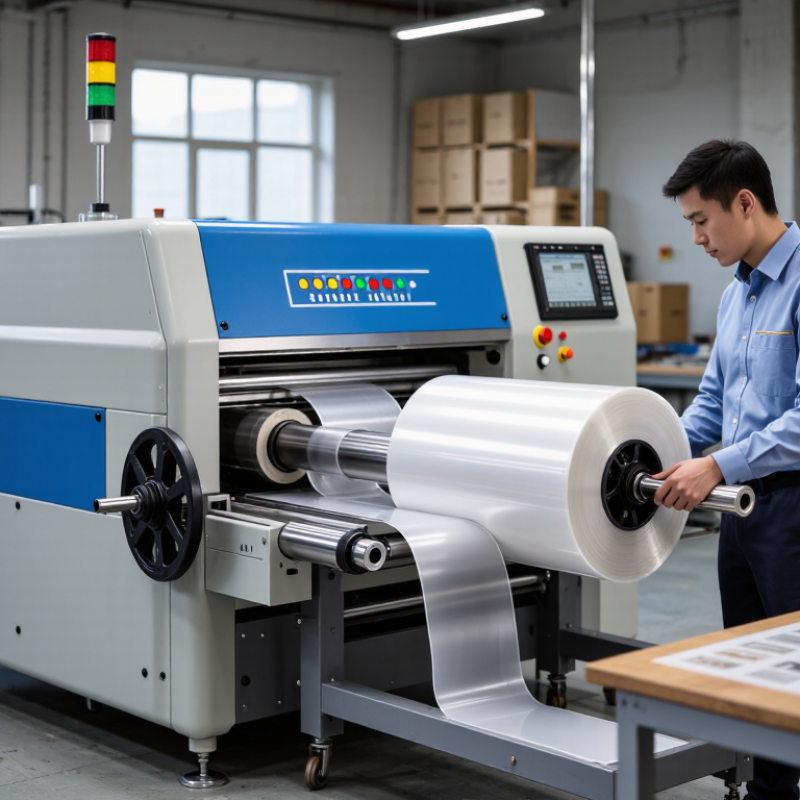
In modern converting operations, a film cutting machine turns wide rolls of plastic film into narrower rolls or sheets ready for packaging, printing, lamination, or further processing. Operators load a master roll, guide the film through rollers, and set the required width and length. A rotary blade or other cutting tool makes the cut as the material moves. Clean edges matter: uneven cuts can cause wrinkles or misalignment downstream.
The machine also helps control tension and maintain consistent output. Sensors and adjustable rollers can reduce slack, stretching, and shifting, especially when handling thin films. Operators may save settings for repeat jobs, but the right setup still depends on film thickness, surface finish, and roll diameter. Small errors show up quickly. A loose core, for example, can make a neat roll wobble during unwinding.
For a converting business, reliable cutting can reduce manual trimming and material waste. It can also help teams meet specific customer widths without changing the entire production line. Still, a successful trial with one film does not guarantee the same result with every material. Check cut quality, edge condition, speed, and waste using your actual film before committing to a production setup.
Why Choose a Film Cutting Machine for Your Business? — What a Film Cutting Machine Does in Modern Converting Operations | Operation or Capability | What the Machine Does | Business Value | Key Consideration |
| Roll slitting | Divides a wide film roll into narrower rolls using cutting blades or another specified cutting system. | Produces roll widths suited to downstream processes or customer requirements. | Blade type, setup, film properties, and machine configuration affect edge quality and achievable tolerances. |
| Sheet cutting | Cuts film from a roll into sheets of a selected length when the equipment is configured for sheeting. | Supports applications that require flat, consistently sized film pieces. | Cut length, feeding accuracy, and film handling should be matched to the material and end use. |
| Length and width setup | Allows operators to set cut dimensions according to the machine’s controls and tooling. | Helps standardize repeat orders and reduce reliance on manual measuring and cutting. | Confirm the machine’s usable width, length range, and changeover requirements before purchase. |
| Web tension and material handling | Guides and manages the film web through the cutting process; tension-control features vary by machine. | Appropriate handling can help limit wrinkles, stretching, and tracking problems during conversion. | Thin, stretchable, or static-prone films may need suitable tension, guiding, and static-control provisions. |
| Repeatable production | Uses defined settings and operating procedures to reproduce cut sizes across production runs. | Can improve consistency and make production planning easier compared with fully manual cutting. | Results depend on calibration, material variation, operator practice, and routine maintenance. |
| Trim and waste management | Some slitting setups generate edge trim or offcuts that must be collected and handled. | Clear trim handling can keep the work area organized and support material-use monitoring. | Actual material yield depends on incoming roll quality, setup choices, cut layout, and process losses. |
| Production flexibility | May support different film materials, widths, or cutting formats within the machine’s stated capabilities. | Can help a business handle a broader mix of converting jobs with one production resource. | Verify compatibility with each film’s thickness, width, surface, and required finished format. |
| Safety and maintenance | Requires safe operation around moving rolls and cutting components, plus inspection and upkeep. | Planned training and maintenance help support dependable day-to-day operation. | Follow the machine’s safety instructions, guarding requirements, and maintenance schedule. |
How ASTM D882 Covers Tensile Testing of Plastic Film Under 1 mm
Plastic film is often judged by numbers that begin with a clean cut. ASTM D882 covers tensile testing of plastic sheeting less than 1.0 mm thick. It measures properties such as tensile strength, elongation, and tensile modulus. A film cutting machine can produce repeatable specimen widths and cleaner edges before testing. That matters. Small nicks can become tear-starting points and affect results. Still, a precise cut alone cannot ensure a reliable test.
PlasticsEurope’s Plastics – the Fast Facts 2024 reports 413.8 million tonnes of plastics produced worldwide in 2023. This figure covers all plastics, not film alone, but it illustrates the scale of material production. Under ASTM D882, operators should document specimen thickness, orientation, conditioning, grip setup, and test speed. They should follow the applicable standard edition and material requirements. Test both machine and transverse directions when film orientation matters. A smooth edge helps, yet thickness variation, humidity, and grip alignment can also change a result. These details are easy to overlook. A cutting machine supports consistency, but the test still depends on careful setup and honest reporting.
How Slitting, Sheeting, and Die Cutting Create Different Outputs
Why Choose a Film Cutting Machine for Your Business?
Slitting, sheeting, and die cutting turn the same film roll into different usable formats. Slitting makes narrower rolls for bag-making lines or narrow packaging. Operators set blade spacing and tension; poor tension can leave curled edges or uneven rolls. Sheeting cuts film into flat panels, useful when a process needs sheets rather than continuous rolls. Die cutting stamps repeatable shapes, such as rounded labels or custom inserts, from a web or sheet. It creates more complex outlines, but setup and material waste can increase.
The scale of this work matters. The Flexible Packaging Association’s 2023 State of the U.S. Flexible Packaging Industry report estimated U.S. industry sales at $42.9 billion in 2022. That figure does not determine which cutter a shop needs, but it shows why reliable converting steps matter across a large market. Match the method to the next operation: a narrow roll for winding, flat sheets for stacking, or shaped pieces for assembly. A versatile machine may help, but switching tools and settings still takes time.
Tips: Test the actual film, not just a sample with similar thickness. Check edge quality, dimensional consistency, and scrap after a full-speed run. Keep a setup record. It may be incomplete at first, but notes on blade spacing, tension, and feed speed make the next trial less of a guess.
Why Choose a Film Cutting Machine for Your Business?
Slitting, sheeting, and die cutting turn roll stock into different output formats.
Example output width (mm): Slitting can produce 250 mm-wide lanes from a 1,000 mm master roll; sheeting can produce A4 sheets, which are 210 mm wide; and die cutting can produce a 50 mm-wide component. The die-cut size is an illustrative example, not a standard specification. Actual dimensions depend on the material and job requirements.
How Cutting Speed, Tolerance, and Scrap Rates Affect Production Costs
A film cutting machine can raise output, but the useful number is finished, usable rolls per shift. A high feed speed means little if operators pause often to clear curled edges or reset the web. Speed isn’t everything. Track run time, changeover time, and accepted output across several jobs, not just the machine’s top setting.
Tolerance affects both fit and yield. If a customer needs a narrow width range, inconsistent cuts can create rolls that require inspection, rework, or rejection. Even small errors may accumulate across a long roll. Check cut width at the start and at intervals, using the same measuring method each time. Scrap rates also deserve a close look: edge trim, damaged starts, and misaligned cuts consume film that has already been purchased. A trial run on the actual film can reveal whether blade condition, web tension, or operator setup is driving waste. Results vary by material and job. A spreadsheet may overlook a slow changeover or a roll that looks acceptable but unwinds poorly. Compare total cost per accepted roll, including labor, scrap, and downtime, before deciding whether faster cutting truly saves money.
Which OSHA 29 CFR 1910.212 Guarding Requirements Should Buyers Check?
Why Choose a Film Cutting Machine for Your Business?
Which OSHA 29 CFR 1910.212 Guarding Requirements Should Buyers Check?
A film cutting machine can speed up repeat work, but its blade and feed rollers need careful guarding. Under OSHA 29 CFR 1910.212, buyers should check protection around the point of operation, rotating parts, and in-running nip points. A hand reaching toward a blade or between rollers can be exposed to serious injury. Guards should prevent access to danger zones without creating another hazard.
Tips: Ask to see the machine running, then inspect guards at the blade, roller infeed, and discharge. Check whether openings allow fingers to reach moving parts. Confirm guards are secured and can be removed only when needed for servicing. If access doors have interlocks, verify they stop hazardous motion when opened. A clear panel helps visibility, but it is not protective if hands can pass through.
Also consider how operators load film, clear jams, and change blades; these tasks can expose hazards that are hidden during normal cutting. Ask for the machine’s risk assessment and guarding instructions, and have a qualified safety professional review the setup for your workplace. Details matter. A guard that works on a showroom floor may be awkward beside a real production line, and that deserves a second look.