Top 10 Press Fit Bottom Bracket Tools to Buy?
Choosing the right press fit bottom bracket tool can protect an expensive frame and prevent frustrating workshop damage. These tools look similar, but their thread quality, guide sleeves, bearing supports, and alignment accuracy can differ sharply. A tool that feels solid in your hand may still press a bearing unevenly.
Calvin Jones, Park Tool’s director of education, offers a practical workshop principle: “Press the bearing in straight, not just hard.” That advice explains why this comparison matters. A correct installation should feel controlled, with steady resistance and no sudden twisting. Grease on the contact surfaces, clean frame shells, and properly sized drifts also matter. The tool cannot repair careless preparation.
This Top 10 list examines press fit bottom bracket tools for home mechanics, mobile technicians, and busy professional shops. We consider compatibility with common BB86, BB90, BB92, PF30, and BB30 systems. We also look at handle comfort, spindle support, replaceable parts, portability, and long-term value. Some premium kits are beautifully engineered. They may still be excessive for occasional riders.
There is no perfect choice.
A cheaper press may work well with careful hands, while an expensive kit can expose poor alignment immediately. I have found that product descriptions often hide important limitations, especially around shell width and bearing diameter. Therefore, each recommendation should be checked against your bicycle’s specifications. This guide is useful, but not a substitute for measuring twice. Small mistakes become expensive quickly.
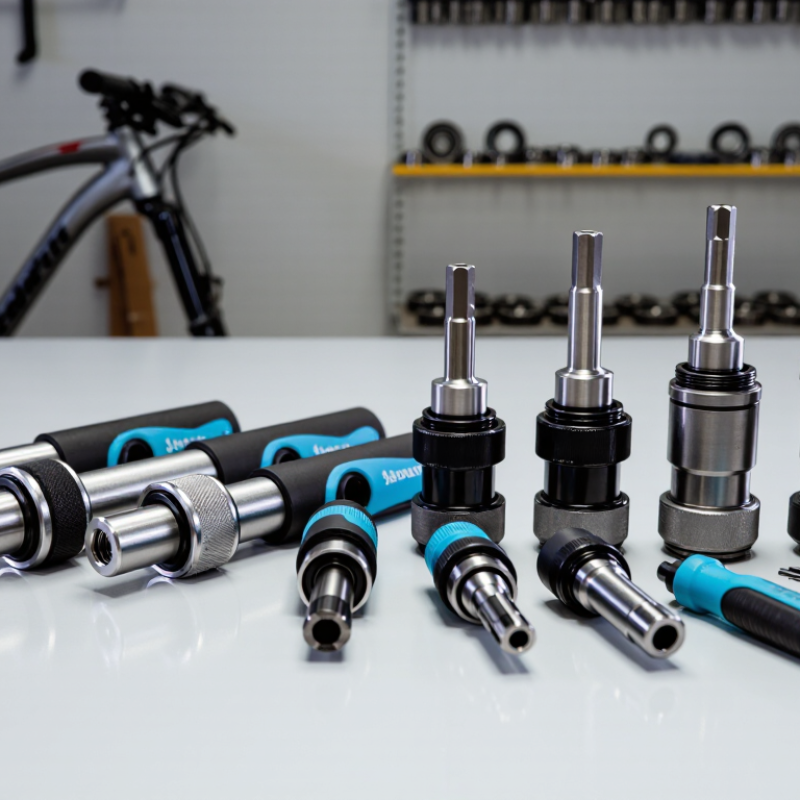
Press-Fit Basics: Compare BB86 (86.5 mm), BB92 (92 mm), BB30 (42 mm)
Top 10 Press Fit Bottom Bracket Tools to Buy?
Press-fit standards can look similar, but their measurements are not interchangeable. BB86 uses an 86.5 mm shell width, while BB92 uses a wider 92 mm shell. Both usually accept cups pressed into a frame with a 41 mm internal diameter. BB30 is different: its bearing seat measures 42 mm, and bearings may sit directly inside the frame. Check the frame drawing before choosing a tool.
A reliable press-fit tool needs a straight guide rod, accurately sized drifts, and smooth contact surfaces. The drift should push the cup evenly, not against its seal or bearing. For BB86, select spacers that match the narrower shell. BB92 needs more spacing on the same rod. BB30 removal often requires expanding extractors that reach behind the bearing without scratching the carbon or alloy seat.
I once assumed a longer rod would make installation safer. It did not. Poor alignment still damaged a cup edge. Measure twice. A caliper, shell-width gauge, and clean inspection light are worth adding to the tool list. Grease is not always correct; follow the component maker’s fit guidance. Some frames require retaining compound, while others prohibit it. Press slowly, stop if resistance changes suddenly, and inspect both cups after installation. Small errors become creaks quickly.
| Rank | Tool Type | Primary Job | BB86 Compatibility | BB92 Compatibility | BB30 Compatibility | Important Tool Size or Interface | Recommended Use | Key Buying Consideration |
|---|---|---|---|---|---|---|---|---|
| 1 | Universal Press-Fit Installation Kit | Installs press-fit cups or bearings evenly into the frame shell. | Yes | Yes | Yes | Threaded rod, pressure plates, and interchangeable drifts for approximately 37–46 mm interfaces. | Home workshops and general bicycle servicing. | Choose a kit with rigid plates, smooth thrust bearings, and frame-specific drifts. |
| 2 | BB86/BB92 Cup Press with 41 mm Drifts | Presses bearing cups into frames using a controlled, straight load. | Yes | Yes | No | Drifts should support the outer face of the approximately 41 mm press-fit cup without touching the bearing seal. | Frames using external press-fit cups around cartridge bearings. | Verify the drift contacts the cup, not the inner bearing race or dust seal. |
| 3 | BB30 Bearing Installation Drift Set | Installs bearings directly into a BB30 frame shell. | No | No | Yes | Designed for approximately 42 mm bearing outer diameter and 68 or 73 mm shell widths. | BB30 frames with bearings pressed directly into the shell. | Use bearing-specific drifts that load the outer race only. |
| 4 | Press-Fit Removal Collet Set | Removes installed cups or bearings from the inside of the shell. | Yes | Yes | Yes | Expanding collets must match the internal lip of the cup or bearing being removed. | Removal of seized or service-worn press-fit assemblies. | Prioritize collets with rounded edges to reduce the risk of shell damage. |
| 5 | Threaded Rod and Thrust-Bearing Press | Provides a compact, low-cost pressing mechanism. | Yes | Yes | Yes | Common configurations use a threaded rod with large washers or dedicated 37–46 mm press plates. | Occasional maintenance and small workshop use. | A thrust bearing makes tightening smoother and helps prevent the plates from twisting. |
| 6 | Guided BB30 Bearing Press | Keeps the installation shaft aligned through the frame shell. | No | No | Yes | Must support the 42 mm bearing outer race and accommodate common 68 or 73 mm BB30 shells. | Frequent BB30 bearing replacement. | Internal guides are useful because BB30 bearings are installed directly into the frame. |
| 7 | Multi-Standard Press Plate Set | Adapts one press mechanism to different press-fit standards. | Yes | Yes | Yes | Look for clearly marked plates for approximately 37, 41, 42, and 46 mm applications. | Workshops servicing several frame and crank standards. | Plate diameter alone is not enough; the contact surface must match the cup or bearing race. |
| 8 | Bearing-Safe Installation Drift Kit | Transfers force to the correct bearing race during installation. | Yes | Yes | Yes | Includes separate inner- and outer-race support profiles for common cartridge-bearing sizes. | Precision servicing where bearing seal damage must be avoided. | Confirm the drift profile matches the bearing’s outer diameter and race location. |
| 9 | Portable Lever-Action Press | Creates pressing force without a long threaded rod. | Yes | Yes | Yes | Requires interchangeable 41 mm or 42 mm contact adapters, depending on the standard. | Mobile mechanics and service work away from a full workshop. | Check the maximum opening width and available pressing travel before purchase. |
| 10 | Press-Fit Service Alignment Gauge | Checks shell alignment, cup seating, and installation depth. | Yes | Yes | Yes | Should reference the shell centerline and accommodate 41 mm BB86/BB92 cups or 42 mm BB30 bearings. | Quality control after installation or diagnosis of recurring bearing wear. | Useful as a companion tool, but it does not replace a properly sized installation press. |
Related Posts
-

How to Choose the Best BSA Bottom Bracket Tool for Your Needs?
-
How to Choose the Right Bottom Bracket Tool for Your Bike?
-
Essential Tips for Choosing the Right Bottom Bracket
-

Top Tools for Press Fit Bottom Brackets in 2026 What to Buy?
-
Top 5 Benefits of Using a 73mm Threaded Bottom Bracket for Your Bike
-
Unlocking Performance Upgrades with the Best 68mm Bottom Bracket Choices for Your Ride
This website uses cookies to ensure you get the best experience possible. Learn more.