2026 Best Road Bike Bottom Bracket Which One to Buy?
Choosing a road bike bottom bracket in 2026 is not a simple matter of picking the lightest model. Frame standards, crank compatibility, bearing seals, and installation tools all influence the result. A quiet crankset can feel effortless on smooth asphalt. It can also expose poor bearing alignment after several wet rides.
Industry reports provide useful context, but they do not replace workshop inspection. CONEBI’s 2024 European Bicycle Industry and Market Profile shows the continuing importance of high-value bicycle components within a mature cycling market. ZIV’s 2024 market data also highlights strong demand for technically advanced bicycles in Germany. These reports do not rank bottom brackets directly. They help explain why compatibility, durability, and service access matter more than marketing claims.
This guide compares threaded, press-fit, ceramic, steel, and hybrid bearing options for modern road bikes. It examines standards such as BSA, T47, BB86, and BB30, along with common Shimano and SRAM crank requirements. Manufacturer service manuals remain essential references, especially for torque values and spacer placement. Independent testing can reveal drag and sealing differences, yet laboratory results may not match a muddy commute or a long mountain descent. That limitation deserves attention. The “best” choice may be the component your mechanic can install correctly and service locally. We will weigh measured performance against real workshop experience, replacement cost, weather exposure, and long-term reliability before recommending which road bike bottom bracket deserves your money in 2026.
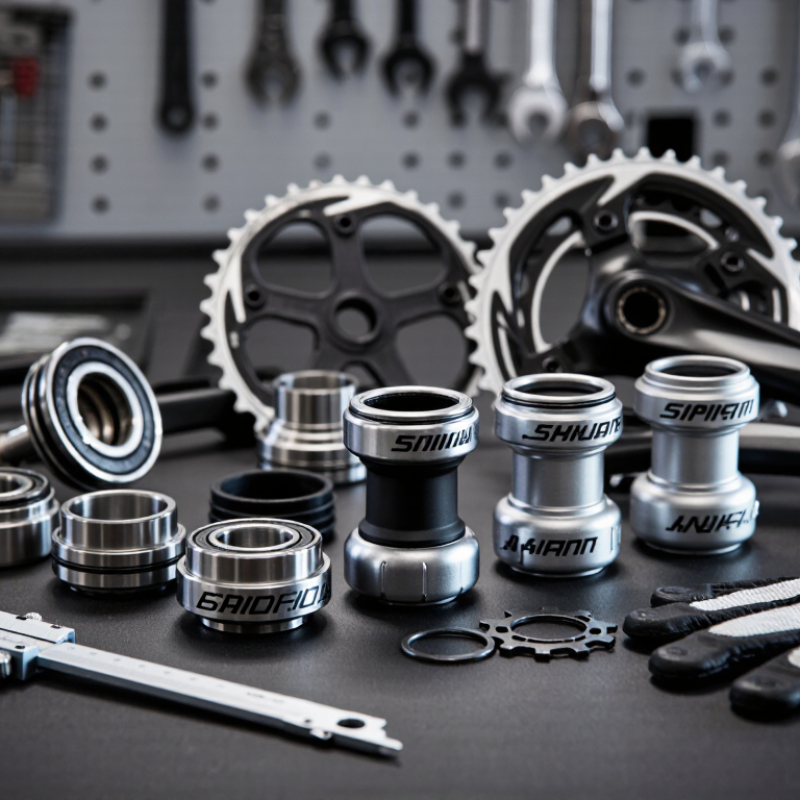
Road Bike Bottom Bracket Standards: BSA 68/73 mm, BB86 86.5 mm, and T47
2026 Best Road Bike Bottom Bracket Which One to Buy?
Choosing a road bike bottom bracket starts with the frame shell, not the crankset. BSA uses internal threads and commonly measures 68 mm on road frames. A 73 mm shell appears more often on wider mountain-bike designs, so do not assume compatibility. Measure the shell before ordering.
BB86 is a press-fit standard with an 86.5 mm shell width and roughly 41 mm internal diameter. Its wider platform can improve crank alignment, but installation requires clean faces and accurate pressing. Dust, paint, or uneven pressure may cause noise. I have seen a new bearing feel rough because the shell was never checked properly. That mistake is easy to repeat.
T47 uses large internal threads and combines a threaded interface with a wider press-fit style layout. Road versions commonly use a 68 mm shell, while other frames may specify 86.5 mm. The exact standard still depends on the frame and crank spindle. Check shell width, thread direction, spindle length, bearing position, and spacer instructions together. Small errors matter. Measure twice.
For wet roads, sealed bearings and careful grease application usually provide better reliability. Ceramic bearings are not automatically faster in real conditions. They may also demand stricter maintenance. I prefer a quiet, correctly fitted bottom bracket over an expensive one installed by guesswork. A torque wrench helps, but it cannot correct the wrong standard.
2026 Best Road Bike Bottom Bracket Which One to Buy? - Road Bike Bottom Bracket Standards: BSA 68/73 mm, BB86 86.5 mm, and T47
| Bottom Bracket Standard | Frame Shell Dimensions | Frame Interface | Typical Road-Bike Use | Key Advantages | Common Limitations | What to Check Before Buying |
|---|---|---|---|---|---|---|
| BSA 68 mm |
Shell width: 68 mm Thread: 1.37 × 24 TPI Thread direction: right side is reverse-threaded; left side is standard-threaded |
Threaded steel or aluminum shell with external or internal bearing cups | Traditional road frames using a standard threaded bottom-bracket shell |
|
|
Confirm the shell width is 68 mm, the frame uses BSA threading, and the bottom-bracket spindle matches the crankset |
| BSA 73 mm |
Shell width: 73 mm Thread: 1.37 × 24 TPI Thread direction: right side is reverse-threaded; left side is standard-threaded |
Threaded shell with external or internal bearing cups | More common on mountain, gravel, and utility frames than on standard road frames |
|
|
Verify the crankset’s required shell width, chainline, spindle length, and manufacturer-specified spacer arrangement |
| BB86 Road |
Shell width: 86.5 mm Shell inside diameter: approximately 41 mm Press-fit standard: cups or bearings are pressed into the frame |
Press-fit shell; the bearing cups or bearing cartridges sit inside the frame shell | Road frames designed for an integrated press-fit bottom-bracket system |
|
|
Measure the shell width and inside diameter; confirm that the bottom bracket is specifically made for BB86 road frames and the crank spindle diameter |
| T47-68 Internal |
Shell width: 68 mm Thread: 47 mm × 1.0 mm Cup position: cups thread into the inside of the frame shell |
Large-diameter threaded shell with internal cups | Road frames combining a threaded interface with compatibility for a broad range of crank spindle sizes |
|
|
Check that the frame is T47-68 internal rather than T47-86.5 external, then match the cup type to the crank spindle |
| T47-86.5 External |
Shell width: 86.5 mm Thread: 47 mm × 1.0 mm Cup position: cups sit outside the frame shell |
Large-diameter threaded shell with external cups | Road and endurance frames requiring a wide shell with a serviceable threaded interface |
|
|
Confirm the frame specification is T47-86.5 external and check the required chainline, spindle diameter, and spacers |
| Selection Guide |
|
|||||
| Important: Bottom-bracket standards are determined by the frame shell, not only by the crankset. Before purchasing, verify shell width, shell inside diameter, threading, cup position, crank spindle diameter, chainline, and required spacers. | ||||||
Related Posts
-
What is a 73mm Threaded Bottom Bracket and How to Choose?
-
What Are the Top Bottom Bracket Types?
-
How to Choose a China Top 24mm Bottom Bracket?
-
What Is the Best T47 Ceramic Bottom Bracket in China?
-
7 Tips for Choosing the Right BSA Bottom Bracket?
-
Top 10 Benefits of the T47 Ceramic Bottom Bracket for Cyclists?
This website uses cookies to ensure you get the best experience possible. Learn more.