What Are the Best Bottom Bracket Types for Bikes?
A bottom bracket is easy to overlook—until a creak follows every pedal stroke. This small assembly connects the crankset to the frame, supports rotation, and affects maintenance, compatibility, and long-term reliability. Yet there is no universally best option. The right choice depends on the frame shell, crank spindle, riding conditions, and the owner’s willingness to service it.
The main bottom bracket types include threaded systems such as BSA, press-fit designs such as BB86 and PF30, and integrated-bearing arrangements. Shimano’s dealer technical documents specify compatible crank and bearing combinations, while Park Tool’s repair guidance describes practical installation and removal requirements. These sources matter because a standard’s name alone does not confirm compatibility: shell width, diameter, spindle size, and manufacturer tolerances all count. PeopleForBikes’ industry reporting offers broader context on a diverse bicycle market, but it does not rank bottom bracket designs or prove that one lasts longest. That distinction is worth keeping clear.
For everyday riders, a common threaded unit may be easier to inspect and replace with ordinary shop tools. Press-fit designs can save space or suit particular frame layouts, but fit and installation quality become especially important. Small differences matter. No option is flawless; even a well-chosen unit can creak if it is poorly installed, contaminated, or mismatched. This guide compares bottom bracket types by compatibility, durability, serviceability, and cost, so you can choose based on your bike—not a marketing claim.
What a Bike Bottom Bracket Does
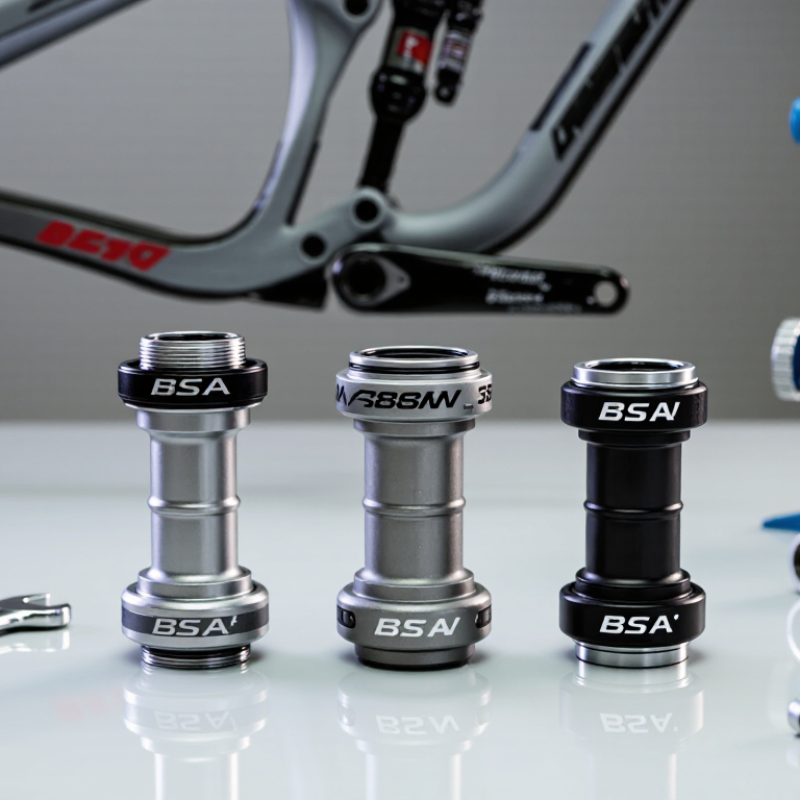
A bottom bracket joins the crank spindle to the bicycle frame and lets the cranks rotate while supporting the rider’s pedalling load. It contains bearings, cups or a sleeve, and seals that help keep water and grit away. Small part. Big job. When bearings become rough, you may feel drag, hear a click, or notice play at the crank. Those symptoms can also come from loose cranks or pedals, so check before replacing parts.
The workload adds up quickly: at 90 crank revolutions per minute, the assembly turns 5,400 times in one hour. That figure is a simple calculation, not a lifespan claim; rider weight, terrain, fit, and contamination all change wear. ISO 4210-8:2023 sets test methods for bicycle pedals and drive systems, reflecting the need to assess these parts under mechanical stress. It does not provide one universal measure of bottom-bracket friction or service life. In practice, smooth rotation and correct installation matter more than chasing a single “best” type. A press-fit unit may save space, while a threaded unit can be easier to service with compatible tools. Neither is immune to poor alignment or dirty seals. I have seen a quiet creak misdiagnosed as bearing failure; inspection is less glamorous, but often wiser.
What Are the Best Bottom Bracket Types for Bikes?
Common crank spindle diameters used with different bottom bracket systems
A bottom bracket holds the crank spindle in the frame and lets the cranks rotate. Common spindle formats include 24 mm, approximately 29 mm, and 30 mm. The best system depends on frame-shell compatibility, crankset fit, and service needs; spindle diameter alone does not determine compatibility. Square-taper spindles are tapered, so they are not shown as a single diameter here.
How Bottom Bracket Designs Differ
Bottom brackets differ mainly in how they attach to the frame and support the crank spindle. Threaded designs screw into a metal shell, making inspection and removal relatively straightforward. Press-fit designs use cups or bearings pressed into the frame. They can suit wider shells, but accurate frame dimensions matter. A poor fit may contribute to movement or noise. Fit matters most.
Bearing placement also changes the design. Some systems sit inside the frame shell; others place bearings outside it, which can allow larger bearings around the spindle. One-piece crank designs combine the spindle and crank arms, often on simpler or older bicycles. They are easy to recognize, but offer fewer upgrade options. Compatibility depends on shell width, diameter, threading, and spindle size. Similar-looking parts may not fit. A creak is not proof of a faulty bottom bracket; pedals, crank bolts, or the seat area can make similar sounds.
Tips: Check your frame’s specifications before buying parts. Measure the shell if its standard is unclear, and inspect for wear before replacing bearings. Keep the area clean during service. Small details matter.
What Are the Best Bottom Bracket Types for Bikes? - How Bottom Bracket Designs Differ
| Bottom Bracket Type |
Frame Interface and Typical Dimensions |
Common Spindle Fit |
Main Advantages |
Trade-Offs and Best Use |
| BSA threaded |
Threaded shell, 1.37 × 24 TPI; commonly 68 mm on road bikes and 73 mm on many mountain bikes. The drive side uses a left-hand thread. |
Often 24 mm; compatible units are also available for other spindle standards. |
Widely used, straightforward to service, and generally less prone to creaking when installed correctly. |
A strong all-round choice for everyday, touring, and mountain bikes. The frame must have the matching threaded shell. |
| Italian threaded |
Threaded shell, 36 × 24 TPI; typically 70 mm wide. Both cups use right-hand threads. |
Often 24 mm; other spindle-compatible versions exist. |
Threaded construction is serviceable and offers a familiar, durable interface. |
Found on some road frames, especially older designs. It is not interchangeable with BSA because the thread and shell width differ. |
| BB30 |
Bearings press directly into a nominal 42 mm frame shell; common shell widths are 68 mm for road and 73 mm for mountain bikes. |
Designed around a 30 mm spindle. |
Can be light and allows a large spindle within a relatively compact shell. |
Bearing fit and frame tolerances matter; noise or wear can occur if parts are poorly fitted. Check frame and crank compatibility carefully. |
| PF30 |
Press-fit cups sit in a nominal 46 mm frame shell; common shell widths include 68 mm for road and 73 mm for mountain bikes. |
Typically designed for a 30 mm spindle; compatible adapters or cups may support other spindle sizes. |
Accommodates a large spindle and uses cups between the bearings and frame. |
Requires the correct shell and cup combination. Installation quality and shell condition can affect noise and bearing life. |
| PF86 / PF92 |
Press-fit cups fit a nominal 41 mm shell. Typical shell widths are about 86.5 mm for road and 91.5–92 mm for mountain bikes. |
Commonly used with 24 mm spindles; specific bottom brackets can accommodate other sizes. |
A relatively wide shell can provide good frame stiffness, with bearings held in cups rather than directly in the frame. |
Press-fit installation requires suitable tools and accurate fit. Confirm the exact shell width and crank spindle before choosing parts. |
| T47 threaded |
Large-diameter threaded shell with a nominal 47 mm thread; available in several widths, including common road and mountain configurations. |
Available for 24 mm and 30 mm spindles, depending on the specific unit. |
Combines a threaded installation with space for larger bearings or spindles, depending on the design. |
Offers a serviceable option for compatible frames, but is not interchangeable with other threaded standards. Match shell width and spindle precisely. |
Dimensions are typical examples; standards and frame specifications can vary. Always check the frame shell, crank spindle, and bottom bracket manufacturer’s fit guidance before purchasing.
Common Bottom Bracket Types and Their Features
A bottom bracket joins the crankset to the bicycle frame and lets the cranks spin. Common types differ in how their cups fit the frame and where their bearings sit.
Threaded bottom brackets screw into matching frame threads, making installation and removal relatively straightforward. They are often a practical choice for routine maintenance. Square-taper systems use a compact axle and fit many older or utility bicycles, though they may not suit every modern crankset.
External-bearing designs place the bearings outside the frame shell, which can allow a wider axle. Press-fit types sit directly in a smooth frame opening, without threaded cups. They can save space, but correct frame and bearing tolerances matter; a poor fit may contribute to creaking. Quiet when fitted well.
Some systems use cartridge units, while others allow bearing replacement, so service needs vary. Before buying, check the frame’s shell width, diameter, and threading, then confirm crankset compatibility. A caliper and the bicycle’s service notes can prevent an expensive mismatch.
There is no perfect choice. Fit and maintenance matter more than a type’s reputation.
How Frame and Crank Compatibility Affects Your Choice
A bottom bracket must match both the frame shell and the crank spindle; matching only one can leave the bike unrideable. Measure the shell’s width and internal diameter, then check whether it is threaded or designed for press-fit cups. Common examples include 68 mm threaded shells and press-fit shells around 41 mm in diameter, but dimensions vary by frame standard. Small difference. A few millimetres can affect bearing alignment, crank clearance, and installation.
The spindle matters just as much. A square-taper crank needs a matching square-taper interface, while a 24 mm or 30 mm spindle needs a bottom bracket made for that diameter. ISO 6695:2015 specifies requirements and test methods for square-end crank assemblies; it is a useful technical reference, though it does not cover every modern interface. Check the frame maker’s shell specification and the crank’s spindle length before buying. A practical workshop habit is to measure the bare shell with calipers, rather than trust an old part’s label. I would still verify the crank’s chainline and clearance after fitting; compatibility charts can miss small frame-specific differences. A quiet spin is not proof of a correct fit.
How to Choose a Bottom Bracket for Your Riding Needs
Choose by frame fit before chasing a bottom-bracket type. Threaded units are often easier to remove with basic workshop tools, while press-fit units depend more on precise frame dimensions and installation. Check your frame’s shell width, diameter, crank-spindle size, and manufacturer specifications. ISO 4210-7:2023 sets safety tests for crank assemblies, but it does not rank threaded and press-fit systems for every rider. Fit comes first.
Think about weather and service access. A wet commuter may value effective sealing and straightforward replacement more than a few grams of weight. Mud, grit, and frequent washing can shorten bearing life, so inspect for rough rotation or play rather than relying on a calendar. Spicer and colleagues’ 2000 laboratory study found bicycle chain-drive efficiency could approach 98% under controlled conditions; it did not establish one bottom-bracket type as universally faster. I wouldn’t chase tiny gains here. For long-distance riding, choose a well-matched, serviceable unit and confirm the crank turns smoothly after installation. A slightly creaky setup can still be hard to diagnose. Check alignment and preload before replacing parts.