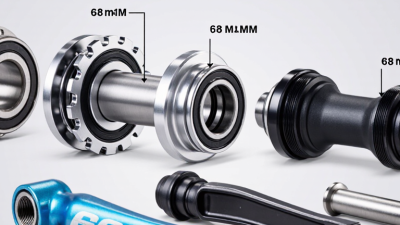
What Is a Square Taper Bottom Bracket?
A square taper bottom bracket is a traditional bicycle component that connects the crankset to the frame. Its spindle has tapered, square-shaped ends, and the crank arms press onto those ends and are secured with bolts. The design is compact and widely used on utility, touring, and older bicycles. Simple in principle.
Compatibility takes more care than the shape suggests. Spindle length affects crank position and chainline, while shell width and threading must match the frame. The interface standard matters, too: JIS and ISO square tapers differ slightly, so a crank that fits one may sit differently on the other. Fit still matters.
Professional references help explain the measurements. Park Tool’s bottom-bracket standards guide covers common interfaces and frame dimensions, while Shimano technical documentation provides component-specific installation and compatibility details. ISO 6695 also sets out assembly and test methods for crank axles and bottom-bracket assemblies. These sources are more useful for choosing parts than a general market statistic, which cannot confirm whether a particular crank will fit. Still, technical documents do not remove every uncertainty: worn threads, old parts, and unclear component history can complicate identification. A careful check of the frame shell, spindle, and crank is worthwhile before ordering replacements. This guide explains how the system works, what to measure, and where a square taper bottom bracket may—or may not—be the right choice.
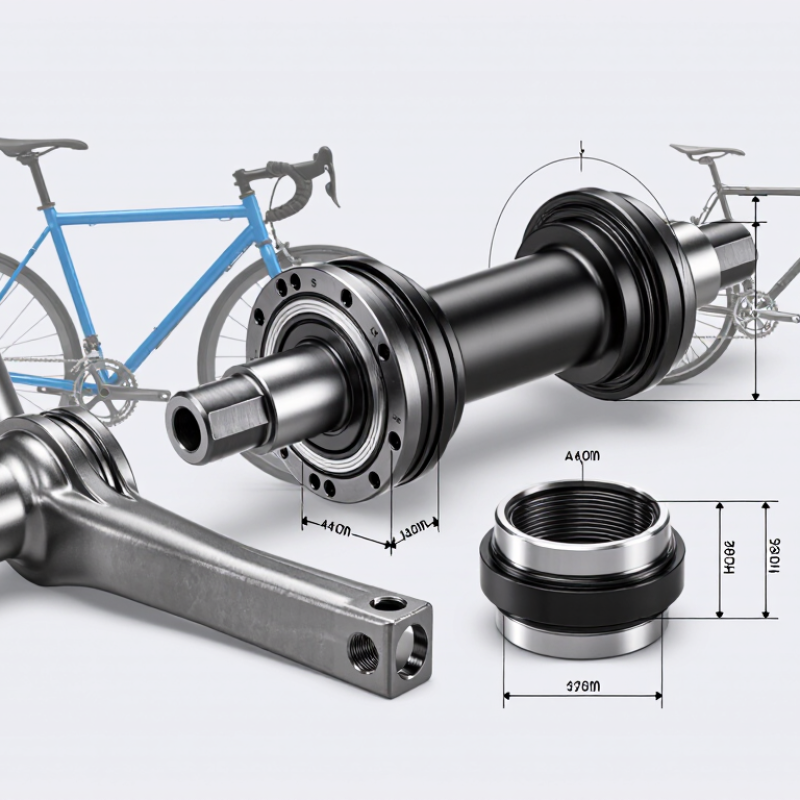
Definition and Purpose of a Square Taper Bottom Bracket
A square taper bottom bracket is the assembly inside a bicycle’s frame that supports the crank spindle and lets it rotate. The spindle has tapered, four-sided ends. Crank arms slide onto these ends and are held in place by fixing bolts. The bracket’s bearings allow smooth rotation while the frame keeps the assembly aligned. Simple, but not universal. Taper dimensions and spindle lengths can differ, so parts that look similar may not fit correctly.
Its purpose is to connect the rider’s pedaling force to the crankset and drivetrain. A correctly fitted unit should turn smoothly, without noticeable side-to-side movement. Creaking can come from a loose crank, worn bearings, or another nearby part; the sound alone does not identify the cause. Fit depends on the frame’s bottom-bracket shell and the required spindle length. It is easy to overlook these details when replacing a worn unit.
Tips: Check shell width, thread type, taper standard, and spindle length before buying a replacement. With the crank removed, look for damaged taper surfaces and test for rough bearing movement. Tighten components to the specified torque; overtightening can damage the crank. If the fit remains uncertain, consult a qualified mechanic.
What Is a Square Taper Bottom Bracket?
A square taper bottom bracket uses a spindle with four tapered sides that fit into matching sockets in the crank arms. Tightening the crank bolts seats the arms on the spindle, creating a secure connection that transfers pedaling force to the drivetrain.
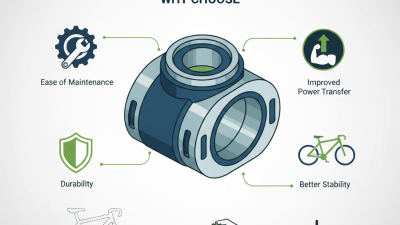
The chart compares the interface features: a square taper has four contact faces, while splined interfaces are commonly described by their spline counts. These counts describe geometry, not relative strength or compatibility.
Main Components of a Square Taper Bottom Bracket
A square taper bottom bracket is built around a spindle, bearings, and a frame-mounted housing. The spindle’s four tapered faces fit matching sockets in the crank arms. Tightening the crank bolts pulls the arms firmly onto the spindle. A small mismatch in taper standards can cause poor seating, so “square” does not mean every part is interchangeable.
In a sealed cartridge design, the spindle and bearings sit inside one unit, held in the frame by threaded cups. Older adjustable designs use separate cups, loose bearings, and often a lockring. Seals help keep grease in and grit out; they are not waterproof barriers. Small parts matter. ISO 281:2007 defines bearing rating life using an L10 value, the life that 90 percent of a sufficiently large bearing group is expected to reach under stated conditions. That is a statistical measure, not a bicycle bottom-bracket lifespan guarantee. ISO 4210-7:2023 also sets crank-assembly fatigue and impact test methods, underscoring the loads carried through the spindle and crank interface. In practice, smooth rotation alone can miss early wear; check for play, roughness, and damaged taper faces before reassembly.
How the Tapered Spindle Connects to the Crank Arms
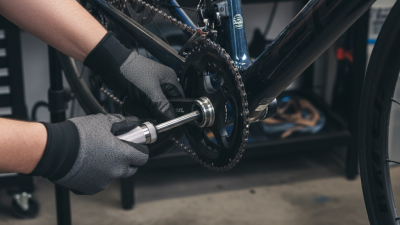
A square-taper bottom bracket connects to each crank through a four-sided spindle tip. The crank’s matching socket slides onto this tapered end. As the fixing bolt tightens, the socket moves inward and grips the spindle. The taper does the work. It turns a small bolt’s clamping force into firm contact across four faces.
That contact explains why fit matters. A mismatched taper standard or damaged socket can cause rocking, creaking, or a loose crank. In practice, inspect the socket for rounded edges and check that the spindle ends are clean before installation. Small details matter. The ISO 4210-8:2023 safety standard covers crank-and-drive-system tests, including fatigue and static-strength testing; it offers a useful reference for why this joint must withstand repeated pedaling loads. It does not give one universal installation torque for every crank. Use the component maker’s stated torque, and avoid forcing a poorly fitting arm onto the spindle. I still find this interface less intuitive than a splined one: it looks simple, but the taper’s exact fit carries much of the load.
Common Square Taper Standards and Compatibility
Square-taper bottom brackets mainly use two interface standards: ISO and JIS. Their tapered square ends look alike, but their dimensions differ, so a crank that fits one may sit too far inward or outward on the other. ISO 6695 specifies dimensions and test requirements for square-taper crank assemblies. That makes it a useful technical reference, but it does not mean every crank and spindle combination is interchangeable. Fit is not guaranteed.
Check the frame shell separately. Common shell widths are 68 mm and 73 mm, while common threaded systems include English threading at 1.37 × 24 TPI and Italian threading at 36 × 24 TPI. ISO 6696 covers screw threads used in bottom-bracket assemblies. These measurements describe different parts of the setup: shell width and thread type determine whether the unit fits the frame; taper standard and spindle length affect crank seating and chainline. A practical check is to confirm all four details before installation. One detail is easy to miss: matching spindle lengths do not ensure matching crank positions across standards. When the old parts are available, compare their markings and measure the shell rather than relying on appearance alone.
What Is a Square Taper Bottom Bracket? - Common Square Taper Standards and Compatibility
| Topic or standard |
Key details |
Compatibility guidance |
| Square taper bottom bracket |
A bottom bracket with tapered, square-section spindle ends. The crank arms slide onto these ends and are secured with crank bolts or nuts. |
Check the crank’s taper standard, required spindle length, and bottom bracket shell dimensions before choosing a replacement. |
| JIS taper |
A common square-taper standard used on many bicycles. Its spindle-end dimensions differ from the ISO taper. |
Use a crank and spindle designed for the same taper standard where possible. A JIS crank on an ISO spindle may sit farther inward than intended. |
| ISO taper |
A square-taper standard with different spindle-end dimensions from JIS. It is found on some older and specialty crank systems. |
An ISO crank on a JIS spindle may sit farther outward than intended. Do not assume that matching spindle length makes the two tapers interchangeable. |
| Spindle length |
Measured across the spindle from end to end. Common lengths vary by crank design and intended chainline; there is no single universal length. |
Follow the crank maker’s specified length when available. A different length can change crank position, chainline, and frame clearance. |
| BSA / English threaded shell |
Typically 1.37 × 24 threads per inch, with a 68 mm or 73 mm shell width. The drive-side cup uses a left-hand thread; the non-drive-side cup uses a right-hand thread. |
A threaded bottom bracket must match the shell’s thread standard and width. Shell compatibility does not determine whether its spindle taper fits the crank. |
| Italian threaded shell |
Typically 36 × 24 threads per inch, commonly with a 70 mm shell width. Both sides use right-hand threads. |
Requires a bottom bracket made for Italian threading; it is not interchangeable with a BSA-threaded unit. |
| French threaded shell |
Typically 35 × 1 mm threads, commonly with a 68 mm shell width. Both sides use right-hand threads. |
Requires a French-threaded bottom bracket. Do not force a differently threaded unit into the shell. |
| Shell width versus spindle length |
Shell width describes the frame’s bottom bracket shell; spindle length describes the axle. These are separate measurements. |
Confirm both measurements independently. A unit that fits the frame shell may still place the cranks incorrectly. |
| Practical fit check |
Identify the frame’s shell threading and width, the crank’s taper standard, and the crank’s required spindle length. |
After installation, check chainline, crank-to-frame clearance, and secure crank-bolt tightening according to the component instructions. |
Compatibility note: JIS and ISO square tapers are similar in appearance but differ in dimensions. Matching the taper standard is the safest choice; spindle length alone does not guarantee correct fit.
Benefits, Limitations, and Maintenance Needs
What Is a Square Taper Bottom Bracket? Benefits, Limitations, and Maintenance Needs
A square taper bottom bracket uses a spindle with tapered square ends, which seat inside matching crank-arm sockets. The interface is mechanically simple and compact. ISO 6695:2015 specifies dimensions for square-end crank interfaces, but compatibility still depends on matching the spindle standard and crank. Check before buying; “square taper” alone is not a complete fit specification.
Its advantages are modest weight, straightforward servicing, and a design that many mechanics can inspect with basic tools. It can suit commuting and touring bikes where dependable, uncomplicated parts matter. But simplicity is not immunity from wear. Repeatedly removing a crank can loosen or deform its tapered socket, and a poorly seated crank may creak or develop play. Different spindle lengths also change crank position, so a replacement is not always a simple swap. Small detail, real consequence.
Keep the area clean, check for crank movement, and investigate new clicking or creaking sounds. When reinstalling a crank, follow its maker’s specified bolt torque and lubrication instructions; lubrication changes clamping force. Avoid riding with a loose crank. Stop and inspect it. I would not treat a quiet first ride as proof of a correct fit: recheck after installation, especially if the crank was removed or replaced. ISO 4210-8:2023 provides test methods for crank assemblies, a useful engineering reference, though it does not predict the service life of an individual bottom bracket.